The Upanishads: Translations of Hindu Sacred Scriptures
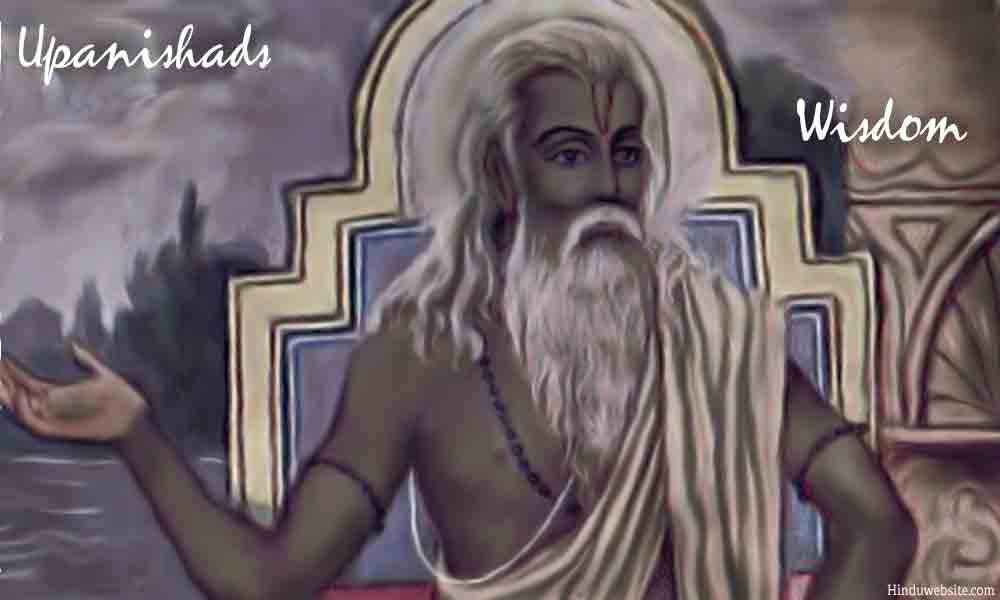
Summary: The Upanishads are foundational Sanskrit texts of Hindu philosophy that explore the nature of Brahman, the self, and ultimate reality. This collection translated by Max Muller presents translations of the principal Upanishads, including the Chandogya, Katha, Mundaka, Taittiriya, Brihadaranyaka, Svetavatara, Prasna, Maitrayana, and Kaushitaki Upanishads. The page offers scholarly access to these ancient documents that reveal the dawn of human religious consciousness and philosophical thought in Eastern tradition.
Who was Max Muller? Max Müller (1823–1900) was a German-born philologist and pioneering scholar of comparative religion and Indology. After settling in England, he became a leading figure at Oxford University, where he devoted his life to the study and translation of ancient Sanskrit texts. Müller played a central role in introducing the Rig Veda and other foundational Hindu scriptures to the Western world through his monumental Sacred Books of the East series. His work helped shape modern understanding of Indo‑European languages, Vedic literature, and comparative mythology, leaving a lasting influence on religious and linguistic studies. Although posts-independence Indologists often view his work critically for his Western bias and over simplification, Max Muller did a pioneering work in the study of Indian literature and introducing the deeper aspects of Hindu philosophy and Indian traditions to the world, for which he had deep admirations.
Max Müller was not personally hostile to Indian traditions, but his work inevitably reflected the constraints, assumptions, and intellectual climate of 19th-century Europe. He admired India deeply and repeatedly praised the Upanishads, the Rig Veda, and India’s philosophical heritage, sincerely believing that Sanskrit literature ranked among humanity’s greatest achievements. Yet he worked within a colonial, Christian, and Eurocentric framework. As a result, his training in comparative philology led him to classify cultures in evolutionary stages, a common feature of Victorian scholarship. This, sometimes, produced interpretations that seemed reductive or patronizing to Indians. We must also acknowledge that his access to historical evidence was limited, as archaeology, anthropology, and modern Indology were still developing; consequently, he relied heavily on manuscripts, missionary reports, and second-hand accounts. In his later years, he attempted to revise and refine his earlier views, openly acknowledging that many of his early theories, especially those concerning the origins of the Vedas and the “Aryan race,” were speculative and had been misused by others. In conclusion, Müller was not deliberately biased against India, but he was a scholar shaped by his time, working with incomplete information and Victorian intellectual assumptions. In the colonial era, he was indeed an intellectual rebel who dared to question many common assumptions that the Europeans of his time held against Asian countries and oriental studies. His contributions were foundational, yet his interpretations must be read critically and in their historical context. The following quotation amply reflects his thinking and attitude toward his understanding and admiration of Eastern traditions.
"The religions of antiquity must always be approached in a loving spirit, and the dry and cold-blooded scholar is likely to do here as much mischief as the enthusiastic sciolist. But true love does not ignore all faults and failings: on the contrary, it scans them keenly, though only in order to be able to understand, to explain, and thus to excuse them. To watch in the Sacred Books of the East the dawn of the religious consciousness of man, must always remain one of the most inspiring and hallowing sights in the whole history of the world ; and he whose heart cannot quiver with the first quivering rays of human thought and human faith, as revealed in those ancient documents, is, in his own way, as unfit for these studies as, from another side, the man who shrinks from copying and collating ancient MSS., or toiling through volumes of tedious commentary."
Source: Max Müllers' translation of the Upanishads, Volume One. (1879) (Volume 1 of the Sacred Books of the East.) and Volume Two. (1884) (Volume 15 of the Sacred Books of the East.). While we have made every effort to reproduce the text correctly, we do not guarantee or accept any responsibility for any errors or omissions or inaccuracies in the reproduction of this text.