Hymn 4 to Goddess Indri from the Rig-Veda Book I
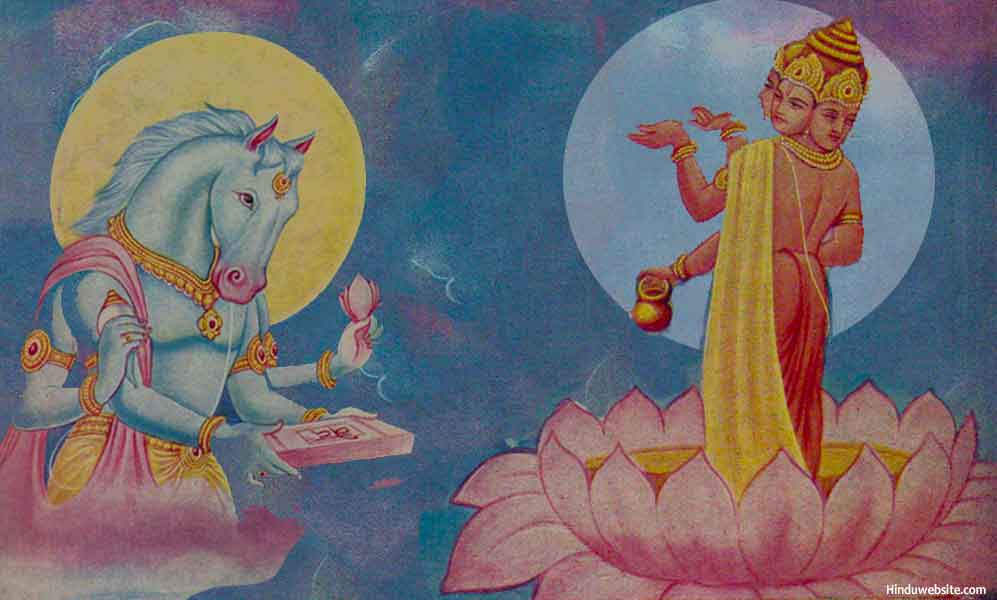
Summary: This page presents Hymn IV dedicated to Indri, a Vedic goddess and consort of the deity Indra, sourced from Book I of the Rig-Veda. The hymn, translated by the renowned Sanskrit scholar Ralph T.H. Griffith, comprises ten verses invoking Indri's benevolence and divine grace. Readers will discover prayers requesting her assistance, blessings of prosperity, and references to Indra's heroic deeds, offering insight into ancient Hindu devotional practices and Vedic religious beliefs.
HYMN 4. Indri
1 As a good cow to him who milks, we call the doer of fair deeds,
To our assistance day
by day.
2 Come thou to our libations, drink of Soma; Soma-drinker thou!
The rich One's rapture
giveth kine.
3 So may we be acquainted with thine innermost benevolence:
Neglect us not,
come hitherward.
4 Go to the wise unconquered One, ask thou of Indra, skilled in song,
Him
who is better than thy friends.
5 Whether the men who mock us say, Depart unto another place,
Ye who serve Indra and none else;
6 Or whether, God of wondrous deeds, all our true people
call us blest,
Still may we dwell in Indra's care.
7 Unto the swift One bring the swift,
man-cheering, grace of sacrifice,
That to the Friend gives wings and joy.
8 Thou, Satakratu,
drankest this and wast the Vrtras' slayer; thou
Helpest the warrior in the fray.
9 We strengthen,
Satakratu, thee, yea, thee the powerful in fight,
That, Indra, we may win us wealth.
10
To him the mighty stream of wealth, prompt friend ot'him who pours the juice,
yea, to this
Indra sing your song.
HYMN 179. Rati.
The deified object of this omitted hymn is said to be Rati or Love, and its Rsis or authors are Lopamudrd, Agastya, and a disciple. Lopamudra is represented as inviting the caresses of her aged husband Agastya, and complaining of his coldness and neglect. Agastya responds in stanza 3, and in the second half of stanza 4 the disciple or the poet briefly tells the result of the dialogue. Stanza 5 is supposed to be spoken by the disciple who has overheard the conversation, but its connexion with the rest of the hymn is not very apparent. In stanza 6 'toiling with strong endeavour' is a paraphrase and not a translation of the original khanamanah khanitraib (ligonibus fodiens) which Sayana explains by 'obtaining the desired result by means of lauds and sacrifices.' M. Bergaigne is of opinion that the hymn has a mystical meaning, Agastya being identifiable with the celestial Soma whom Lopamudra, representing fervent Prayer, succeeds after long labour in drawing down from his secret dwelling place. See La Religion Vedique, ii. 394 f.
1 'Through many autumns have I toiled and laboured, at night and morn, through age-inducing
dawnings.
Old age impairs the beauty of our bodies. Let husbands still come near unto their
spouses.
2 For even the men aforetime, law-fulfillers, who with the Gods declared eternal statutes,--
They have decided, but have not accomplished: so now let Wives come near unto their husbands.
3 Non inutilis est labor cui Dii favent: nos omnes aemulos et aemulas vincamus.
Superemus in
hac centum artium pugna in qua duas partes convenientes utrinque commovemus.
4 Cupido me cepit
illius tauri [viri] qui me despicit, utrum hinc utrum illinc ab aliqua parte nata sit.
Lopamudra
taururn [mariturn suum] ad se detrahit: insipiens illa sapientem anhelantern absorbet.
5 This
Soma I address that is most near us, that which hath been imbibed within the spirit,
6 To pardon
any sins we have committed. Verily mortal man is full of longings.
7 Agastya thus, toiling
with strong endeavour, wishing for children, progeny and. power,
8 Cherished - a sage of mighty
strength - both classes, and with the Gods obtained his prayer's fulfilment.
By 'both classes' probably priests and princes, or institutors
of sacrifices, are meant. M. Bergaigne understands the expression to mean the two forms or essences
of Soma, the celestial and the terrestrial.
5 Membrum suum virile, quod vrotentum fuerat, mas
ille retraxit. Rursus illud quod in juvenem filiam sublatum fuerat, non aggressurus, ad se rerahit.
6 Quum jam in medio connessu, semiperfecto opere, amorem in puellam pater impleverat, ambo discedentes
seminis paulum in terrae superficiem sacrorum sede effusum emiserunt.
7 Quum pater suam nilam
adiverat, cum ed congressus suum semen supra wrrarn effudit. Tum Dii benigni precem (brahma) prgeduerunt,
et Vastoshpatim, legum sacrarum custodem, formaverunt.
8 Ille tauro similis spumam in certamine
jactavit, tunc discedens pusillaximis huc profectus est. Quasi dextro pede claudus processit, "inutiles
fuerunt illi mei complexus," ita locutus.
9 'The fire, burning the people, does not approach quickly (by day): the naked (Rakasas approach) not Agni by night; the giver of fuel, and the giver of food, he, the upholder (of the rite), is born, overcoming enemies by his might.'
Source: These hymns are reproduced from An English translation of the Vedas by Ralph T.H. Griffith, 1896. Griffith wrote in a poetic, archaic style. In order to make the hymns sound like English poetry, he often compromised the original meaning of the Sanskrit words. Further, his Sanskrit knowledge was limited by the scholarship of the 19th century. For many Indian readers, this feels distant, making his work less accessible than modern prose translations. This page has been formatted, and the hymns are selected and organized by Jayaram V for Hinduwebsite.com. Hymn numbers have been changed from Roman numerals to standard numbers.