Rig Veda Book 5, Hymns 21-30: Vedic Hymns to Agni
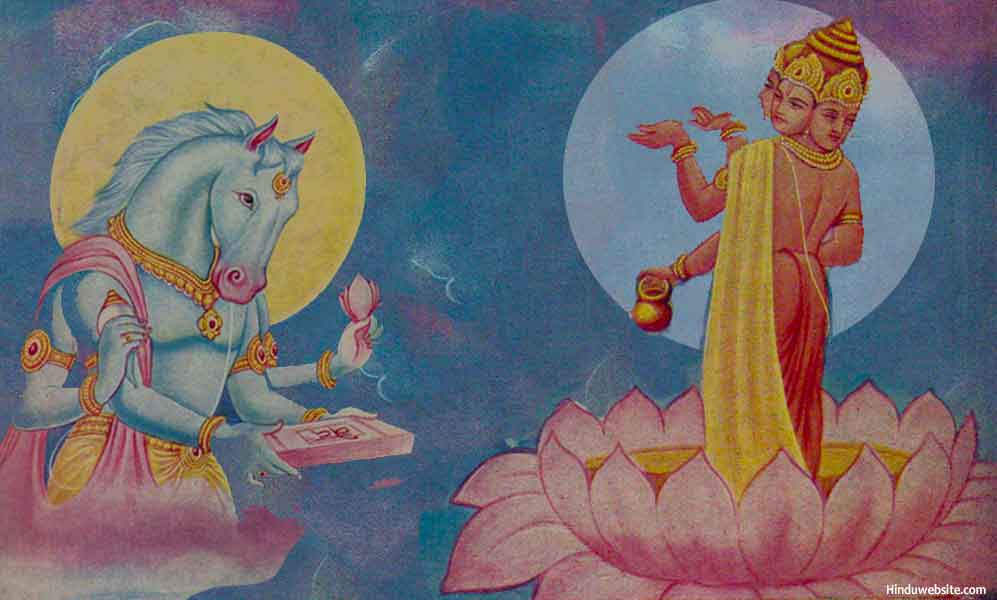
Summary: This page presents verses 21-30 from Book 5 of the Rig Veda, one of Hinduism's oldest and most revered sacred texts. The passage includes Hymn 21 dedicated to Agni, the Vedic fire god and divine messenger, translated by the renowned Sanskrit scholar Ralph T.H. Griffith. Readers will find the complete English translation with detailed verses exploring Agni's role in Vedic rituals and worship practices.
HYMN 21. Agni.
1. WE stablish thee as Manus used, as Manus used we kindle thee.
Like Manus, for the pious
man , Angiras, Agni, worship Gods.
2 For well, O Agni, art thou pleased when thou art kindled
mid mankind.
Straight go the ladles unto thee, thou highborn God whose food is oil.
3 Thee
have all Gods of one accord established as their messenger.
Serving at sacrifices men adore
thee as a God, O Sage.
4 Let mortal man adore your God, Agni, with worship due to Gods.
Shine forth enkindled, Radiant One. Sit in the chamber of the Law, sit in the chamber of the food.
HYMN 22. Agni.
1. LIKE Atri, Visvasaman! sing to him of purifying light,
Who must be praised in holy rites,
the Priest most welcome in the house.
2 Set Jatavedas in his place, Agni the God and Minister.
Let sacrifice proceed to-day duly, comprising all the Gods.
3 All mortals come to thee for
aid, the God of most observant mind.
Of thine excelling favour we bethink us as we long for
it.
4 Mark with attention this our speech, O Agni, thou victorious One.
Thee, Strong-jawed!
as the homestead's Lord, the Atris with their lauds exalt, the Atris beautify with songs.
HYMN 23. Agni.
1. By thy fair splendour's mighty power, O Agni, bring victorious wealth,
Wealth that o'ercometh
all mankind, and, near us, conquereth in fight.
2 Victorious Agni, bring to us the wealth that
vanquisheth in war;
For thou art wonderful and true, giver of strength in herds of kine.
3 For all the folk with one accord, whose sacred grass is trimmed and strewn,
Invite thee to
their worship-halls, as a dear Priest, for choicest wealth.
4 For he, the God of all men, hath
gotten him might that quelleth foes.
O Agni, in these homes shine forth, bright God! for our
prosperity, shine, Purifier! splendidly.
HYMN 24. Agni.
1. O Agni, be our nearest Friend, be thou a kind deliverer and a gracious Friend.
2 Excellent
Agni, come thou nigh to us, and give us wealth most splendidly renowned.
3 So hear us, listen
to this call of ours, and keep us far from every sinful man.
4 To thee then, O Most Bright,
O Radiant God, we come with prayer for happiness for our friends.
HYMN 25. Agni.
1. I WILL sing near, for grace, your God Agni, for he is good to us.
Son of the Brands,
may he give gifts, and, righteous, save us from the foe.
2 For be is true, whpm men of old
enkindled, and the Gods themselves,
The Priest with the delicious tongue, rich with the light
of glorious beams.
3 With wisdom that surpasseth all, with gracious will most excellent,
O Agni, worthy of our choice, shine wealth on us through hymns of praise.
4 Agni is King, for
he extends to mortals and to Gods alike.
Agni is bearer of our gifts. Worship ye Agni with
your thoughts.
5 Agni gives to the worshipper a son, the best, of mightiest fame,
Of deep
devotion, ne'er subdued, bringer of glory to his sire.
6 Agni bestows the hero-lord who conquers
with the men in fight.
Agni bestows the fleet-foot steed, the victor never overcome.
7 The
mightiest song is Agni's: shine on high, thou who art rich in light.
Like the Chief Consort
of a King, riches and strength proceed -from thee.
8 Resplendent are thy rays of light: loud
is thy voice like pressing-stones.
Yea, of itself thy thunder goes forth like the roaring of
the heaven.
9 Thus, seeking riches, have we paid homage to Agni Conqueror.
May he, most
wise, as with a ship, carry us over all our foes.
HYMN 26. Agni.
1. O Agni, Holy and Divine, with splendour and thy pleasant tongue
Bring hither and adore
the Gods.
2 We pray thee, thou who droppest oil, bright-rayed! who lookest on the Sun,
Bring
the Gods hither to the feast.
3 We have enkindled thee, O Sage, bright caller of the Gods to
feast.
O Agni, great in Sacrifice.
4 O Agni, come with all the Gods, come to our sacrificial
gift:
We choose thee as Invoking Priest.
5 Bring, Agni, to the worshipper who pours the
juice, heroic strength:
Sit with the Gods upon the grass.
6 Victor of thousands, Agni, thou,
enkindled, cherishest the laws,
Laud-worthy, envoy of the Gods.
7 Set Agni Jatavedas down,
the bearer of our sacred gifts,
MostYouthful, God and Minister.
8 Duly proceed our sacrifice,
comprising all the Gods, to-day:
Strew holy grass to be their seat.
9 So may the Maruts
sit thereon, the Asvins, Mitra, Varuna:
The Gods with all their company.
HYMN 27. Agni.
1. THE Godlike hero, famousest of nobles, hath granted me two oxen with a wagon.
Trvrsan's
son Tryaruna hath distinguished himself, Vaisvanara Agni! with ten thousands.
2 Protect Tryaruna,
as thou art waxing strong and art highly praised, Vaisvanara Agni!
Who granteth me a hundred
kine and twenty, and two bay horses, good at draught, and harnessed.
3 So Trasadasyu served
thee, God Most Youthful, craving thy favour for the ninth time, Agni;
Tryaruya who with attentive
spirit accepteth many a song from me the mighty.
4 He who declares his wish to me, to Asvamedha,
to the Prince,
Pays him who with his verse seeks gain, gives power to him who keeps the Law.
5 From whom a hundred oxen, all of speckled hue, delight my heart,
The gifts of Asvamedha,
like thrice-mingled draughts of Soma juice.
6 To Asvamedha who bestows a hundred gifts grant
hero power,
O Indra-Agni! lofty rule like the unwasting Sun in heaven.
HYMN 28. Agni.
1. Agni inflamed hath sent to heaven his lustre: he shines forth widely turning unto Morning.
Eastward the ladle goes that brings all blessing, praising the Godswith homage and oblation.
2 Enkindled, thou art King of the immortal world: him who brings offerings thou attendest for
his weal.
He whom thou urgest on makes all possessions his: he sets before thee, Agni, gifts
that guests may claim.
3 Show thyself strong for mighty bliss, O Agni, most excellent be thine
effulgent splendours.
Make easy to maintain our household lordship, and overcome the might
of those who hate us.
4 Thy glory, Agni, I adore, kindled, exalted in thy strength.
A Steer
of brilliant splendour, thou art lighted well at sacred rites.
5 Agni, invoked and kindled,
serve the Gods, thou skilled in sacrifice:
For thou art bearer of our gifts.
6 Invoke and
worship Agni while the sacrificial rite proceeds:
For offering-bearer choose ye him.
HYMN 29. Agni.
1. MAN'S worship of the Gods hath three great lustres, and three celestial lights have they
established
The Maruts gifted with pure strength adore thee, for thou, O Indra, art their sapient
Rsi.
2 What time the Maruts sang their song to Indra, joyous when he had drunk of Soma juices,
He grasped his thunderbolt to slay the Dragon, and loosed, that they might flow, the youthful
Waters.
3 And, O ye Brahmans, Maruts, so may Indra drink draughts of this my carefully pressed
Sorna;
For this oblation found for man the cattle, and Indra, having quaffed it, slew the Dragon.
4 Then heaven and earth he sundered and supported: wrapped even in these he struck the Beast with
terror.
So Indra forced the Engulfer to disgorgement, and slew the Danava. panting against
him.
5 Thus all the Gods, O Maghavan, delivered to thee of their free will the draught of Soma;
When thou for Etasa didst cause to tarry the flying mares of Surya racing forward.
6 When Maghavan
with the thunderbolt demolished his nine-and-ninety castles all together,
The Maruts, where
they met, glorified Indra: ye with the Trstup hymn obstructed heaven.
7 As friend to aid a
friend, Agni dressed quickly three hundred buffaloes, even as he willed it.
And Indra, from
man's gift, for Vrtra's slaughter, drank ofr at once three lakes of pressed-out Soma.
8 When
thou three hundred buffaloes' flesh hadst eaten, and drunk, as Maghavan, three lakes of Soma,
All the Gods raised as 'twere a shout of triumph to Indra praise because he slew the Dragon.
9 What time ye came with strong steeds swiftly speeding, O Usana and Indra, to the dwelling,
Thou camest thither -conquering together with Kutsa and the Gods: thou slewest Susna.
10 One
car-wheel of the Sun thou rolledst forward, and one thou settest free to move for Kutsa.
Thou
slewest noseless Dasyus with thy weapon, and in their home o'erthrewest hostile speakers.
11
The lauds of Gauriviti made thee mighty to Vidathin's son, as prey, thou gavest Pipru.
Rjisivan
drew thee into friendship dressing the sacred food, and thou hast drunk his Soma.
12 Navagvas
and Dasgvas with libations of Soma juice sing hymns of praise to Indra.
Labouring at their
task the men laid open the stall of Kine though firmly closed and fastened.
13 How shall I
serve thee, Maghavan, though knowing full well what hero deeds thou hast accomplished?
And
the fresh deeds which thou wilt do, Most Mighty! these, too, will we tell forth in sacred synods.
14 Resistless from of old through hero courage, thou hast done all these many acts, O Indra.
What thou wilt do in bravery, Thunder-wielder! none is there who may hinder this thy prowess.
15 Indra, accept the prayers which now are offered, accept the new prayers, Mightiest! which we
utter.
Like fair and well-made robes, I, seeking riches, as a deft craftsman makes a car, have
wrought them.
HYMN 30. Indra.
1. WHERE is that Hero? Who hath looked on Indra borne on light-rolling car by Tawny Coursers,
Who, Thunderer, seeks with wealth the Soma-presser, and to his house goes, much-invoked, to aid
him?
2 I have beheld his strong and secret dwelling, longing have sought the Founder's habitation.
I asked of others, and they said in answer, May we, awakened men, attain to Indra.
3 We will
tell, Indra, when we pour libation, what mighty deeds thou hast performed to please us.
Let
him who knows not learn, who knows them listen: hither rides Maghavan with all his army.
4
Indra, when born, thou madest firm thy spirit: alone thou seekest war to fight with many.
With
might thou clavest e'en the rock asunder, and foundest out the stable of the Milch-kine.
5
When thou wast born supremest at a distance, bearing a name renowned in far-off regions,
Since
then e'en Gods have been afraid of Indra: he conquered all the floods which served the Dasa.
6 These blissful Maruts sing their psalm to praise thee, and pour to thee libation of the Soma.
Indra with wondrous powers subdued the Dragon, the guileful lurker who beset the waters.
7
Thou, Maghavan, from the first didst scatter foemen, speeding, while joying in the milk, the Giver.
There, seeking man's prosperity, thou torest away the head of Namuci the Dasa.
8 Pounding the
head of Namuci the Dasa, me, too thou madest thine associate, Indra!
Yea, and the rolling stone
that is in heaven both worlds, as on a car, brought to the Maruts.
9 Women for weapons hath
the Dasa taken, What injury can his feeble armies To me?
Well he distinguished his two different
voices, and Indra then advanced to fight the Dasyu.
10 Divided from their calves the Cows went
lowing around, on every side, hither and thither.
These Indra re-united with his helpers, what
time the well-pressed Soma made him joyful.
11 What time the Somas mixed by Babhru cheered
him, loud the Steer bellowed in his habitations.
So Indra drank thereof, the Fort-destroyer,
and gave him guerdon, in return, of milch-kine.
12 This good deed have the Rusamas done, Agni!
that they have granted me four thousand cattle.
We have received Rnancaya's wealth, of heroes
the most heroic, which was freely offered.
13 The Rusamas, O Agni, sent me homeward with fair
adornment and with kine in thousands.
The strong libations have made Indra joyful, when night,
whose course was ending, changed to morning.
14 Night, well-nigh ended, at Rnancaya's coming,
King of the Rusamas, was changed to morning.
Like a strong courser, fleet of foot, urged onward,
Babhru hath gained four thousand as his guerdon.
15 We have received four thousand head of
cattle presented by the Rusamas, O Agni.
And we, the singers, have received the caldron of
metal which was heated for Pravargya.
Source: These hymns are reproduced from An English translation of the Vedas by Ralph T.H. Griffith, 1896. Griffith wrote in a poetic, archaic style. In order to make the hymns sound like English poetry, he often compromised the original meaning of the Sanskrit words. Further, his Sanskrit knowledge was limited by the scholarship of the 19th century. For many Indian readers, this feels distant, making his work less accessible than modern prose translations. This page has been formatted, and the hymns are selected and organized by Jayaram V for Hinduwebsite.com. Hymn numbers have been changed from Roman numerals to standard numbers.