Hymns to Rudra from the Rig-Veda - Book I
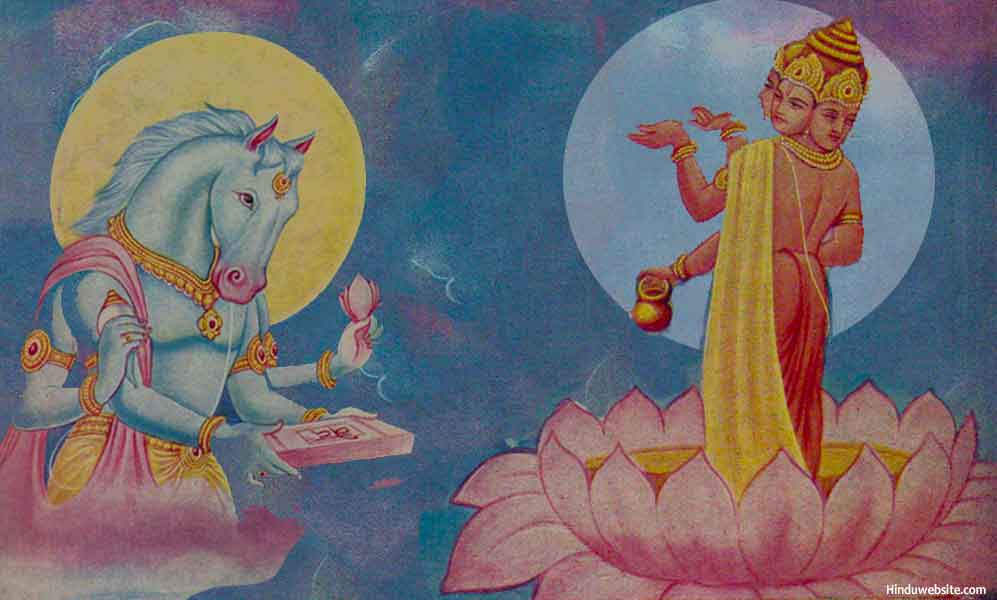
Summary: This page presents Hymn XLIII dedicated to Rudra from the Rig-Veda, one of Hinduism's oldest sacred texts. Rudra is revered as the Vedic deity of healing, destruction, and sacrifice. The hymn, translated by Ralph T.H. Griffith, contains devotional verses invoking Rudra's blessings for health, strength, and prosperity upon cattle, family, and community, while also honoring his cosmic significance among the Vedic pantheon.
HYMN 43. Rudra.
1 WHAT shall we sing to Rudra, strong, most bounteous, excellently wise,
That shall be dearest
to his heart?
2 That Aditi may grant the grace of Rudra to our folk, our kine,
Our cattle
and our progeny;
3 That Mitra and that Varuna, that Rudra may remember us,
Yea, all the
Gods with one accord.
4 To Rudra Lord of sacrifice, of hymns and balmy medicines,
We pray
for joy and health and strength.
5 He shines in splendour like the Sun, refulgent as bright
gold is he,
The good, the best among the Gods.
6 May he grant health into our steeds, wellbeing
to our rams and ewes,
To men, to women, and to kine.
7 O Soma, set thou upon us the glory
of a hundred men,
The great renown of mighty chiefs.
8 Let not malignities, nor those who
trouble Soma, hinder us.
Indu, give us a share of strength.
9 Soma! head, central point,
love these; Soma! know these as serving thee,
Children of thee Immortal, at the highest place
of holy law.
HYMN 114. Rudra.
1. To the strong Rudra bring we these our songs of praise, to him the Lord of Heros with the
braided hair,
That it be well with all our cattle and our men, that in this village all he
healthy and well-fed.
2 Be gracious unto us, O Rudra, bring us joy: thee, Lord of Heroes, thee
with reverence will we serve.
Whatever health and strength our father Manu won by sacrifice
may we, under thy guidance, gain.
3 By worship of the Gods may we, O Bounteous One, O Rudra,
gain thy grace, Ruler of valiant men.
Come to our families, bringing them bliss: may we, whose
heroes are uninjured, bring thee sacred gifts,
4 Hither we call for aid the wise, the wanderer,
impetuous Rudra, perfecter of sacri fice.
May he repel from us the anger of the Gods: verily
we desire his favourable grace.
5 Him with the braided hair we call with reverence down, the
wild-boar of the sky, the red, the dazzling shape.
May he, his hand filled full of sovran medicines,
grant us protection, shelter, and a home secure.
6 To him the Maruts' Father is this hymn addressed,
to strengthen Rudra's might, a song more sweet than sweet.
Grant us, Immortal One, the food
which mortals eat: be gracious unto me, my seed, my progeny.
7 O Rudra, harm not either great
or small of us, harm not the growing boy, harm not the full-grown man.
Slay not a sire among
us, slay no mother here, and to our own dear bodies, Rudra, do not harm.
8 Harm us not, Rudra,
in our seed and progeny, harm us not in the living, nor in cows or steeds,
Slay not our heroes
in the fury of thy wrath. Bringing oblations evermore we call to thee.
9 Even as a herdsman
I have brought thee hymns of praise: O Father of the Maruts, give us happiness,
Blessed is
thy most favouring benevolence, so, verily, do we desire thy saving help.
10 Far be thy dart
that killeth men or cattle: thy bliss be with us, O thou Lord of Heroes.
Be gracious unto us,
O God, and bless us, and then vouchsafe us doubly-strong protection.
11 We, seeking help, have
spoken and adored him: may Rudra, girt by Maruts, hear our calling.
This prayer of ours may
Varuna grant, and Mitra, and Aditi and Sindhu, Earth and Heaven.
Source: These hymns are reproduced from An English translation of the Vedas by Ralph T.H. Griffith, 1896. Griffith wrote in a poetic, archaic style. In order to make the hymns sound like English poetry, he often compromised the original meaning of the Sanskrit words. Further, his Sanskrit knowledge was limited by the scholarship of the 19th century. For many Indian readers, this feels distant, making his work less accessible than modern prose translations. This page has been formatted, and the hymns are selected and organized by Jayaram V for Hinduwebsite.com. Hymn numbers have been changed from Roman numerals to standard numbers.