Cloud Computing and Virtualization Explained
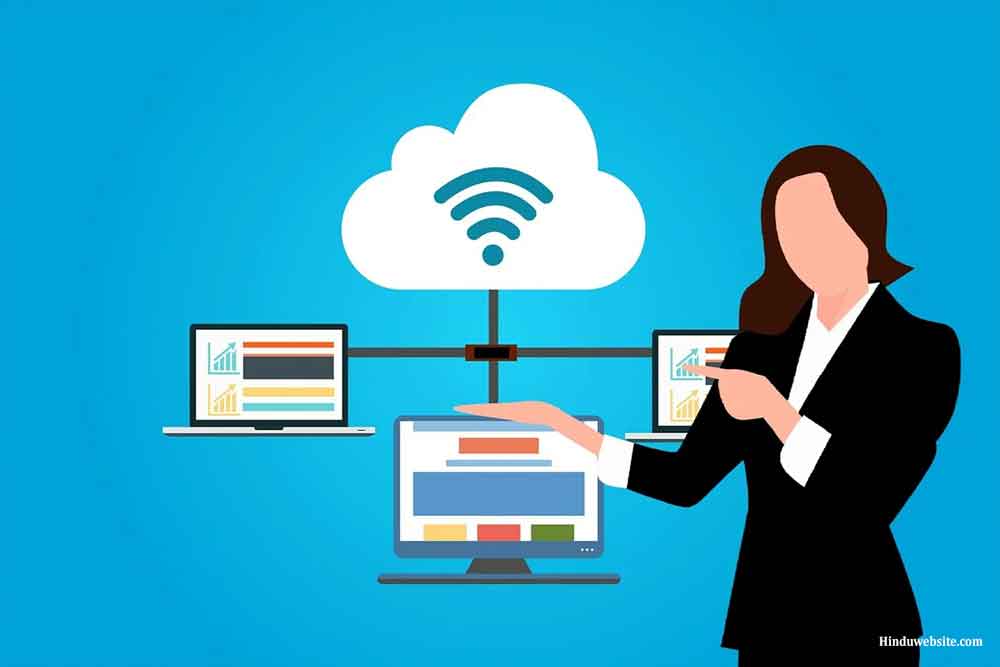
Summary: An overview of cloud computing and virtualization — covering the service models (IaaS, PaaS, SaaS), the major cloud providers, containers, Kubernetes, and serverless computing in 2025.
Cloud computing refers to the delivery of computing resources — servers, storage, databases, networking, software, analytics, and intelligence — over the internet on a pay-as-you-go basis. Rather than owning and maintaining physical data centers and servers, organizations access these resources from providers who manage the underlying infrastructure at scale. Cloud computing has transformed how applications are built, deployed, and operated, making enterprise-grade infrastructure accessible to organizations of all sizes and enabling rapid scaling without capital investment in hardware.
The Three Service Models
Cloud services are typically categorized into three models that represent different levels of abstraction and control. Infrastructure as a Service (IaaS) provides virtualized computing resources — virtual machines, storage, and networking — that organizations configure and manage themselves, just as they would physical servers. Amazon EC2, Google Compute Engine, and Microsoft Azure Virtual Machines are IaaS offerings. Platform as a Service (PaaS) goes further, providing a managed environment for developing, running, and managing applications without dealing with the underlying infrastructure. Heroku, Google App Engine, and Azure App Service are examples. Software as a Service (SaaS) delivers complete applications over the internet — Gmail, Salesforce, Slack, and Microsoft 365 are SaaS products that users access through a browser without installing or managing anything.
The Major Cloud Providers
Three providers dominate the global cloud market. Amazon Web Services (AWS), launched in 2006, is the largest and offers the broadest catalog of services — over 200 products covering compute, storage, databases, machine learning, networking, security, and more. Microsoft Azure is the second largest and is particularly strong in enterprises already using Microsoft software, with deep integrations into Active Directory, Office 365, and the Windows ecosystem. Google Cloud Platform (GCP) is the third major provider, with particular strengths in data analytics (BigQuery), machine learning (Vertex AI), and Kubernetes, which Google originally developed. Smaller providers such as DigitalOcean, Linode (now Akamai Cloud), and Vultr offer more accessible pricing and simpler interfaces suited to developers and smaller teams.
Virtualization and Containers
Virtualization is the technology that makes cloud computing possible at scale. A hypervisor allows multiple virtual machines (VMs) to run on a single physical server, each with its own operating system and isolated resources. This enables cloud providers to divide physical hardware among many customers efficiently. Containers represent a lighter-weight virtualization alternative — rather than running a full operating system for each workload, containers share the host OS kernel while isolating the application and its dependencies. Docker is the dominant container platform, providing tools for building, shipping, and running containerized applications consistently across development, testing, and production environments. A container image built on a developer's laptop runs identically on any server or cloud platform that supports Docker.
Kubernetes
As containerized applications grow from a handful of containers to hundreds or thousands, orchestrating their deployment, scaling, and health monitoring becomes complex. Kubernetes, originally developed by Google and now an open-source project under the Cloud Native Computing Foundation, is the standard system for container orchestration. It automates the deployment of containers across a cluster of machines, handles load balancing, restarts failed containers, rolls out updates without downtime, and scales the number of running instances up or down based on demand. All major cloud providers offer managed Kubernetes services — Amazon EKS, Google GKE, and Azure AKS — that handle the complexity of running the Kubernetes control plane so teams can focus on their applications.
Serverless Computing
Serverless computing takes abstraction one step further, removing the need to think about servers, containers, or clusters entirely. Developers write individual functions that are triggered by events — an HTTP request, a scheduled time, a database change, a message in a queue — and the cloud platform handles all the provisioning, scaling, and execution automatically. AWS Lambda, Google Cloud Functions, and Azure Functions are the major serverless offerings. Costs are based on actual execution time rather than reserved capacity, making serverless economical for workloads with irregular or unpredictable traffic. Cloudflare Workers runs serverless functions at the network edge, close to users globally, enabling very low-latency responses for geographically distributed applications.
This article was written with AI assistance and reviewed for accuracy. Image for the topic of this page created with images from Pixabay.