
The Early Life Of The Buddha
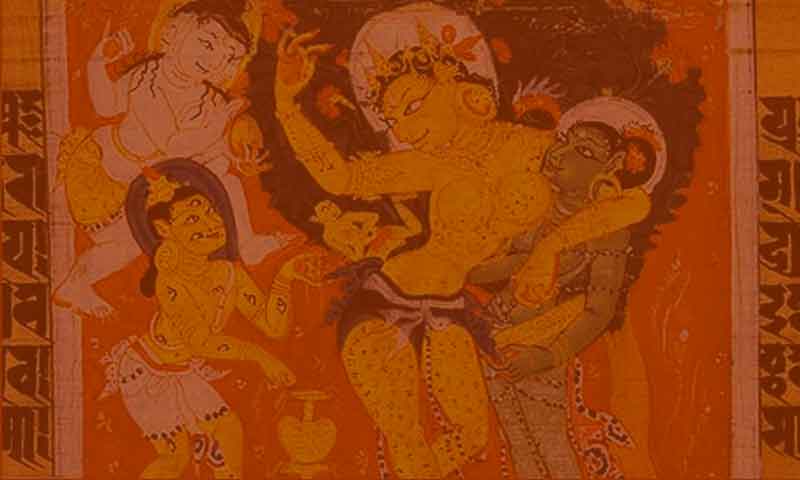
The miraculous birth of the Buddha, out of the side of Queen Mahamaya
Next >> Page 1 | Page 2 |
Here is a brief sketch of the life of the Buddha also known as Siddhartha, Gautama and Sakyamuni, the founder of Buddhism. We have presented the life of the Buddha in four parts. This is part 1.
The Buddha was born in the year 563 B.C. in a mango grove at a place called Lumbini. It is presently located in the foot hills of Nepal in the region bordering the present day India. His father Suddhodana was a Sakya king and his mother Maya also came from a princely family. Seven days after his birth his mother died, leaving him to the care of her sister and his step mother Mahajapati, who was also a wife of Suddhodana.
The young Buddha was brought up in Kapilavastha, which was the capital of Sakya kingdom. When he was born, legend records the occurrence of several miracles, confirming the arrival of a great being into the world. His father and some prominent members of his court were aware that a divine child, who was was destined to be a great person, was born amidst them. His parents gave him the name Siddhartha. They expected him to grow and become a successful and skillful king.
Siddhartha was also known in history by the name Gautama. This was in fact his family name, which he inherited from his mother's side.
Princely life and the great change
We are told that knowing well what was in store for his son, his father tried his best to shield him from all possible spiritual contacts and influences by surrounding him with pomp and luxury and providing all material comforts, so that when he grew up he would become a great ruler. He built three palaces for his son with all the comforts and amenities and arranged for his training in in martial arts and education in various subjects necessary for conduct of state affairs. We are told that despite of these arrangements the young Siddhartha was still drawn occasionally into philosophical and contemplative thinking during which he would suffer from deep despair.
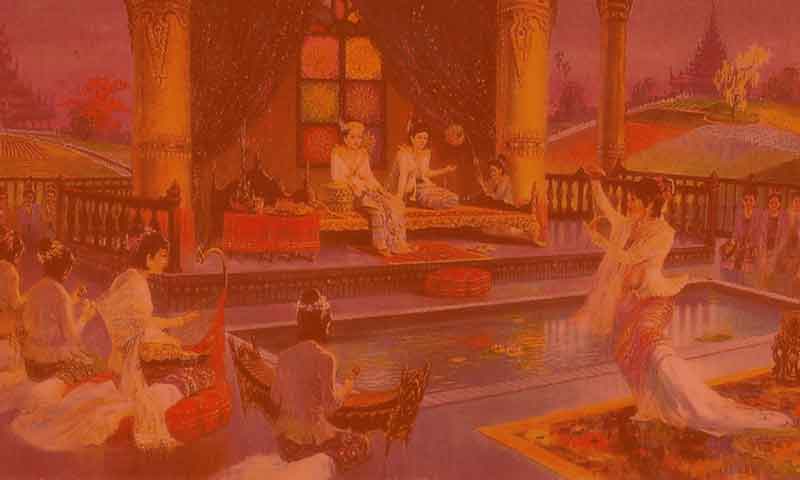 Prince Siddhattha and Princess Yasodhara's marriage
When he reached the age of sixteen he was married to a beautiful princess called Yashodhara. She was the daughter of a Sakya Chieftain called Suprabuddha. He had a son through her by the name Rahula. We do not know much about his family life, except that he cared for his wife and spent considerable time in her company. We do not know whether he had any liaison with some other women too. Yashodhara was probably a very dutiful wife, who might have suffered later in life when the Buddha finally left her.
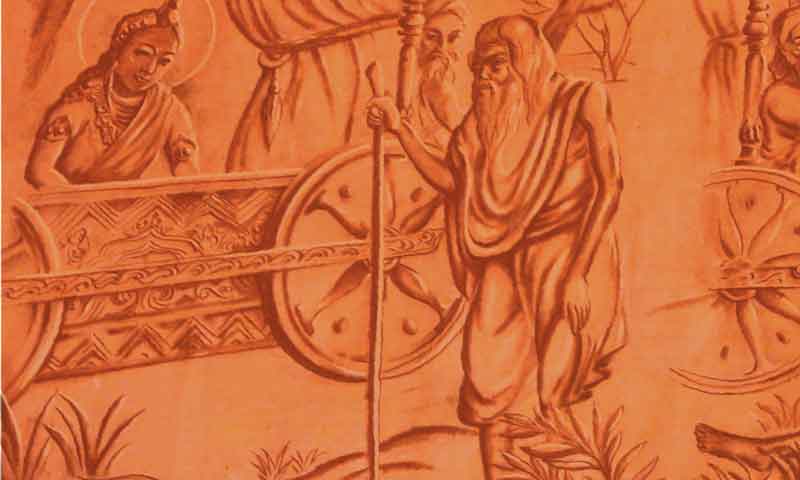 Buddha seeing an old man from his chariot
During this period he went through four strange experiences which the Buddhists refer as the "Four Noble Signs". They changed his thinking completely and brought a fundamental change in his attitude towards the life he was leading till then.
The first of these signs was the sight of an old and decrepit man. This made him think about the decay inherent in all life. The second was the sight of a sick and ailing man. This made him think about the suffering inherent in existence.
The third sign was the sight of corpse lying in a bier. This made him think about the transience of human life and need for liberation from the very experience of death. The fourth was the sight of a meditating monk, who had renounced the worldly life and was leading the life of a monk. It reminded him of the possibilities of spiritual life lying beyond the boundaries of his own materialistic life.
These experiences prompted the young Siddhartha to review the life he was leading till then and change it if he could. He was overwhelmed with a sense of grief and compassion for the troubles of the mankind. He decided not to rest till he found suitable answers to the questions that were troubling him for some time. His son Rahula was just born then, as if circumstances were making it a little more difficult for him to leave his wife and worldly life behind.
The life of a wandering monk
But the young Siddhartha was firm in his resolve. Ever since he saw the meditating hermit, he became eager to pursue a similar life of austerity and inner detachment.
Shortly afterwards, one day, in the middle of the night, when every one was asleep, he left the palace, his family, friends and the kingdom.
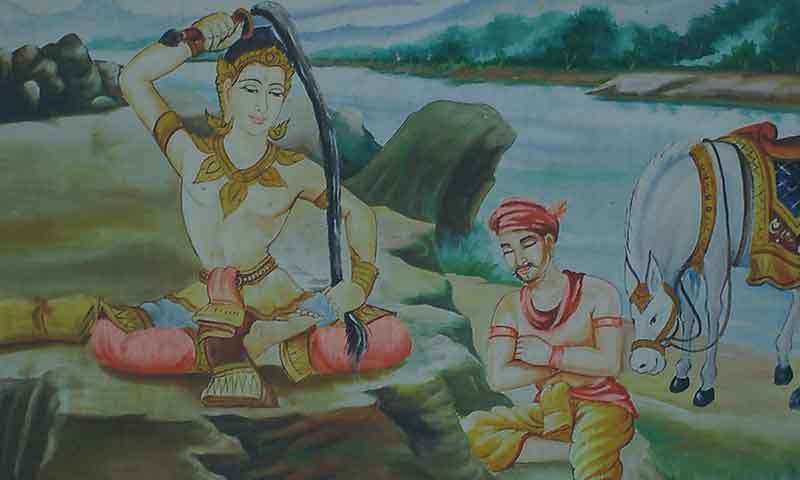 Buddha's Renunciation
He felt relieved as he rode out of Kapilavasthu, in a chariot driven by his trusted charioteer named Channa, towards the deep forests that lay beyond the civilized life. After crossing a stream called Anana, he removed all his jewelry and rich clothes and gave them to Channa. He ordered him to return to the city with the chariot and all his belongings, much against the protestations and pleadings of the latter.
Early struggles
After Channa's departure, he proceeded on foot to a near by mango grove called Anupia and stayed there for a week, contemplating on the possible course of action he was to take. After a few days he decided to go to Rajagriha, the capital of the famous Magadha Kingdom, ruled then by the equally famous king, Bimbisara, who was a man of noble qualities and great vision. We are told that when he was in Magadha, he was visited by king Bimbisara, who tried to persuade him unsuccessfully not to renounce his princely ways and worldly life. But Siddhartha, could not be persuaded. He remained firm in his resolve. He promised him nothing. But he gave him the assurance that when he attained enlightenment, he would first come to Magadha only to preach his gospel to the people there.
From Rajagriha, he went to meet a famous sage named Aalara Kalama who was living then in a hermitage near by. We do not know how he came to know about this sage and when he actually decided to see him. It is possible that he might have heard of the latter's spiritual eminence when he was staying in Rajagriha.
Alara Kalama accepted him as his disciple and initiated him into the secrets of ecstatic meditation. He also taught him the doctrine of Atman and the existence of Brahman. But it appears that he was not able to exert any influence on his young disciple, as probably he himself was not very conversant with the deeper aspects of the Upanishadic knowledge of Brahminism.
By all means, while staying in the hermitage, Siddhartha grew disillusioned with the teachings of his master. So after a brief stay, he decided to leave the hermitage and search for Truth on his own. Alara Kalara's teachings, especially on the nature of Atman and Brahman, convinced him that if he wanted to know the Truth he must search for it on his own. He left the hermitage and repaired to a forest near Uruvela, on the banks of river Nairanjana.
There he met five wandering monks. Like him they were also looking for liberation from the cycle of births and deaths and they believed that it could be achieved only through the strict observation of austerities and self-denial. Upon meeting him and talking to him, they decided to stay with him and pursue their path. And when the saw the sincerity behind his resolution and the manner in which started practicing austerities, they decided to accept him as their leader and master.
Austerities and self-mortification
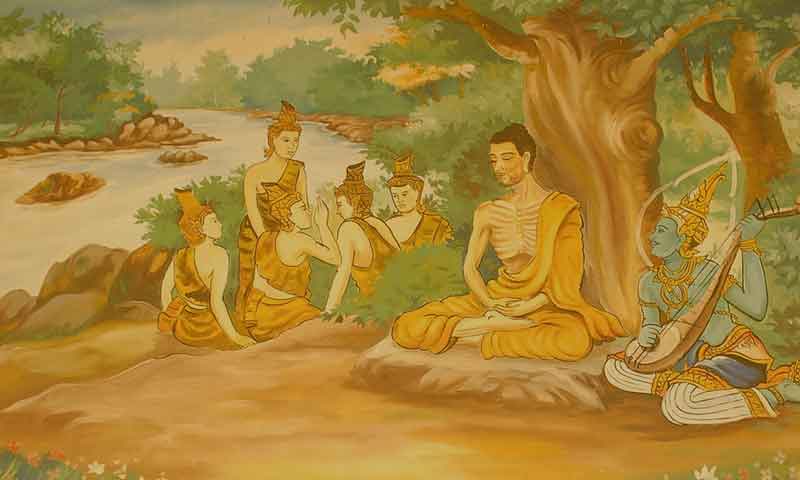
For six years, Gautama practiced several austerities and subjected himself to severe self-mortification. He led a life of hardship, complete fasting and starvation, so much so that his well groomed body was reduced to a heap of bones and skin without any flesh in between. He lost the vigor of youth and the strength to perform even ordinary tasks. Because of terrible weakness and complete exhaustion one day he fell unconscious.
When he came out of unconscious state, he felt that he was pursuing a wrong path. He became convinced that he would not get enlightenment and final liberation through a weak body that had lost its strength. He decided to leave the austere life behind and go to near by villages to beg food and strengthen his body again. A village girl by name Sujata said to have served him with milk-rice during this period, thereby ending the six-year period of his severe fasting.
The five monks who were with him till then were not happy with the change they noticed in Gautama. They wondered how Gautama who was unable to get enlightenment even after six years of severe austerities would achieve liberation if he started begging and eating ordinary food. They left him alone and went away to Isipitana, a place that was in the suburbs of ancient Varanasi.
The Buddha, the Enlightened One
After they deserted him, Gautama spent some time alone in the forest contemplating the further course of action he was to take. His initial failure only strengthened his resolve to seek enlightenment. He decided not leave the place till he got the knowledge he wanted. Thus resolved, he sat under a bodhi tree and practiced deep meditation for several days. Legend has it that during this period he was subjected to many temptations by the deceitful Mara, but no amount of trickery could defeat his purpose and resolve.
Finally, after several days, one day, "when the sun was yet above the horizon", he received the answers he was searching for and received enlightenment. He entered the stage of Nirvana and became the Buddha or "the Knower".
Next >> Page 1 | Page 2 |
Suggestions for Further Reading
- Buddhism - The Concept of Anatta or No Self
- Anatta or Anatma in Buddhism
- Anicca or Anitya in Buddhism
- The Buddha on God
- The Buddha on Avijja or Ignorance and on the Origin of Life
- The Buddha On the Self And Anatta, the Not-Self
- History Of The Four Buddhist Councils
- Chinese Buddhism
- The Eightfold Path Of Buddhism
- The Four Noble Truths of Buddhism
- Four Stages of Progress on the Middle Way in Buddhism
- The Practice of Friendliness, Kalyanamittata, in Buddhism
- Karma or Kamma In Buddhism
- Mahayana Buddhism
- Buddha's Last Days and Final Words
- Buddhism - The Middle Way
- The Buddha's Teaching on Right Mindfulness
- The Meaning and Practice of Mindfulness
- Buddhism - Vinaya or Monastic Discipline
- Right Conduct For Lay Buddhists
- Nirvana or Nibbana in Buddhism
- Buddhism - Objects of Meditation and Subjects for Meditation
- Buddhism - Right Speech and Mind Training
- Buddhism - Right Living On The Eightfold Path
- Handbook for the Relief of Suffering by Ajaan Lee
- Theravada Buddhism
- Meat Eating or Vegetarianism in Buddhism
- Essays On Dharma
- Esoteric Mystic Hinduism
- Introduction to Hinduism
- Hindu Way of Life
- Essays On Karma
- Hindu Rites and Rituals
- The Origin of The Sanskrit Language
- Symbolism in Hinduism
- Essays on The Upanishads
- Concepts of Hinduism
- Essays on Atman
- Hindu Festivals
- Spiritual Practice
- Right Living
- Yoga of Sorrow
- Happiness
- Mental Health
- Concepts of Buddhism
- General Essays
Image Attribution: The images of the Buddha used in this article are either in public domain or licensed under the Creative Commons Attribution-Share Alike 3.0 Unported license.