
Meditation on Anicca or Impermanence in Buddhism
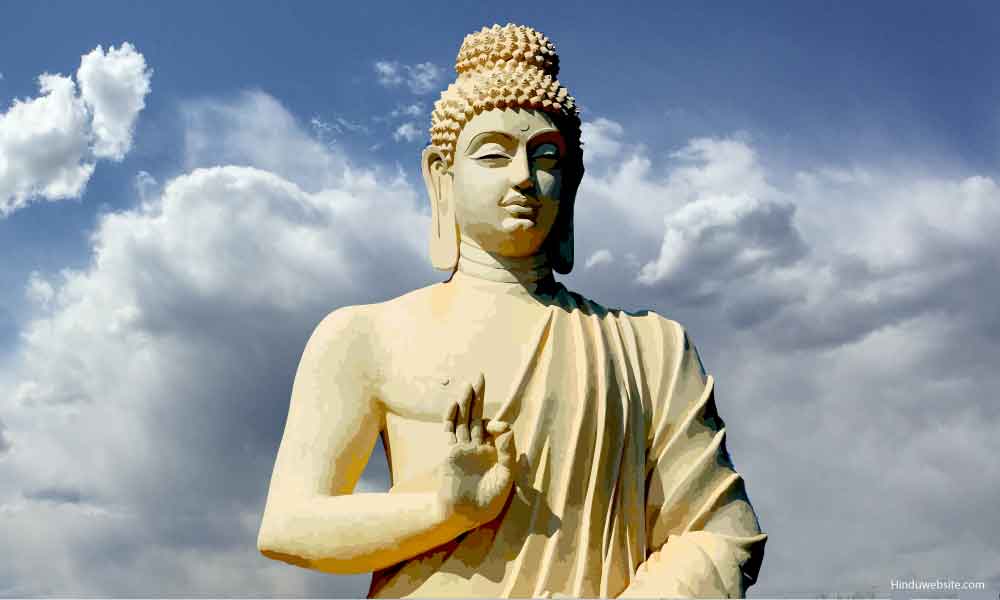
Anicca, Dukkha, Anatta — Impermanence, suffering and Egolessness — are the three essential characteristics of things in the Teaching of the Buddha. If you know Anicca correctly, you will know Dukkha as its corollary and Anatta as ultimate truth. It takes time to understand the three together.
Impermanence (anicca) is, of course, the essential fact which must be first experienced and understood by practice. Mere book-knowledge of the Buddha-Dhamma will not be enough for the correct understanding of Anicca because the experiential aspect will be missing. It is only through experiential understanding of the nature of Anicca as an ever-changing process within you that you can understand Anicca in the way the Buddha would like you to understand it. As in the days of the Buddha, so too now, this understanding of Anicca can be developed by persons who have no book-knowledge whatsoever of Buddhism.
To understand Impermanence (anicca) one must follow strictly and diligently the Eightfold Noble Path, which is divided into the three groups of Sila, Samadhi and Pañña — Morality, Concentration and Wisdom. Sila, or virtuous living, is he basis for Samadhi, control of the mind leading to one-pointedness. It is only when Samadhi is good that one can develop Pañña. Therefore, Sila and Samadhi are the prerequisites for Pañña. By Pañña is meant the understanding of Anicca, Dukkha and Anatta through the practice of Vipassana, i.e., insight meditation.
Whether a Buddha has arisen or not, the practice of Sila and Samadhi may be present in the human world. They are, in fact, the common denominators of all religious faiths. They are not, however, sufficient means for the goal of Buddhism — the complete end of suffering. In his search for the end of suffering, Prince Siddhattha, the future Buddha, found this out and worked his way through to find the path which would lead to the end of suffering. After solid work for six years, he found the way out, became completely enlightened, and then taught men and gods to follow the Path which would lead them to the end of suffering.
In this connection we should understand that each action — whether by deed, word or thought — leaves behind an active force called "Sankhara" (or "kamma" in popular terminology), which goes to the credit or debit account of the individual, according to whether the action is good or bad. There is, therefore, an accumulation of Sankhara (or Kamma) with everyone, which functions as the supply-source of energy to sustain life, which is inevitably followed by suffering and death. It is by the development of the power inherent in the understanding of Anicca, Dukkha and Anatta, that one is able to rid oneself of the Sankhara accumulated in ones own personal account.
This process begins with the correct understanding of Anicca, while further accumulations of fresh actions and the reduction of the supply of energy to sustain life are taking place simultaneously, from moment to moment and from day to day. It is, therefore, a matter of a whole lifetime or more to get rid of all one's Sankhara. He who has rid himself of all Sankhara comes to the end of suffering, for then no Sankhara remains to give the necessary energy to sustain him in any form of life. On the termination of their lives the perfected saints, i.e., the Buddhas and arahants, pass into Parinibbana, reaching the end of suffering. For us today who take to Vipassana Meditation, it would suffice if we can understand Anicca well enough to reach the first stage of an Ariya (a Noble person), that is, a Sotapanna or stream-enterer, who will not take more than Seven lives to come to the end of suffering.
The fact of Anicca, which opens the door to the understanding of Dukkha and Anatta and eventually to the end of suffering, can be encountered in its full significance only through the Teachings of a Buddha, for so long as that Teaching relating to the Eightfold Noble Path and the Thirty-Seven Factors of Enlightenment (bodhipakkhiya dhamma) remains intact and available to the aspirant.
For progress in Vipassana Meditation, a student must keep knowing Anicca as continuously as possible. The Buddha's advice to monks is that they should try to maintain the awareness of Anicca, Dukkha or Anatta in all postures, whether sitting, standing, walking or lying down. Continuous awareness of Anicca and so of Dukkha and Anatta, is the secret of success. The last words of the Buddha just before He breathed His last and passed away into Maha-parinibbana were: "Decay (or Anicca) is inherent in all component things. Work out your own salvation with diligence." This is in fact the essence of all His teachings during the forty-five years of His ministry. If you will keep up the awareness of the Anicca that is inherent in all component things, you are sure to reach the goal in the course of time.
As you develop in the understanding of Anicca, your insight into "What is true of nature" will become greater and greater, so much so that eventually you will have no doubt whatsoever of the three characteristics of Anicca, Dukkha and Anatta. It is then only that you will be in a position to go ahead for the goal in view. Now that you know Anicca as the first essential factor, you would try to understand what Anicca is with real clarity as extensively as possible so as not to get confused in the course of practice or discussion.
The real meaning of Anicca is that Impermanence or Decay is the inherent nature of everything that exists in the Universe — whether animate or inanimate. The Buddha taught His disciples that everything that exists at the material level is composed of "Kalapas." Kalapas are material units very much smaller than atoms, which die out immediately after they come into being. Each kalapa is a mass formed of the eight basic constituents of matter, the solid, liquid, calorific and oscillatory, together with color, smell, taste, and nutriment. The first four are called primary qualities, and are predominant in a kalapa. The other four are subsidiaries, dependent upon and springing from the former. A kalapa is the minutest particle in the physical plane — still beyond the range of science today. It is only when the eight basic material constituents unite together that the kalapa is formed. In other words, the momentary collocation of these eight basic elements of behavior makes a man just for that moment, which in Buddhism is known as a kalapa. The life-span of a kalapa is termed a moment, and a trillion such moments are said to elapse during the wink of a man's eye. These kalapas are all in a state of perpetual change or flux. To a developed student in Vipassana Meditation they can be felt as a stream of energy.
The human body is not, as it may appear, a solid stable entity, but a continuum of matter (rupa) co-existing with mentality (nama). To know that our very body is tiny kalapas all in a state of change is to know the true nature of change or decay. This change or decay (anicca) occasioned by the continual breakdown and replacement of kalapas, all in a state of combustion, must necessarily be identified as Dukkha, the truth of suffering. It is only when you experience impermanence (anicca) as suffering (dukkha) that you come to the realization of the truth of suffering, the first of the Four Noble Truths basic to the doctrine of the Buddha. Why? Because when you realize the subtle nature of Dukkha from which you cannot escape for a moment, you become truly afraid of, disgusted with, and disinclined towards your very existence as mentality-materiality (namarupa), and look for a way of escape to a state beyond Dukkha, and so to Nibbana, the end of suffering. What that end of suffering is like, you will be able to taste, even as a human being, when you reach the level of sotapanna, a stream-enterer, and develop well enough by practice to attain to the unconditioned state of Nibbana, the Peace within. But even in terms of everyday, ordinary life, no sooner than you are able to keep up the awareness of Anicca in practice will you know for yourself that a change is taking place in you for the better, both physically and mentally.
Before entering upon the practice of Vipassana Meditation, that is, after Samadhi has been developed to a proper level, a student should acquaint himself with the theoretical knowledge of material and mental properties, i.e., of Rupa and Nama. For in Vipassana Meditation one contemplates not only the changing nature of matter, but also the changing nature of mentality, of the thought-elements of attention directed towards the process of change going on within matter. At times the attention will be focused on the impermanence of the material side of existence, i.e., upon Anicca in regard to Rupa, and at other times on the impermanence of the thought-elements or mental side, i.e., upon Anicca in regard to Nama. When one is contemplating the impermanence of matter, one realizes also that the thought-elements simultaneous with that awareness are also in a state of transition or change. In this case one will be knowing Anicca in regard to both Rupa and Nama together.
All I have said so far relates to the understanding of Anicca through bodily feelings of the process of change of Rupa or matter, and also of thought-elements depending upon such changing processes. You should know that Anicca can also be understood through other types of feeling as well. Anicca can be contemplated through feeling:
(i) by contact of visible form with the sense organ of the eye;
(ii) by contact of sound with the sense organ of the ear;
(iii) by contact of smell with the sense organ of the nose;
(iv) by contact of taste with the sense organ of the tongue;
(v) by contact of touch with the sense organ of the body;
(vi) and by contact of mental objects with the sense organ of the mind.
Once can thus develop the understanding of Anicca through any of six sense organs. In practice, however, we have found that of all the types of feeling, the feeling by contact of touch with the component parts of the body in a process of change covers the widest area for introspective meditation. Not only that, the feelings by contact of touch (by way of friction, radiation and vibration of the kalapas within) with the component parts of the body is more evident than other types of feeling and therefore a beginner in Vipassana Meditation can come to the understanding of Anicca more easily through bodily feelings of the change of Rupa or matter. This is the main reason why we have chosen bodily feeling as a medium for quick understanding of Anicca. It is open to anyone to try other means, but my suggestion is that one should be well-established in the understanding of Anicca through bodily feeling before any attempt is made through other types of feeling.
There are ten levels of knowledge in Vipassana, namely:
(i) Sammasana: theoretical appreciation of Anicca, Dukkha and Anatta by close observation and analysis.
(ii) Udayabbaya: knowledge of the arising and dissolution of Rupa and Nama by direct observation.
(iii) Bhanga: knowledge of the rapidly changing nature of Rupa and Nama as a swift current or stream of energy; in particular, clear awareness of the phase of dissolution.
(iv) Bhaya: knowledge that this very existence is dreadful.
(v) Adinava: knowledge that this very existence is full of evils.
(vi) Nibbida: knowledge that this very existence is disgusting.
(vii) Muncitukamyata: knowledge of the urgent need and wish to escape from this very existence.
(viii) Patisankha: knowledge that the stage is now set to get detached from all conditioned phenomena (sankhara) and to break away from egocentricity.
(x) Anuloma: knowledge that would accelerate the attempt to reach the goal.
These are the levels of attainment which one goes through during the course of Vipassana Meditation; in the case of those who reach the goal in a short time they can be known only in retrospect. Along with one's progress in understanding Anicca, one may reach these levels of attainment, subject, however, to adjustments or help at certain levels by a competent teacher. One should avoid looking forward to such attainments in anticipation, as this will distract from the continuity of awareness of Anicca, which alone can and will give the desired reward.
Let me now deal with Vipassana Meditation from the point of view of a householder in everyday life and explain the benefit one can derive from it — here and now — in this very lifetime.
The initial object of Vipassana Meditation is to activate the experience of Anicca in oneself and to eventually reach a state of inner and outer calmness and balance. This is achieved when one becomes engrossed in the feeling of Anicca within. The world is now facing serious problems which threaten all mankind. It is just the right time for everyone to take to Vipassana Meditation and learn how to find a deep pool of quiet in the midst of all that is happening today. Anicca is inside of everybody. It is within reach of everybody. Just a look into oneself and there it is — Anicca to be experienced. When one can feel Anicca, when one can experience Anicca, and when one can become engrossed in Anicca, one can at will cut oneself off from the world of ideation outside. Anicca is, for the householder, the gem of life which he will treasure to create a reservoir of calm and balanced energy for his own well-being and for the welfare of the society.
The experience of Anicca, when properly developed, strikes at the root of ones physical and mental ills and removes gradually whatever is bad in him, i.e., the causes of such physical and mental ills. This experience is not reserved for men who have renounced the world for the homeless life. It is for the householder as well. In spite of drawbacks which make a householder restless in these days, a competent teacher or guide can help a student to get the experience of Anicca activated in a comparatively short time. Once he has got it activated, all that is necessary is for him to try and preserve it; but he must make it a point, as soon as time or opportunity presents itself for further progress, to work for the stage of Bhangañana — the third level of knowledge in Vipassana. If he reaches this level, there will be little or no problem because he should then be able to experience Anicca without much ado and almost automatically. In this case Anicca will become his base, to which all his physical and mental activities return as soon as the domestic needs of daily life for such activities are over. However, there is likely to be some difficulty for one who has not reached the stage of Bhanga. It will be just like a tug-of-war for him between Anicca within, and physical and mental activities outside. So it would be wise for him to follow the motto of work while you work, play while you play. There is no need for him to be activating the experience of Anicca all the time. It should suffice if this could be confined to a regular period, or periods, set apart in the day or night for the purpose. During this time, at least, an attempt must be made to keep the attention focused inside the body, with awareness devoted exclusively to Anicca; that is to say, his awareness of Anicca should go on from moment to moment so continuously as not to allow for the interpolation of any discursive or distracting thoughts which are definitely detrimental to progress. In case this is not possible, he will have to go back to respiration-mindfulness, because Samadhi is the key to the contemplation of Anicca. To get good Samadhi, Sila (morality) has to be perfect, since Samadhi is build upon Sila. For a good experience of Anicca, Samadhi must be good. If Samadhi is excellent awareness of Anicca will also become excellent. There is no special technique for activating the experience of Anicca other than the use of the mind, adjusted to a perfect state of balance, and attention projected upon the object of meditation. In Vipassana the object of meditation is Anicca, and therefore in the case of those used to focusing their attention on bodily feelings, they can feel Anicca directly. In experiencing Anicca in relation to the body, it should first be in the area where one can easily get his attention engrossed, changing the area of attention from place to place, from head to feet and from feet to head, at times probing into the interior. At this stage, it must clearly be understood that no attention is to be paid to the anatomy of the body, but to the formations of matter — the kalapas — and the nature of their constant change.
If these instructions are observed, there will surely be progress, but the progress depends also on Parami (i.e., on one's dispositions for certain spiritual (qualities) and the devotion of the individual to the work of meditation. If he attains high levels of knowledge, his power to understand the three characteristics of Anicca, Dukkha and Anatta will increase and he will accordingly come nearer and nearer to the goal of the Ariya or noble saint, which every householder should keep in view.
This is the age of science. Man of today has no Utopia. He will not accept anything unless the results are good, concrete, vivid, personal, and here-and-now. When the Buddha was alive, He said to the Kalamas:
Now look, you Kalamas. Be not misled by report or tradition or hearsay. Be not misled by proficiency in the scriptural collections, or by reasoning or logic or reflection on and approval of some theory, or because some view conforms with one's inclinations, or out of respect for prestige of a teacher. But when you know for yourselves: these things are unwholesome, these things are blameworthy, these things are censured by the wise; these things when practiced and observed, conduce to loss and sorrow — then you reject them. But if at any time you know for yourselves: these things are wholesome, these things are blameless, these things are praised by the intelligent; these things, when practiced and observed, conduce to welfare and happiness, then, Kalamas, do ye, having practiced them, abide.
The time-clock of Vipassana has now struck — that is for the revival of Buddha-Dhamma Vipassana in practice. We have no doubt whatsoever that definite results would accrue to those who would with an open mind sincerely undergo a course of training under a competent teacher — I mean results which will be accepted as good, concrete, vivid, personal, here-and-now, results which will keep them in good stead and in a state of well-being and happiness for the rest of their lives.
May all beings be happy and may Peace prevail in the world.
Suggestions for Further Reading
- Buddhism - The Concept of Anatta or No Self
- Anatta or Anatma in Buddhism
- Anicca or Anitya in Buddhism
- The Buddha on God
- The Buddha on Avijja or Ignorance and on the Origin of Life
- The Eightfold Path Of Buddhism
- The Four Noble Truths of Buddhism
- Buddhism - Right Living On The Eightfold Path
- Handbook for the Relief of Suffering by Ajaan Lee
- Meat Eating or Vegetarianism in Buddhism
- The Agendas of Mindfulness
- Meditation on Anicca or Impermanence in Buddhism
- A Sketch of the Buddha's Life
- What is Ignorance And Cessation Of Ignorance
- The Meaning of the Buddha's Awakening
- Basic Breath Meditation Practice
- Buddha's Teachings on Kamma or Karma
- Affinities Of Buddhism And Christianity
- Death and Dying in Buddhism
- Buddhism In A Nutshell
- The Buddha on Ignorance or Avijja
- Dhamma for Everyone by Ajaan Lee Dhammadharo
- Advaita Vedanta and Buddhism
- Four Discourses of the Buddha on Everyman's Ethics
- The Five Aggregates A Study Guide
- The Healing Power of the Five Buddhist Percepts
- The Working of Maya or Illusion - A Buddhist Perspective
- Buddhism - Kamma (Karma) and its Fruit
- Buddhism - Kamma (Karma) A Study Guide
- Buddhism - Living the Dhamma A Practice Guide
- What Anatta or No-Self is All About
- Buddhism - The Middle Way
- The Buddhist Monastic Code, Dhamma-Vinaya
- Nibbana, or Nivranva in Buddhsim
- Why The Buddha Taught the Anatta or Not-Self Doctrine
- The Status of Women in Buddhist Societies
- Buddhism - The Practice of Loving-Kindness (Metta)
- Buddhism - Does Rebirth Make Sense
- Buddhism - Right Concentration
- Buddhism - Intentions and Nirvana
- The Round of Rebirth - Samsara
- The Role of Samavega in Buddhism
- The Chaos Theory and Nirvana in Buddhism
- A Christian's Journey Into Buddhism
- A Simple Guide to Buddhism
- Buddhist Cosmology - The Thirty one Realms of Existence
- Buddhism and the concept of renunciation
- Sankharas (Samskaras) in Buddhism
- Vedanta and Buddhism A Comparative Study
- Buddhism - Vipansana or Insight Meditation
- The Right Approach To End Suffering in Buddhismm
- Essays On Dharma
- Esoteric Mystic Hinduism
- Introduction to Hinduism
- Hindu Way of Life
- Essays On Karma
- Hindu Rites and Rituals
- The Origin of The Sanskrit Language
- Symbolism in Hinduism
- Essays on The Upanishads
- Concepts of Hinduism
- Essays on Atman
- Hindu Festivals
- Spiritual Practice
- Right Living
- Yoga of Sorrow
- Happiness
- Mental Health
- Concepts of Buddhism
- General Essays
Source: Copyright © 1981 Buddhist Publication Society - Source: The Wheel Publication No. 231 (Kandy: Buddhist Publication Society, 1981). Transcribed from the print edition in 1995 by Tom Fitton under the auspices of the DharmaNet Dharma Book Transcription Project, with the kind permission of the Buddhist Publication Society. For free distribution. This work may be republished, reformatted, reprinted, and redistributed in any medium. It is the author's wish, however, that any such republication and redistribution be made available to the public on a free and unrestricted basis and that translations and other derivative works be clearly marked as such.