
A Sketch of the Buddha's Life
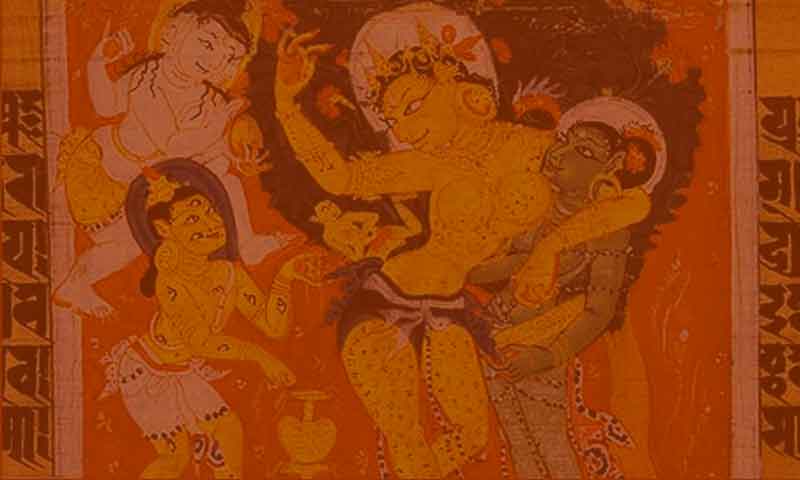
The Miraculous Birth of the Buddha
Indeed, the Blessed One is worthy and rightly self-awakened, consummate in knowledge & conduct, well-gone, an expert with regard to the world, unexcelled as a trainer for those people fit to be tamed, the Teacher of divine & human beings, awakened, blessed." — AN XI.12
This selection of excerpts from the Pali Canon provides a rough outline of the life of the Buddha. I hope you will find enough in this anthology to gain at least an inkling both of the range of the Buddha's teachings and of the sweeping trajectory of his extraordinary life.
For more thorough accounts of the Buddha's life, please see these two excellent anthologies: The Splendour of Enlightenment: A Life of the Buddha (two volumes), compiled by Phra Khantipalo (Bangkok: Mahamakut Rajavidyalaya Press, 1976), and The Life of the Buddha by Bhikkhu Ñanamol (Kandy: Buddhist Publication Society, 1992).
Contents
- The Bodhisatta (Buddha-to-be)
- The Awakening
- After the Awakening
- Setting the Wheel of Dhamma in Motion
- Forty-five years of teaching
- The Buddha's last days
- Postscript: Many names for the Buddha
The Bodhisatta (Buddha-to-be)
![[go to top]](../images/scrollup.gif)
Asita, the seer, visits the newborn prince
[Date: -80 BE]
Asita the seer, in his mid-day meditation,
saw the devas of the Group of Thirty
— exultant, ecstatic —
dressed in pure white, honoring Indra,
holding up banners, cheering wildly,
& on seeing the devas so joyful & happy,
having paid his respects, he said:
"Why is the deva community
so wildly elated?
Why are they holding up banners
& waving them around?
Even after the war with the Asuras
— when victory was the devas',
the Asuras defeated —
even then there was no excitement like this.
Seeing what marvel
are the devas so joyful?
They shout,
they sing,
play music,
clap their hands,
dance.
So I ask you, who live on Mount Meru's summit.
Please dispel my doubt quickly, dear sirs."
"The Bodhisatta, the foremost jewel,
unequaled,
has been born for welfare & ease
in the human world,
in a town in the Sakyan countryside,
Lumbini.
That's why we're all so wildly elated.
He, the highest of all beings,
the ultimate person,
a bull among men, foremost of all people,
will set turning the Wheel [of Dhamma]
in the grove named after the seers,
like a strong, roaring lion,
the conqueror of beasts."
Hearing these words,
Asita quickly descended [from heaven]
and went to Suddhodana's dwelling.
There, taking a seat, he said to the Sakyans:
"Where is the prince?
I, too, want to see him."
The Sakyans then showed
to the seer named Asita
their son, the prince,
like gold aglow,
burnished by a most skillful smith
in the mouth of the furnace,
blazing with glory, flawless in color.
On seeing the prince blazing like flame,
pure like the bull of the stars
going across the sky
— the burning sun,
released from the clouds of autumn —
he was exultant, filled with abundant rapture.
The devas held in the sky
a many-spoked sunshade
of a thousand circles.
Gold-handled whisks
waved up & down,
but those holding the whisks & the sunshade
couldn't be seen.
The matted-haired seer
named Dark Splendor,
seeing the boy, like an ornament of gold
on the red woolen blanket,
a white sunshade held over his head,
received him, happy & pleased.
And on receiving the bull of the Sakyans,
longingly, the master of mantras & signs
exclaimed with a confident mind:
"This one is unsurpassed,
the highest of the biped race."
Then, foreseeing his own imminent departure,
he, dejected, shed tears.
On seeing him weeping,
the Sakyans asked:
"But surely there will be
no danger for the prince?"
On seeing the Sakyans' concern
he replied, "I foresee for the prince
no harm.
Nor will there be any danger for him.
This one isn't lowly: be assured.
This prince will touch
the ultimate self-awakening.
He, seeing the utmost purity,
will set rolling the Wheel of Dhamma
through sympathy for the welfare of many.
His holy life will spread far & wide.
But as for me,
my life here has no long remainder;
my death will take place before then.
I won't get to hear
the Dhamma of this one with the peerless role.
That's why I'm stricken,
afflicted, & pained."
— Snp III.11
The young prince grows disenchanted with his life of luxury
"Monks, I lived in refinement, utmost refinement, total refinement. My father even had lotus ponds made in our palace: one where red-lotuses bloomed, one where white lotuses bloomed, one where blue lotuses bloomed, all for my sake. I used no sandalwood that was not from Varanasi. My turban was from Varanasi, as were my tunic, my lower garments, & my outer cloak. A white sunshade was held over me day & night to protect me from cold, heat, dust, dirt, & dew.
"I had three palaces: one for the cold season, one for the hot season, one for the rainy season. During the four months of the rainy season I was entertained in the rainy-season palace by minstrels without a single man among them, and I did not once come down from the palace. Whereas the servants, workers, & retainers in other people's homes are fed meals of lentil soup & broken rice, in my father's home the servants, workers, & retainers were fed wheat, rice, and meat.
"Even though I was endowed with such fortune, such total refinement, the thought occurred to me: 'When an untaught, run-of-the-mill person, himself subject to aging, not beyond aging, sees another who is aged, he is horrified, humiliated, & disgusted, oblivious to himself that he too is subject to aging, not beyond aging. If I — who am subject to aging, not beyond aging — were to be horrified, humiliated, & disgusted on seeing another person who is aged, that would not be fitting for me.' As I noticed this, the [typical] young person's intoxication with youth entirely dropped away.
"Even though I was endowed with such fortune, such total refinement, the thought occurred to me: 'When an untaught, run-of-the-mill person, himself subject to illness, not beyond illness, sees another who is ill, he is horrified, humiliated, & disgusted, oblivious to himself that he too is subject to illness, not beyond illness. And if I — who am subject to illness, not beyond illness — were to be horrified, humiliated, & disgusted on seeing another person who is ill, that would not be fitting for me.' As I noticed this, the healthy person's intoxication with health entirely dropped away.
"Even though I was endowed with such fortune, such total refinement, the thought occurred to me: 'When an untaught, run-of-the-mill person, himself subject to death, not beyond death, sees another who is dead, he is horrified, humiliated, & disgusted, oblivious to himself that he too is subject to death, not beyond death. And if I — who am subject to death, not beyond death — were to be horrified, humiliated, & disgusted on seeing another person who is dead, that would not be fitting for me.' As I noticed this, the living person's intoxication with life entirely dropped away." — AN III.38
At age 29, the young prince goes forth into homelessness
[Date: -51 BE]
"Before my Awakening, when I was still an unawakened Bodhisatta, the thought occurred to me: 'The household life is crowded, a dusty road. Life gone forth is the open air. It isn't easy, living in a home, to lead the holy life that is totally perfect, totally pure, a polished shell. What if I, having shaved off my hair & beard and putting on the ochre robe, were to go forth from the home life into homelessness?'
"So at a later time, when I was still young, black-haired, endowed with the blessings of youth in the first stage of life, having shaved off my hair & beard — though my parents wished otherwise and were grieving with tears on their faces — I put on the ochre robe and went forth from the home life into homelessness." — MN 36
Passers-by take notice of his serene radiance and mindfulness
On going forth,
he avoided evil deeds in body.
Abandoning verbal misconduct,
he purified his livelihood.
Then he, the Buddha, went to Rajagaha,
the mountain fortress of the Magadhans,
and wandered for alms,
endowed with all the foremost marks.
King Bimbisara, standing in his palace, saw him,
and on seeing him, consummate in marks,
said: "Look at this one, sirs.
How handsome, stately, pure!
How consummate his demeanor!
Mindful, his eyes downcast,
looking only a plow-length before him,
as one who's not from a lowly lineage:
Send the royal messengers at once
to see where this monk will go."
They — the messengers dispatched —
followed behind him.
"Where will this monk go?
Where will his dwelling place be?"
As he went from house to house —
well-restrained, his sense-doors guarded,
mindful, alert —
his bowl filled quickly.
Then he, the sage, completing his alms round,
left the city, headed for Mount Pandava.
"That's where his dwelling will be."
Seeing him go to his dwelling place,
three messengers sat down,
while one returned to tell the king.
"That monk, your majesty,
on the flank of Pandava,
sits like a tiger, a bull,
a lion in a mountain cleft."
— Snp III.1
A king wonders: "Why have you gone forth?"
Hearing the messenger's words,
the noble warrior king
straight away went by royal coach,
out to Mount Pandava.
Going as far as the coach would go,
he got down, went up on foot,
and on arrival sat down.
Sitting there,
he exchanged courteous greetings,
then said:
"You are young, youthful,
in the first stage of youth,
endowed with the stature & coloring
of a noble-warrior.
You would look glorious
in the vanguard of an army,
arrayed with an elephant squadron.
I offer you wealth : enjoy it.
I ask your birth : inform me."
"Straight ahead, your majesty,
by the foothills of the Himalayas,
is a country consummate
in energy & wealth,
inhabited by Kosalans:
Solar by clan,
Sakyans by birth.
From that lineage I have gone forth,
but not in search of sensual pleasures.
Seeing the danger in sensual pleasures
— and renunciation as rest —
I go to strive.
That's where my heart delights."
— Snp III.1
The Bodhisatta soon surpasses the accomplishments of his teachers
"Having gone forth in search of what might be skillful, seeking the unexcelled state of sublime peace, I went to Alara Kalama and, on arrival, said to him: 'Frind Kalama, I want to practice in this doctrine & discipline.'
"When this was said, he replied to me, 'You may stay here, my friend. This doctrine is such that a wise person can soon enter & dwell in his own teacher's knowledge, having realized it for himself through direct knowledge.'
"It was not long before I learned the doctrine. As far as mere lip-reciting & repetition, I could speak the words of knowledge, the words of the elders, and I could affirm that I knew & saw — I, along with others.
"I thought: 'It isn't through mere conviction alone that Alara Kalama declares, "I have entered & dwell in this Dhamma, having realized it for myself through direct knowledge." Certainly he dwells knowing & seeing this Dhamma.' So I went to him and said, 'To what extent do you declare that you have entered & dwell in this Dhamma?' When this was said, he declared the dimension of nothingness.
"I thought: 'Not only does Alara Kalama have conviction, persistence, mindfulness, concentration, & discernment. I, too, have conviction, persistence, mindfulness, concentration, & discernment. What if I were to endeavor to realize for myself the Dhamma that Alara Kalama declares he has entered & dwells in, having realized it for himself through direct knowledge.' So it was not long before I quickly entered & dwelled in that Dhamma, having realized it for myself through direct knowledge. I went to him and said, 'Friend Kalama, is this the extent to which you have entered & dwell in this Dhamma, having realized it for yourself through direct knowledge?'
"'Yes, my friend...'
"'This, friend, is the extent to which I, too, have entered & dwell in this Dhamma, having realized it for myself through direct knowledge.'
"'It is a gain for us, my friend, a great gain for us, that we have such a companion in the holy life. So the Dhamma I declare I have entered & dwell in, having realized it for myself through direct knowledge, is the Dhamma you declare you have entered & dwell in, having realized it for yourself through direct knowledge. And the Dhamma you declare you have entered & dwell in, having realized it for yourself through direct knowledge, is the Dhamma I declare I have entered & dwell in, having realized it for myself through direct knowledge. The Dhamma I know is the Dhamma you know; the Dhamma you know is the Dhamma I know. As I am, so are you; as you are, so am I. Come friend, let us now lead this community together.'
"In this way did Alara Kalama, my teacher, place me, his pupil, on the same level with himself and pay me great honor. But the thought occurred to me, 'This Dhamma leads not to disenchantment, to dispassion, to cessation, to stilling, to direct knowledge, to Awakening, nor to Unbinding (nibbana), but only to reappearance in the dimension of nothingness.' So, dissatisfied with that Dhamma, I left.
"In search of what might be skillful, seeking the unexcelled state of sublime peace, I went to Uddaka Ramaputta and, on arrival, said to him: 'Friend Uddaka, I want to practice in this doctrine & discipline.'
"When this was said, he replied to me, 'You may stay here, my friend. This doctrine is such that a wise person can soon enter & dwell in his own teacher's knowledge, having realized it for himself through direct knowledge.'
"It was not long before I quickly learned the doctrine. As far as mere lip-reciting & repetition, I could speak the words of knowledge, the words of the elders, and I could affirm that I knew & saw — I, along with others.
"I thought: 'It wasn't through mere conviction alone that Rama declared, "I have entered & dwell in this Dhamma, having realized it for myself through direct knowledge." Certainly he dwelled knowing & seeing this Dhamma.' So I went to Uddaka and said, 'To what extent did Rama declare that he had entered & dwelled in this Dhamma?' When this was said, Uddaka declared the dimension of neither perception nor non-perception.
"I thought: 'Not only did Rama have conviction, persistence, mindfulness, concentration, & discernment. I, too, have conviction, persistence, mindfulness, concentration, & discernment. What if I were to endeavor to realize for myself the Dhamma that Rama declared he entered & dwelled in, having realized it for himself through direct knowledge.' So it was not long before I quickly entered & dwelled in that Dhamma, having realized it for myself through direct knowledge. I went to Uddaka and said, 'Friend Uddaka, is this the extent to which Rama entered & dwelled in this Dhamma, having realized it for himself through direct knowledge?'
"'Yes, my friend...'
"'This, friend, is the extent to which I, too, have entered & dwell in this Dhamma, having realized it for myself through direct knowledge.'
"'It is a gain for us, my friend, a great gain for us, that we have such a companion in the holy life. So the Dhamma Rama declared he entered & dwelled in, having realized it for himself through direct knowledge, is the Dhamma you declare you have entered & dwell in, having realized it for yourself through direct knowledge. And the Dhamma you declare you have entered & dwell in, having realized it for yourself through direct knowledge, is the Dhamma Rama declared he entered & dwelled in, having realized it for himself through direct knowledge. The Dhamma he knew is the Dhamma you know; the Dhamma you know is the Dhamma he knew. As he was, so are you; as you are, so was he. Come friend, lead this community.'
"In this way did Uddaka Ramaputta, my companion in the holy life, place me in the position of teacher and pay me great honor. But the thought occurred to me, 'This Dhamma leads not to disenchantment, to dispassion, to cessation, to stilling, to direct knowledge, to Awakening, nor to Unbinding (nibbana), but only to reappearance in the dimension of neither perception nor non-perception.' So, dissatisfied with that Dhamma, I left." — MN 36
He practices extreme austerities in the forest
"I thought: 'Suppose that I, clenching my teeth and pressing my tongue against the roof of my mouth, were to beat down, constrain, & crush my mind with my awareness.' So, clenching my teeth and pressing my tongue against the roof of my mouth, I beat down, constrained, & crushed by mind with my awareness. Just as a strong man, seizing a weaker man by the head or the throat or the shoulders, would beat him down, constrain, & crush him, in the same way I beat down, constrained, & crushed my mind with my awareness. As I did so, sweat poured from my armpits. And although tireless persistence was aroused in me, and unmuddled mindfulness established, my body was aroused & uncalm because of the painful exertion. But the painful feeling that arose in this way did not invade my mind or remain.
"I thought: 'Suppose I were to become absorbed in the trance of non-breathing.' So I stopped the in-breaths & out-breaths in my nose & mouth. As I did so, there was a loud roaring of winds coming out my earholes, just like the loud roar of winds coming out of a smith's bellows... So I stopped the in-breaths & out-breaths in my nose & mouth & ears. As I did so, extreme forces sliced through my head, just as if a strong man were slicing my head open with a sharp sword... Extreme pains arose in my head, just as if a strong man were tightening a turban made of tough leather straps around my head... Extreme forces carved up my stomach cavity, just as if a butcher or his apprentice were to carve up the stomach cavity of an ox... There was an extreme burning in my body, just as if two strong men, grabbing a weaker man by the arms, were to roast & broil him over a pit of hot embers. And although tireless persistence was aroused in me, and unmuddled mindfulness established, my body was aroused & uncalm because of the painful exertion. But the painful feeling that arose in this way did not invade my mind or remain.
"Devas, on seeing me, said, 'Gotama the contemplative is dead.' Other devas said, 'He isn't dead, he's dying.' Others said, 'He's neither dead nor dying, he's an arahant, for this is the way arahants live.'
"I thought: 'Suppose I were to practice going altogether without food.' Then devas came to me and said, 'Dear sir, please don't practice going altogether without food. If you go altogether without food, we'll infuse divine nourishment in through your pores, and you will survive on that.' I thought, 'If I were to claim to be completely fasting while these devas are infusing divine nourishment in through my pores, I would be lying.' So I dismissed them, saying, 'Enough.'
"I thought: 'Suppose I were to take only a little food at a time, only a handful at a time of bean soup, lentil soup, vetch soup, or pea soup.' So I took only a little food at a time, only handful at a time of bean soup, lentil soup, vetch soup, or pea soup. My body became extremely emaciated. Simply from my eating so little, my limbs became like the jointed segments of vine stems or bamboo stems... My backside became like a camel's hoof... My spine stood out like a string of beads... My ribs jutted out like the jutting rafters of an old, run-down barn... The gleam of my eyes appeared to be sunk deep in my eye sockets like the gleam of water deep in a well... My scalp shriveled & withered like a green bitter gourd, shriveled & withered in the heat & the wind... The skin of my belly became so stuck to my spine that when I thought of touching my belly, I grabbed hold of my spine as well; and when I thought of touching my spine, I grabbed hold of the skin of my belly as well... If I urinated or defecated, I fell over on my face right there... Simply from my eating so little, if I tried to ease my body by rubbing my limbs with my hands, the hair — rotted at its roots — fell from my body as I rubbed, simply from eating so little.
"People on seeing me would say, 'Gotama the contemplative is black. Other people would say, 'Gotama the contemplative isn't black, he's brown.' Others would say, 'Gotama the contemplative is neither black nor brown, he's golden-skinned. So much had the clear, bright color of my skin deteriorated, simply from eating so little.
"I thought: 'Whatever priests or contemplatives in the past have felt painful, racking, piercing feelings due to their striving, this is the utmost. None have been greater than this. Whatever priests or contemplatives in the future will feel painful, racking, piercing feelings due to their striving, this is the utmost. None will be greater than this. Whatever priests or contemplatives in the present are feeling painful, racking, piercing feelings due to their striving, this is the utmost. None is greater than this. But with this racking practice of austerities I haven't attained any superior human state, any distinction in knowledge or vision worthy of the noble ones. Could there be another path to Awakening?'" — MN 36
He confronts fear & terror head-on
"I stayed in the sort of places that are awe-inspiring and make your hair stand on end, such as park-shrines, forest-shrines, & tree-shrines. And while I was staying there a wild animal would come, or a bird would make a twig fall, or wind would rustle the fallen leaves. The thought would occur to me: 'Is this that fear & terror coming?' Then the thought occurred to me: 'Why do I just keep waiting for fear? What if I were to subdue fear & terror in whatever state they come?' So when fear & terror came while I was walking back & forth, I would not stand or sit or lie down. I would keep walking back & forth until I had subdued that fear & terror. When fear & terror came while I was standing, I would not walk or sit or lie down. I would keep standing until I had subdued that fear & terror. When fear & terror came while I was sitting, I would not lie down or stand up or walk. I would keep sitting until I had subdued that fear & terror. When fear & terror came while I was lying down, I would not sit up or stand or walk. I would keep lying down until I had subdued that fear & terror." — MN 4
Mara, the personification of evil, pays a visit
"Monks, Mara is continually, ceaselessly, hovering around you, [thinking,] 'Perhaps I'll get an opportunity by means of the eye... the ear... the nose... the tongue... the body. Perhaps I'll get an opportunity by means of the intellect.' Thus, monks, you should dwell with the doors to your senses well-guarded." — SN XXXV.199
To me —
resolute in exertion
near the river Nerañjara,
making a great effort,
doing jhana
to attain security from bondage —
Namuci1 came,
speaking words of compassion:
"You are ashen, thin.
Death is in
your presence.
Death
has 1,000 parts of you.
Only one part
is your life.
Live, good sir!
Life is better.
Alive,
you can do
acts of merit.
Your living the holy life,
performing the fire sacrifice,
will heap up much merit.
What use is exertion to you?
Hard to follow
— the path of exertion —
hard to do, hard
to sustain."
Saying these verses,
Mara stood in the Awakened One's presence.
And to that Mara, speaking thus,
the Blessed One said this:
"Kinsman of the heedless,
Evil One,
come here for whatever purpose:
I haven't, for merit,
even the least bit of need.
Those who have need of merit:
those are the ones
Mara's fit to address.
In me are conviction,
austerity,
persistence,
discernment.
Why, when I'm so resolute
do you petition me
to live?
This wind could burn up
even river currents.
Why, when I'm resolute
shouldn't my blood dry away?
As my blood dries up
gall & phlegm dry up.
As muscles waste away,
the mind grows clearer;
mindfulness, discernment,
concentration stand
more firm.
Staying in this way,
attaining the ultimate feeling,2
the mind has no interest
in sensual passions.
See:
a being's
purity!
Sensual passions are your first army.
Your second is called Discontent.
Your third is Hunger & Thirst.
Your fourth is called Craving.
Fifth is Sloth & Drowsiness.
Sixth is called Terror.
Your seventh is Uncertainty.
Hypocrisy & Stubbornness, your eighth.
Gains, Offerings, Fame, & Status
wrongly gained,
and whoever would praise self
& disparage others.
That, Namuci, is your army,
the Dark One's commando force.
A coward can't defeat it,
but one having defeated it
gains bliss.
Do I carry muñja grass?3
I spit on my life.
Death in battle woud be better for me
than that I, defeated,
survive.
Sinking here, they don't appear,
some priests & contemplatives.
They don't know the path
by which those with good practices
go.
Seeing the bannered force
on all sides —
the troops, Mara
along with his mount —
I go into battle.
May they not budge me
from
my spot.
That army of yours,
that the world with its devas
can't overcome,
I will smash with discernment —
as an unfired pot with a stone.
Making my resolve mastered,
mindfulness well-established,
I will go about, from kingdom to kingdom,
training many disciples.
They — heedful, resolute
doing my bidding —
despite your wishes, will go
where, having gone,
there's no grief."
...
As he was overcome with sorrow,
his lute fell from under his arm.
Then he, the despondent spirit,
right there
disappeared.
— Snp III.2
Notes:
1. Mara 2. The highest equanimity that can be attained through jhana. 3. Muñja grass was the ancient Indian equivalent of a white flag. A warrior expecting that he might have to surrender would take muñja grass into battle with him. If he did surrender, he would lie down with the muñja grass in his mouth. The Buddha, in asking this rhetorical question, is indicating that he is not the type of warrior who would carry muñja grass. If defeated, he would rather die than surrender.
He abandons his austerities
"I thought: 'I recall once, when my father the Sakyan was working, and I was sitting in the cool shade of a rose-apple tree, then — quite withdrawn from sensuality, withdrawn from unskillful mental qualities — I entered & remained in the first jhana: rapture & pleasure born from withdrawal, accompanied by directed thought & evaluation. Could that be the path to Awakening?' Then, following on that memory, came the realization: 'That is the path to Awakening.' I thought: 'So why am I afraid of that pleasure that has nothing to do with sensuality, nothing to do with unskillful mental qualities?' I thought: 'I am no longer afraid of that pleasure that has nothing to do with sensuality, nothing to do with unskillful mental qualities, but it is not easy to achieve that pleasure with a body so extremely emaciated. Suppose I were to take some solid food: some rice & porridge.' So I took some solid food: some rice & porridge. Now five monks had been attending on me, thinking, 'If Gotama, our contemplative, achieves some higher state, he will tell us.' But when they saw me taking some solid food — some rice & porridge — they were disgusted and left me, thinking, 'Gotama the contemplative is living luxuriously. He has abandoned his exertion and is backsliding into abundance.'
"So when I had taken solid food and regained strength, then — quite withdrawn from sensuality, withdrawn from unskillful mental qualities, I entered & remained in the first jhana: rapture & pleasure born from withdrawal, accompanied by directed thought & evaluation. But the pleasant feeling that arose in this way did not invade my mind or remain. With the stilling of directed thought & evaluation, I entered & remained in the second jhana: rapture & pleasure born of composure, unification of awareness free from directed thought & evaluation — internal assurance. But the pleasant feeling that arose in this way did not invade my mind or remain. With the fading of rapture I remained in equanimity, mindful & alert, and physically sensitive of pleasure. I entered & remained in the third jhana, of which the Noble Ones declare, 'Equanimous & mindful, he has a pleasurable abiding.' But the pleasant feeling that arose in this way did not invade my mind or remain. With the abandoning of pleasure & pain — as with the earlier disappearance of elation & distress — I entered & remained in the fourth jhana: purity of equanimity & mindfulness, neither pleasure nor pain. But the pleasant feeling that arose in this way did not invade my mind or remain." — MN 36
The Awakening
[Date: -45 BE]
He finds the Middle Way
"There are these two extremes that are not to be indulged in by one who has gone forth. Which two? That which is devoted to sensual pleasure with reference to sensual objects: base, vulgar, common, ignoble, unprofitable; and that which is devoted to self-affliction: painful, ignoble, unprofitable. Avoiding both of these extremes, the middle way realized by the Tathagata — producing vision, producing knowledge — leads to calm, to direct knowledge, to self-awakening, to Unbinding.
"And what is the middle way realized by the Tathagata that — producing vision, producing knowledge — leads to calm, to direct knowledge, to self-awakening, to Unbinding? Precisely this Noble Eightfold Path: right view, right resolve, right speech, right action, right livelihood, right effort, right mindfulness, right concentration. This is the middle way realized by the Tathagata that — producing vision, producing knowledge — leads to calm, to direct knowledge, to self-awakening, to Unbinding." — SN LVI.11
He penetrates the Three Knowledges
"When the mind was thus concentrated, purified, bright, unblemished, rid of defilement, pliant, malleable, steady, & attained to imperturbability, I directed it to the knowledge of recollecting my past lives. I recollected my manifold past lives, i.e., one birth, two... five, ten... fifty, a hundred, a thousand, a hundred thousand, many eons of cosmic contraction, many eons of cosmic expansion, many eons of cosmic contraction & expansion: 'There I had such a name, belonged to such a clan, had such an appearance. Such was my food, such my experience of pleasure & pain, such the end of my life. Passing away from that state, I re-arose there. There too I had such a name, belonged to such a clan, had such an appearance. Such was my food, such my experience of pleasure & pain, such the end of my life. Passing away from that state, I re-arose here.' Thus I remembered my manifold past lives in their modes & details.
"This was the first knowledge I attained in the first watch of the night. Ignorance was destroyed; knowledge arose; darkness was destroyed; light arose — as happens in one who is heedful, ardent, & resolute. But the pleasant feeling that arose in this way did not invade my mind or remain.
"When the mind was thus concentrated, purified, bright, unblemished, rid of defilement, pliant, malleable, steady, & attained to imperturbability, I directed it to the knowledge of the passing away & reappearance of beings. I saw — by means of the divine eye, purified & surpassing the human — beings passing away & re-appearing, and I discerned how they are inferior & superior, beautiful & ugly, fortunate & unfortunate in accordance with their kamma: 'These beings — who were endowed with bad conduct of body, speech, & mind, who reviled the noble ones, held wrong views and undertook actions under the influence of wrong views — with the break-up of the body, after death, have re-appeared in the plane of deprivation, the bad destination, the lower realms, in hell. But these beings — who were endowed with good conduct of body, speech & mind, who did not revile the noble ones, who held right views and undertook actions under the influence of right views — with the break-up of the body, after death, have re-appeared in the good destinations, in the heavenly world.' Thus — by means of the divine eye, purified & surpassing the human — I saw beings passing away & re-appearing, and I discerned how they are inferior & superior, beautiful & ugly, fortunate & unfortunate in accordance with their kamma.
"This was the second knowledge I attained in the second watch of the night. Ignorance was destroyed; knowledge arose; darkness was destroyed; light arose — as happens in one who is heedful, ardent, & resolute. But the pleasant feeling that arose in this way did not invade my mind or remain.
"When the mind was thus concentrated, purified, bright, unblemished, rid of defilement, pliant, malleable, steady, & attained to imperturbability, I directed it to the knowledge of the ending of the mental fermentations. I discerned, as it was actually present, that 'This is stress... This is the origination of stress... This is the cessation of stress... This is the way leading to the cessation of stress... These are fermentations... This is the origination of fermentations... This is the cessation of fermentations... This is the way leading to the cessation of fermentations.' My heart, thus knowing, thus seeing, was released from the fermentation of sensuality, released from the fermentation of becoming, released from the fermentation of ignorance. With release, there was the knowledge, 'Released.' I discerned that 'Birth is ended, the holy life fulfilled, the task done. There is nothing further for this world.'
"This was the third knowledge I attained in the third watch of the night. Ignorance was destroyed; knowledge arose; darkness was destroyed; light arose — as happens in one who is heedful, ardent, & resolute. But the pleasant feeling that arose in this way did not invade my mind or remain." — MN 36
Supreme Awakening!
Through the round of many births I roamed
without reward,
without rest,
seeking the house-builder.
Painful is birth
again & again.
House-builder, you're seen!
You will not build a house again.
All your rafters broken,
the ridge pole destroyed,
gone to the Unformed, the mind
has come to the end of craving.
— Dhp 153-4
He becomes the Tathagata
"The world has been fully awakened to by the Tathagata. From the world, the Tathagata is disjoined. The origination of the world has been fully awakened to by the Tathagata. The origination of the world has, by the Tathagata, been abandoned. The cessation of the world has been fully awakened to by the Tathagata. The cessation of the world has, by the Tathagata, been realized. The path leading to the cessation of the world has been fully awakened to by the Tathagata. The path leading to the cessation of the world has, by the Tathagata, been developed.
"Whatever in this world — with its devas, Maras, & Brahmas, its generations complete with contemplatives & priests, princes & men — is seen, heard, sensed, cognized, attained, sought after, pondered by the intellect, that has been fully awakened to by the Tathagata. Thus he is called the Tathagata.
"From the night the Tathagata fully awakens to the unsurpassed Right Self-awakening to the night he is totally unbound in the Unbinding property with no fuel remaining, whatever the Tathagata has said, spoken, explained is just so (tatha) and not otherwise. Thus he is called the Tathagata.
"The Tathagata is one who does in line with (tathaa) what he teaches, one who teaches in line with what he does. Thus he is called the Tathagata.
"In this world with its devas, Maras, & Brahmas, its generations complete with contemplatives & priests, princes & men, the Tathagata is the unconquered conqueror, all-seeing, the wielder of power. Thus he is called the Tathagata." — Iti 112
After the Awakening
The Buddha investigates the laws of cause-and-effect
I have heard that on one occasion, when the Blessed One was newly Awakened — staying at Uruvela by the banks of the Nerañjara River in the shade of the Bodhi tree, the tree of Awakening — he sat in the shade of the Bodhi tree for seven days in one session, sensitive to the bliss of release. At the end of seven days, after emerging from that concentration, in the third watch of the night, he gave close attention to dependent co-arising in forward and reverse order, thus:
When this is, that is.
From the arising of this comes the arising of that.
When this isn't, that isn't.
From the cessation of this comes the cessation of that.
In other words:
From ignorance as a requisite condition come fabrications. From fabrications as a requisite condition comes consciousness. From consciousness as a requisite condition comes name-and-form. From name-and-form as a requisite condition come the six sense media. From the six sense media as a requisite condition comes contact. From contact as a requisite condition comes feeling. From feeling as a requisite condition comes craving. From craving as a requisite condition comes clinging/sustenance. From clinging/sustenance as a requisite condition comes becoming. From becoming as a requisite condition comes birth. From birth as a requisite condition, then old age and death, sorrow, lamentation, pain, distress, and despair come into play. Such is the origination of this entire mass of stress and suffering.
Now from the remainderless fading and cessation of that very ignorance comes the cessation of fabrications. From the cessation of fabrications comes the cessation of consciousness. From the cessation of consciousness comes the cessation of name-and-form. From the cessation of name-and-form comes the cessation of the six sense media. From the cessation of the six sense media comes the cessation of contact. From the cessation of contact comes the cessation of feeling. From the cessation of feeling comes the cessation of craving. From the cessation of craving comes the cessation of clinging/sustenance. From the cessation of clinging/sustenance comes the cessation of becoming. From the cessation of becoming comes the cessation of birth. From the cessation of birth, then old age and death, sorrow, lamentation, pain, distress, and despair all cease. Such is the cessation of this entire mass of stress and suffering.
Then, on realizing the significance of that, the Blessed One on that occasion exclaimed:
As phenomena grow clear
to the brahman — ardent, absorbed —
he stands, routing the troops of Mara,
like the sun that illumines
the sky.
— Ud I.3
He wonders: Whom should I revere as my teacher?
I have heard that on one occasion, when the Blessed One was newly Self-awakened, he was staying at Uruvela on the bank of the Nerañjara River, at the foot of the Goatherd's Banyan Tree. Then, while he was alone and in seclusion, this line of thinking arose in his awareness: "One suffers if dwelling without reverence or deference. Now on what priest or contemplative can I dwell in dependence, honoring and respecting him?"
Then the thought occurred to him: "It would be for the sake of perfecting an unperfected aggregate of virtue that I would dwell in dependence on another priest or contemplative, honoring and respecting him. However, in this world with its devas, Maras, & Brahmas, in this generation with its priests and contemplatives, its royalty and common-folk, I do not see another priest or contemplative more consummate in virtue than I, on whom I could dwell in dependence, honoring and respecting him.
"It would be for the sake of perfecting an unperfected aggregate of concentration...
"It would be for the sake of perfecting an unperfected aggregate of discernment...
"It would be for the sake of perfecting an unperfected aggregate of release...
"It would be for the sake of perfecting an unperfected aggregate of knowledge and vision of release that I would dwell in dependence on another priest or contemplative, honoring and respecting him. However, in this world with its devas, Maras, & Brahmas, in this generation with its priests and contemplatives, its royalty and common-folk, I do not see another priest or contemplative more consummate in knowledge and vision of release than I, on whom I could dwell in dependence, honoring and respecting him.
"What if I were to dwell in dependence on this very Dhamma to which I have fully awakened, honoring and respecting it?"
Then, having known with his own awareness the line of thinking in the Blessed One's awareness — just as a strong man might extend his flexed arm or flex his extended arm — Brahma Sahampati disappeared from the Brahma-world and reappeared in front of the Blessed One. Arranging his upper robe over one shoulder, he saluted the Blessed One with his hands before his heart and said to him: "So it is, Blessed One! So it is, One-Well-Gone! Those who were arahants, Rightly Self-awakened Ones in the past — they, too, dwelled in dependence on the very Dhamma itself, honoring and respecting it. Those who will be arahants, Rightly Self-awakened Ones in the future — they, too, will dwell in dependence on the very Dhamma itself, honoring and respecting it. And let the Blessed One, who is at present the arahant, the Rightly Self-awakened One, dwell in dependence on the very Dhamma itself, honoring and respecting it." — SN VI.2
He wonders: Should I teach this Dhamma to others?
I have heard that on one occasion, when the Blessed One was newly Self-awakened, he was staying at Uruvela on the bank of the Nerañjara River, at the foot of the Goatherd's Banyan Tree. Then, while he was alone and in seclusion, this line of thinking arose in his awareness: "This Dhamma that I have attained is deep, hard to see, hard to realize, peaceful, refined, beyond the scope of conjecture, subtle, to-be-experienced by the wise. But this generation delights in attachment, is excited by attachment, enjoys attachment. For a generation delighting in attachment, excited by attachment, enjoying attachment, this/that conditionality and dependent co-arising are hard to see. This state, too, is hard to see: the resolution of all fabrications, the relinquishment of all acquisitions, the ending of craving; dispassion; cessation; Unbinding. And if I were to teach the Dhamma and if others would not understand me, that would be tiresome for me, troublesome for me."
Just then these verses, unspoken in the past, unheard before, occurred to the Blessed One:
Enough now with teaching
what
only with difficulty
I reached.
This Dhamma is not easily realized
by those overcome
with aversion & passion.
What is abstruse, subtle,
deep,
hard to see,
going against the flow —
those delighting in passion,
cloaked in the mass of darkness,
won't see.
As the Blessed One reflected thus, his mind inclined to dwelling at ease, not to teaching the Dhamma.
Then Brahma Sahampati, having known with his own awareness the line of thinking in the Blessed One's awareness, thought: "The world is lost! The world is destroyed! The mind of the Tathagata, the arahant, the Rightly Self-awakened One inclines to dwelling at ease, not to teaching the Dhamma!" Then, just as a strong man might extend his flexed arm or flex his extended arm, Brahma Sahampati disappeared from the Brahma-world and reappeared in front the Blessed One. Arranging his upper robe over one shoulder, he knelt down with his right knee on the ground, saluted the Blessed One with his hands before his heart, and said to him: "Lord, let the Blessed One teach the Dhamma! Let the One-Well-Gone teach the Dhamma! There are beings with little dust in their eyes who are falling away because they do not hear the Dhamma. There will be those who will understand the Dhamma."
...
Then the Blessed One, having understood Brahma's invitation, out of compassion for beings, surveyed the world with the eye of an Awakened One. As he did so, he saw beings with little dust in their eyes and those with much, those with keen faculties and those with dull, those with good attributes and those with bad, those easy to teach and those hard, some of them seeing disgrace and danger in the other world. Just as in a pond of blue or red or white lotuses, some lotuses — born and growing in the water — might flourish while immersed in the water, without rising up from the water; some might stand at an even level with the water; while some might rise up from the water and stand without being smeared by the water — so too, surveying the world with the eye of an Awakened One, the Blessed One saw beings with little dust in their eyes and those with much, those with keen faculties and those with dull, those with good attributes and those with bad, those easy to teach and those hard, some of them seeing disgrace and danger in the other world.
...
Then Brahma Sahampati, thinking, "The Blessed One has given his consent to teach the Dhamma," bowed down to the Blessed One and, circling him on the right, disappeared right there. — SN VI.1
He wonders: To whom should I teach this Dhamma first?
"Then the thought occurred to me, 'To whom should I teach the Dhamma first? Who will quickly understand this Dhamma?' Then the thought occurred to me, 'This Alara Kalama is wise, competent, intelligent. He has long had little dust in his eyes. What if I were to teach him the Dhamma first? He will quickly understand this Dhamma.' Then devas came to me and said, 'Lord, Alara Kalama died seven days ago.' And knowledge & vision arose within me: 'Alara Kalama died seven days ago.' The thought occurred to me, 'A great loss has Alara Kalama suffered. If he had heard this Dhamma, he would have quickly understood it.'
"Then the thought occurred to me, 'To whom should I teach the Dhamma first? Who will quickly understand this Dhamma?' Then the thought occurred to me, 'This Uddaka Ramaputta is wise, competent, intelligent. He has long had little dust in his eyes. What if I were to teach him the Dhamma first? He will quickly understand this Dhamma.' Then devas came to me and said, 'Lord, Uddaka Ramaputta died last night.' And knowledge & vision arose within me: 'Uddaka Ramaputta died last night.' The thought occurred to me, 'A great loss has Uddaka Ramaputta suffered. If he had heard this Dhamma, he would have quickly understood it.'
"Then the thought occurred to me, 'To whom should I teach the Dhamma first? Who will quickly understand this Dhamma?' Then the thought occurred to me, 'They were very helpful to me, the group of five monks who attended to me when I was resolute in exertion. What if I were to teach them the Dhamma first?' Then the thought occurred to me, 'Where are the group of five monks staying now?' And with the divine eye, purified & surpassing the human, I saw that they were staying near Varanasi in the Deer Park at Isipatana.
"Then, having stayed at Uruvela as long as I liked, I set out to wander by stages to Varanasi. Upaka the Ajivaka saw me on the road between Gaya and the (place of) Awakening, and on seeing me said to me, 'Clear, my friend, are your faculties. Pure your complexion, and bright. On whose account have you gone forth? Who is your teacher? In whose Dhamma do you delight?'
"When this was said, I replied to Upaka the Ajivaka in verses:
'All-vanquishing,
all-knowing am I,
with regard to all things,
unadhering.
All-abandoning,
released in the ending of craving:
having fully known on my own,
to whom should I point as my teacher?
I have no teacher,
and one like me can't be found.
In the world with its devas,
I have no counterpart.
For I am an arahant in the world;
I, the unexcelled teacher.
I, alone, am rightly self-awakened.
Cooled am I, unbound.
To set rolling the wheel of Dhamma
I go to the city of Kasi.
In a world become blind,
I beat the drum of the Deathless.'
"'From your claims, my friend, you must be an infinite conqueror.'
'Conquerors are those like me
who have reached fermentations' end.
I've conquered evil qualities,
and so, Upaka, I'm a conqueror.'
"When this was said, Upaka said, 'May it be so, my friend,' and — shaking his head, taking a side-road — he left.
"Then, wandering by stages, I arrived at Varanasi, at the Deer Park in Isipatana, to where the group of five monks were staying. From afar they saw me coming and, on seeing me, made a pact with one another, (saying,) 'Friends, here comes Gotama the contemplative: living luxuriously, straying from his exertion, backsliding into abundance. He doesn't deserve to be bowed down to, to be greeted by standing up, or to have his robe & bowl received. Still, a seat should be set out; if he wants to, he can sit down.' But as I approached, they were unable to keep to their pact. One, standing up to greet me, received my robe & bowl. Another spread out a seat. Another set out water for washing my feet. However, they addressed me by name and as 'friend.'
"So I said to them, 'Don't address the Tathagata by name and as "friend." The Tathagata, friends, is a worthy one, rightly self-awakened. Lend ear, friends: the Deathless has been attained. I will instruct you. I will teach you the Dhamma. Practicing as instructed, you will in no long time reach & remain in the supreme goal of the holy life for which clansmen rightly go forth from home into homelessness, knowing & realizing it for yourselves in the here & now.'
"When this was said, the group of five monks replied to me, 'By that practice, that conduct, that performance of austerities you did not attain any superior human states, any distinction in knowledge & vision worthy of a noble one. So how can you now — living luxuriously, straying from your exertion, backsliding into abundance — have attained any superior human states, any distinction in knowledge & vision worthy of a noble one?'
"When this was said, I replied to them, 'The Tathagata, monks, is not living luxuriously, has not strayed from his exertion, has not backslid into abundance. The Tathagata, friends, is a worthy one, rightly self-awakened. Lend ear, friends: the Deathless has been attained. I will instruct you. I will teach you the Dhamma. Practicing as instructed, you will in no long time reach & remain in the supreme goal of the holy life for which clansmen rightly go forth from home into homelessness, knowing & realizing it for yourselves in the here & now.'
A second time... A third time, the group of five monks said to me, 'By that practice, that conduct, that performance of austerities you did not attain any superior human states, any distinction in knowledge & vision worthy of a noble one. So how can you now — living luxuriously, straying from your exertion, backsliding into abundance — have attained any superior human states, any distinction in knowledge & vision worthy of a noble one?'
"When this was said, I replied to the group of five monks, 'Do you recall my ever having spoken in this way before?'
"'No, lord.'
"'The Tathagata, monks, is not living luxuriously, has not strayed from his exertion, has not backslid into abundance. The Tathagata, friends, is a worthy one, rightly self-awakened. Lend ear, friends: the Deathless has been attained. I will instruct you. I will teach you the Dhamma. Practicing as instructed, you will in no long time reach & remain in the supreme goal of the holy life for which clansmen rightly go forth from home into homelessness, knowing & realizing it for yourselves in the here & now.'
"And so I was able to convince them." — MN 26
Setting the Wheel of Dhamma in Motion
The Buddha's first sermon, to the group of five ascetics
I have heard that on one occasion the Blessed One was staying at Varanasi in the Game Refuge at Isipatana. There he addressed the group of five monks:
"There are these two extremes that are not to be indulged in by one who has gone forth. Which two? That which is devoted to sensual pleasure with reference to sensual objects: base, vulgar, common, ignoble, unprofitable; and that which is devoted to self-affliction: painful, ignoble, unprofitable. Avoiding both of these extremes, the middle way realized by the Tathagata — producing vision, producing knowledge — leads to calm, to direct knowledge, to self-awakening, to Unbinding.
The Noble Eightfold Path
"And what is the middle way realized by the Tathagata that — producing vision, producing knowledge — leads to calm, to direct knowledge, to self-awakening, to Unbinding? Precisely this Noble Eightfold Path: right view, right resolve, right speech, right action, right livelihood, right effort, right mindfulness, right concentration. This is the middle way realized by the Tathagata that — producing vision, producing knowledge — leads to calm, to direct knowledge, to self-awakening, to Unbinding.
The Four Noble Truths
"Now this, monks, is the noble truth of stress: Birth is stressful, aging is stressful, death is stressful; sorrow, lamentation, pain, distress, & despair are stressful; association with the unbeloved is stressful, separation from the loved is stressful, not getting what is wanted is stressful. In short, the five clinging-aggregates are stressful.
"And this, monks, is the noble truth of the origination of stress: the craving that makes for further becoming — accompanied by passion & delight, relishing now here & now there — i.e., craving for sensual pleasure, craving for becoming, craving for non-becoming.
"And this, monks, is the noble truth of the cessation of stress: the remainderless fading & cessation, renunciation, relinquishment, release, & letting go of that very craving.
"And this, monks, is the noble truth of the way of practice leading to the cessation of stress: precisely this Noble Eightfold Path — right view, right resolve, right speech, right action, right livelihood, right effort, right mindfulness, right concentration.
One's duties with regard to the Four Noble Truths
"Vision arose, insight arose, discernment arose, knowledge arose, illumination arose within me with regard to things never heard before: 'This is the noble truth of stress'... 'This noble truth of stress is to be comprehended'... 'This noble truth of stress has been comprehended.'
"Vision arose, insight arose, discernment arose, knowledge arose, illumination arose within me with regard to things never heard before: 'This is the noble truth of the origination of stress'... 'This noble truth of the origination of stress is to be abandoned'... 'This noble truth of the origination of stress has been abandoned.'
"Vision arose, insight arose, discernment arose, knowledge arose, illumination arose within me with regard to things never heard before: 'This is the noble truth of the cessation of stress'... 'This noble truth of the cessation of stress is to be directly experienced'... 'This noble truth of the cessation of stress has been directly experienced.'
"Vision arose, insight arose, discernment arose, knowledge arose, illumination arose within me with regard to things never heard before: 'This is the noble truth of the way of practice leading to the cessation of stress'... 'This noble truth of the way of practice leading to the cessation of stress is to be developed'... 'This noble truth of the way of practice leading to the cessation of stress has been developed.'
The twelve-spoked Wheel of Dhamma
"And, monks, as long as this knowledge & vision of mine — with its three rounds & twelve permutations concerning these four noble truths as they actually are present — was not pure, I did not claim to have directly awakened to the right self-awakening unexcelled in the cosmos with its devas, Maras, & Brahmas, with its contemplatives & priests, its royalty & commonfolk. But as soon as this knowledge & vision of mine — with its three rounds & twelve permutations concerning these four noble truths as they actually are present — was truly pure, then I did claim to have directly awakened to the right self-awakening unexcelled in the cosmos with its devas, Maras & Brahmas, with its contemplatives & priests, its royalty & commonfolk. Knowledge & vision arose in me: 'Unprovoked is my release. This is the last birth. There is now no further becoming.'"
The Noble Sangha is born
That is what the Blessed One said. Gratified, the group of five monks delighted at his words. And while this explanation was being given, there arose to Ven. Kondañña the dustless, stainless Dhamma eye: Whatever is subject to origination is all subject to cessation.
The Wheel of the Dhamma begins to turn
And when the Blessed One had set the Wheel of Dhamma in motion, the earth devas cried out: "At Varanasi, in the Game Refuge at Isipatana, the Blessed One has set in motion the unexcelled Wheel of Dhamma that cannot be stopped by priest or contemplative, deva, Mara or God or anyone in the cosmos." On hearing the earth devas' cry, the devas of the Four Kings' Heaven took up the cry... the devas of the Thirty-three... the Yama devas... the Tusita devas... the Nimmanarati devas... the Paranimmita-vasavatti devas... the devas of Brahma's retinue took up the cry: "At Varanasi, in the Game Refuge at Isipatana, the Blessed One has set in motion the unexcelled Wheel of Dhamma that cannot be stopped by priest or contemplative, devas, Mara, or God or anyone at all in the cosmos."
So in that moment, that instant, the cry shot right up to the Brahma worlds. And this ten-thousand fold cosmos shivered & quivered & quaked, while a great, measureless radiance appeared in the cosmos, surpassing the effulgence of the devas.
Then the Blessed One exclaimed: "So you really know, Kondañña? So you really know?" And that is how Ven. Kondañña acquired the name Añña-Kondañña — Kondañña who knows. — SN LVI.11
The second sermon (On the Not-self Characteristic): Now there are six arahants in the world
...
"Thus, monks, any body whatsoever that is past, future, or present; internal or external; blatant or subtle; common or sublime; far or near: every body is to be seen as it actually is with right discernment as: 'This is not mine. This is not my self. This is not what I am.'
"Any feeling whatsoever...
"Any perception whatsoever...
"Any fabrications whatsoever...
"Any consciousness whatsoever that is past, future, or present; internal or external; blatant or subtle; common or sublime; far or near: every consciousness is to be seen as it actually is with right discernment as: 'This is not mine. This is not my self. This is not what I am.'
"Seeing thus, the well-instructed disciple of the noble ones grows disenchanted with the body, disenchanted with feeling, disenchanted with perception, disenchanted with fabrications, disenchanted with consciousness. Disenchanted, he becomes dispassionate. Through dispassion, he is fully released. With full release, there is the knowledge, 'Fully released.' He discerns that 'Birth is ended, the holy life fulfilled, the task done. There is nothing further for this world.'"
That is what the Blessed One said. Gratified, the group of five monks delighted at his words. And while this explanation was being given, the hearts of the group of five monks, through not clinging (not being sustained), were fully released from fermentation/effluents. — SN XXII.59
What is the difference between an arahant and a Buddha?
[The Buddha:] "So what difference, what distinction, what distinguishing factor is there between one rightly self-awakened and a monk discernment-released?"
[A group of monks:] "For us, lord, the teachings have the Blessed One as their root, their guide, & their arbitrator. It would be good if the Blessed One himself would explicate the meaning of this statement. Having heard it from the Blessed One, the monks will remember it."
"In that case, monks, listen & pay close attention. I will speak."
"As you say, lord," the monks responded.
The Blessed One said, "The Tathagata — the worthy one, the rightly self-awakened one — is the one who gives rise to the path (previously) unarisen, who engenders the path (previously) unengendered, who points out the path (previously) not pointed out. He knows the path, is expert in the path, is adept at the path. And his disciples now keep following the path and afterwards become endowed with the path.
"This is the difference, this the distinction, this the distinguishing between one rightly self-awakened and a monk discernment-released." — SN XXII.58
Forty-five years of teaching
His teachings, always practical, include lessons in basic good manners,
"And how is a monk one with a sense of social gatherings? There is the case where a monk knows his social gathering: 'This is a social gathering of noble warriors; this, a social gathering of priests; this, a social gathering of householders; this, a social gathering of contemplatives; here one should approach them in this way, stand in this way, act in this way, sit in this way, speak in this way, stay silent in this way.' If he didn't know his social gathering — 'This is a social gathering of noble warriors; this, a social gathering of priests; this, a social gathering of householders; this, a social gathering of contemplatives; here one should approach them in this way, stand in this way, act in this way, sit in this way, speak in this way, stay silent in this way' — he wouldn't be said to be one with a sense of social gatherings. So it's because he does know his social gathering — 'This is a social gathering of noble warriors; this, a social gathering of priests; this, a social gathering of householders; this, a social gathering of contemplatives; here one should approach them in this way, stand in this way, act in this way, sit in this way, speak in this way, stay silent in this way' — that he is said to be one with a sense of social gatherings. This is one with a sense of Dhamma, a sense of meaning, a sense of himself, a sense of moderation, a sense of time, & a sense of social gatherings." — AN VII.64
...lessons in how to treat one's parents,
Support for one's parents,
assistance to one's wife and children,
consistency in one's work:
This is the highest protection.
— Sn II.4Mother & father,
compassionate to their family,
are called
Brahma,
first teachers,
those worthy of gifts
from their children.
So the wise should pay them
homage,
honor
with food & drink
clothing & bedding
anointing & bathing
& washing their feet.
Performing these services to their parents, the wise
are praised right here
and after death
rejoice in heaven.
— Iti 106
...lessons on the value of generosity,
"And what is the treasure of generosity? There is the case of a disciple of the noble ones, his awareness cleansed of the stain of stinginess, living at home, freely generous, openhanded, delighting in being magnanimous, responsive to requests, delighting in the distribution of alms. This is called the treasure of generosity." — AN VII.6
...on the value of virtue,
"And what is the treasure of virtue? There is the case where a disciple of the noble ones abstains from taking life, abstains from stealing, abstains from illicit sexual conduct, abstains from lying, abstains from taking intoxicants that cause heedlessness. This, monks, is called the treasure of virtue." — AN VII.6
...on the fruits of virtuous conduct,
With mind rightly directed,
speaking right speech,
doing right deeds with the body:
a person here
of much learning,
a doer of merit
here in this life so short,
at the break-up of the body,
discerning,
reappears in heaven.
— Iti 71
...on the drawbacks of all sensual pleasures — even heavenly ones
"There is the case where a person, being subject himself to aging, realizing the drawbacks of what is subject to aging, seeks the unaging, unsurpassed rest from the yoke: Unbinding. Being subject himself to illness, realizing the drawbacks of what is subject to illness, he seeks the unailing, unsurpassed rest from the yoke: Unbinding. Being subject himself to death, realizing the drawbacks of what is subject to death, he seeks the undying, unsurpassed rest from the yoke: Unbinding. Being subject himself to defilement, realizing the drawbacks of what is subject to defilement, he seeks the undefiled, unsurpassed rest from the yoke: Unbinding." — AN IV.252
...on the value of renunciation,
"Having seen the drawback of sensual pleasures, I pursued that theme; having understood the reward of renunciation, I familiarized myself with it. My heart leaped up at renunciation, grew confident, steadfast, & firm, seeing it as peace. Then, quite withdrawn from sensuality, withdrawn from unskillful qualities, I entered & remained in the first jhana: rapture & pleasure born from withdrawal, accompanied by directed thought & evaluation." — AN IX.41
... and on the four Noble Truths.
"Bhikkhus, it is through not realizing, through not penetrating the Four Noble Truths that this long course of birth and death has been passed through and undergone by me as well as by you. What are these four? They are the noble truth of Dukkha; the noble truth of the origin of Dukkha; the noble truth of the cessation of Dukkha; and the noble truth of the way to the cessation of Dukkha. But now, bhikkhus, that these have been realized and penetrated, cut off is the craving for existence, destroyed is that which leads to renewed becoming, and there is no fresh becoming." — DN 16
In short, the Buddha teaches how to realize true and lasting happiness: Nibbana
"There is that dimension where there is neither earth, nor water, nor fire, nor wind; neither dimension of the infinitude of space, nor dimension of the infinitude of consciousness, nor dimension of nothingness, nor dimension of neither perception nor non-perception; neither this world, nor the next world, nor sun, nor moon. And there, I say, there is neither coming, nor going, nor stasis; neither passing away nor arising: without stance, without foundation, without support (mental object). This, just this, is the end of stress (dukkha)." — Ud VIII.1
"Both formerly & now, it is only stress (dukkha) that I describe, and the cessation of stress." — SN XXII.86
The Buddha is one-of-a-kind
As he was sitting there, [Moggallana the Guardsman] said to Ven. Ananda: "Master Ananda, is there any one monk endowed in each & every way with the qualities with which Master Gotama — worthy & rightly self-awakened — was endowed?"
"No, brahman, there isn't any one monk endowed in each & every way with the qualities with which the Blessed One — worthy & rightly self-awakened — was endowed. For the Blessed One was the arouser of the unarisen path, the begetter of the unbegotten path, the expounder of the unexpounded path, the knower of the path, the expert with regard to the path, adept at the path. And now his disciples follow the path and become endowed with it after him." — MN 108
...and his reputation spreads
"A monk called Gotama, it seems, a son of the Sakyans who went forth from a Sakyan clan, has been wandering in the Kosalan country with a large Sangha of bhikkhus and has come to Sala. Now a good report of Master Gotama has been spread to this effect: 'That Blessed One is such since he is arahant and Fully Enlightened, perfect in true knowledge and conduct, sublime, knower of worlds, incomparable teacher of men to be tamed, teacher of gods and humans, enlightened, blessed. He describes this world with its gods, its Maras, and its (Brahma) Divinities, this generation with its monks and brahmans, with its kings and its people, which he has himself realized through direct knowledge. He teaches a Dhamma that is good in the beginning, good in the middle and good in the end with (the right) meaning and phrasing, he affirms a holy life that is utterly perfect and pure.' Now it is good to see such arahants." — MN 41
He travels widely, teaching people from every caste and from all walks of life,
"I recall having approached many hundred assemblies of nobles... many hundred assemblies of brahmans... many hundred assemblies of householders... many hundred assemblies of recluses..." — MN 12
...including lay-followers,
At one time the Lord was staying near Savatthi in the Jeta Grove at Anathapindika's monastery. Now the lay-follower Dhammika with 500 other lay-followers approached the Lord. Having drawn near and having saluted the Lord respectfully he sat down at one side. Sitting there the lay-follower Dhammika addressed the Lord... — Sn II.14
Dighajanu [LongShin; he also went by the name of TigerPaw] the Koliyan went to the Blessed One and, on arrival, having bowed down to the Blessed One, sat to one side. As he was sitting there he said to the Blessed One, "We are lay people enjoying sensuality; living crowded with spouses & children; using Kasi fabrics & sandalwood; wearing garlands, scents, & creams; handling gold & silver. May the Blessed One teach the Dhamma for those like us, for our happiness & well-being in this life, for our happiness & well-being in lives to come."
[The Blessed One said:] "There are these four qualities, TigerPaw, that lead to a lay person's happiness and well-being in this life. Which four? Being consummate in initiative, being consummate in vigilance, admirable friendship, and maintaining one's livelihood in tune.
"And what does it mean to be consummate in initiative? There is the case where a lay person, by whatever occupation he makes his living — whether by farming or trading or cattle tending or archery or as a king's man or by any other craft — is clever and untiring at it, endowed with discrimination in its techniques, enough to arrange and carry it out. This is called being consummate in initiative.
"And what does it mean to be consummate in vigilance? There is the case when a lay person has righteous wealth — righteously gained, coming from his initiative, his striving, his making an effort, gathered by the strength of his arm, earned by his sweat — he manages to protect it through vigilance [with the thought], 'How shall neither kings nor thieves make off with this property of mine, nor fire burn it, nor water sweep it away, nor hateful heirs make off with it?' This is called being consummate in vigilance.
"And what is meant by admirable friendship? There is the case where a lay person, in whatever town or village he may dwell, spends time with householders or householders' sons, young or old, who are advanced in virtue. He talks with them, engages them in discussions. He emulates consummate conviction in those who are consummate in conviction, consummate virtue in those who are consummate in virtue, consummate generosity in those who are consummate in generosity, and consummate discernment in those who are consummate in discernment. This is called admirable friendship.
"And what does it mean to maintain one's livelihood in tune? There is the case where a lay person, knowing the income and outflow of his wealth, maintains a livelihood in tune, neither a spendthrift nor a penny-pincher, [thinking], 'Thus will my income exceed my outflow, and my outflow will not exceed my income.' Just as when a weigher or his apprentice, when holding the scales, knows, 'It has tipped down so much or has tipped up so much,' in the same way, the lay person, knowing the income and outflow of his wealth, maintains a livelihood in tune, neither a spendthrift nor a penny-pincher, [thinking], 'Thus will my income exceed my outflow, and my outflow will not exceed my income.' If a lay person has a small income but maintains a grand livelihood, it will be rumored of him, 'This clansman devours his wealth like a fruit-tree eater [Commentary: one who shakes more fruit off a tree than he can possibly eat].' If a lay person has a large income but maintains a miserable livelihood, it will be rumored of him, 'This clansman will die of starvation.' But when a lay person, knowing the income and outflow of his wealth, maintains a livelihood in tune, neither a spendthrift nor a penny-pincher, [thinking], 'Thus will my income exceed my outflow, and my outflow will not exceed my income,' this is call maintaining one's livelihood in tune.
"These are the four drains on one's store of wealth: debauchery in sex; debauchery in drink; debauchery in gambling; and evil friendship, evil companionship, evil camaraderie. Just as if there were a great reservoir with four inlets and four drains, and a man were to close the inlets and open the drains, and the sky were not to pour down proper showers, the depletion of that great reservoir could be expected, not its increase. In the same way, these are the four drains on one's store of wealth: debauchery in sex; debauchery in drink; debauchery in gambling; and evil friendship, evil companionship, evil camaraderie.
These are the four inlets to one's store of wealth: no debauchery in sex; no debauchery in drink; no debauchery in gambling; and admirable friendship, admirable companionship, admirable camaraderie. Just as if there were a great reservoir with four inlets and four drains, and a man were to open the inlets and close the drains, and the sky were to pour down proper showers, the increase of that great reservoir could be expected, not its depletion. In the same way, these are the four inlets to one's store of wealth: no debauchery in sex; no debauchery in drink; no debauchery in gambling; and admirable friendship, admirable companionship, admirable camaraderie.
"These, TigerPaw, are the four qualities that lead to a lay person's happiness and well-being in this life.
"There are these four qualities that lead to a lay person's happiness and well-being in lives to come. Which four? Being consummate in conviction, being consummate in virtue, being consummate in generosity, being consummate in discernment.
"And what does it mean to be consummate in conviction? There is the case where a disciple of the noble ones has conviction, is convinced of the Tathagata's Awakening: 'Indeed, the Blessed One is worthy and rightly self-awakened, consummate in knowledge and conduct, well-gone, an expert with regard to the world, unexcelled as a trainer for those people fit to be tamed, the Teacher of divine and human beings, awakened, blessed.' This is called being consummate in conviction.
"And what does it mean to be consummate in virtue? There is the case where a disciple of the noble ones abstains from taking life, abstains from stealing, abstains from illicit sexual conduct, abstains from lying, abstains from taking intoxicants that cause heedlessness. This is called being consummate in virtue.
"And what does it mean to be consummate in generosity? There is the case of a disciple of the noble ones, his awareness cleansed of the stain of miserliness, living at home, freely generous, openhanded, delighting in being magnanimous, responsive to requests, delighting in the distribution of alms. This is called being consummate in generosity.
"And what does it mean to be consummate in discernment? There is the case where a disciple of the noble ones is discerning, endowed with discernment of arising and passing away — noble, penetrating, leading to the right ending of stress. This is called being consummate in discernment.
"These, TigerPaw, are the four qualities that lead to a lay person's happiness and well-being in lives to come." — AN VIII.54
...monks,
I have heard that on one occasion the Blessed One was dwelling among the Sakyans at Kapilavatthu in the Great Wood, together with a large Sangha of approximately 500 bhikkhus, all of them arahants... — DN 20
...lepers,
Then the Blessed One, having encompassed the awareness of the entire assembly with his awareness, asked himself, "Now who here is capable of understanding the Dhamma?" He saw Suppabuddha the leper sitting in the assembly, and on seeing him the thought occurred to him, "This person here is capable of understanding the Dhamma." So, aiming at Suppabuddha the leper, he gave a step-by-step talk, i.e., a talk on generosity, on virtue, on heaven; he declared the drawbacks, degradation, & corruption of sensual passions, and the rewards of renunciation. Then when he saw that Suppabuddha the leper's mind was ready, malleable, free from hindrances, elated, & bright, he then gave the Dhamma-talk peculiar to Awakened Ones, i.e., stress, origination, cessation, & path. And just as a clean cloth, free of stains, would properly absorb a dye, in the same way, as Suppabuddha the leper was sitting in that very seat, the dustless, stainless Dhamma eye arose within him, "Whatever is subject to origination is all subject to cessation." — Ud V.3
...kings,
Then King Pasenadi Kosala approached the Blessed One in the middle of the day and, on arrival, having bowed down, sat to one side. As he was sitting there, the Blessed One said to him: "Well now, great king, where are you coming from in the middle of the day?"
"Just now, lord, I was engaged in the sort of royal affairs typical of head-anointed noble-warrior kings intoxicated with the intoxication of sovereignty, obsessed by greed for sensual pleasures, who have attained stable control in their country, and who rule having conquered a great sphere of territory on earth."
"What do you think, great king? Suppose a man, trustworthy and reliable, were to come to you from the east and on arrival would say: 'If it please your majesty, you should know that I come from the east. There I saw a great mountain, as high as the clouds, coming this way, crushing all living beings [in its path]. Do whatever you think should be done.' Then a second man were to come to you from the west... Then a third man were to come to you from the north... Then a fourth man were to come to you from the south and on arrival would say: 'If it please your majesty, you should know that I come from the south. There I saw a great mountain, as high as the clouds, coming this way, crushing all living beings. Do whatever you think should be done.' If, your majesty, such a great peril should arise, such a terrible destruction of human life — the human state being so hard to obtain — what should be done?"
"If, lord, such a great peril should arise, such a terrible destruction of human life — the human state being so hard to obtain — what else should be done but Dhamma-conduct, right conduct, skillful deeds, meritorious deeds?"
"I inform you, great king, I announce to you, great king: aging and death are rolling in on you. When aging and death are rolling in on you, great king, what should be done?"
"As aging and death are rolling in on me, lord, what else should be done but Dhamma-conduct, right conduct, skillful deeds, meritorious deeds?
...
"So it is, great king! So it is, great king! As aging and death are rolling in on you, what else should be done but Dhamma-conduct, right conduct, skillful deeds, meritorious deeds?" — SN III.25
...outcastes,
In a lowly family I was born,
poor, with next to no food.
My work was degrading:
I gathered the spoiled,
the withered flowers from shrines
and threw them away.
People found me disgusting,
despised me, disparaged me.
Lowering my heart,
I showed reverence to many.
Then I saw the One Self-awakened,
arrayed with a squadron of monks,
the Great Hero, entering the city,
supreme, of the Magadhans.
Throwing down my carrying pole,
I approached him to do reverence.
He — the supreme man — stood still
out of sympathy
just
for me.
After paying homage
to the feet of the teacher,
I stood to one side
& requested the Going Forth from him,
supreme among all living beings.
The compassionate Teacher,
sympathetic to all the world, said:
"Come, monk."
That was my formal Acceptance.
Alone, I stayed in the wilds,
untiring,
I followed the Teacher's words,
just as he, the Conqueror, had taught me.
In the first watch of the night,
I recollected previous lives;
in the middle watch,
purified the divine eye;
in the last,
burst the mass of darkness.
Then, as night was ending
& the sun returning,
Indra & Brahma came to pay homage to me,
hands palm-to-palm at their hearts:
"Homage to you, O thoroughbred of men,
Homage to you, O man supreme,
whose fermentations are ended.
You, dear sir, are worthy of offerings."
— Thag XII.2
...seekers from other spiritual traditions,
Then Punna, a son of the Koliyans and an ox-duty ascetic, and also Seniya a naked dog duty ascetic, went to the Blessed One, and Punna the ox duty ascetic paid homage to the Blessed One and sat down at one side, while Seniya the naked dog-duty ascetic exchanged greetings with the Blessed One, and when the courteous and amiable talk was finished, he too sat down at one side curled up like a dog. When Punna the ox-duty ascetic sat down, he asked the Blessed One: "Venerable sir, this naked dog-duty ascetic Seniya does what is hard to do: he eats his food when it is thrown on the ground. That dog duty has long been taken up and practiced by him. What will be his destination? What will be his future course?"
"Enough, Punna, let that be. Do not ask me that."
A second time... A third time Punna the ox-duty ascetic asked the Blessed One: "Venerable sir, this naked dog-duty ascetic Seniya does what is hard to do: he eats his food when it is thrown on the ground. That dog duty has long been taken up and practiced by him. What will be his destination? What will be his future course?"
"Well, Punna, since I certainly cannot persuade you when I say 'Enough, Punna, let that be. Do not ask me that,' I shall therefore answer you.
"Here, Punna, someone develops the dog duty fully and unstintingly, he develops the dog-habit fully and unstintingly, he develops the dog mind fully and unstintingly, he develops dog behavior fully and unstintingly. Having done that, on the dissolution of the body, after death, he reappears in the company of dogs. But if his view is such as this: 'By this virtue or duty or asceticism or religious life I shall become a (great) god or some (lesser) god,' that is wrong view in his case. Now there are two destinations for one with wrong view, I say: hell or the animal womb. So, Punna, if his dog duty is perfected, it will lead him to the company of dogs; if it is not, it will lead him to hell." — MN 57
...and heavenly beings
"...many hundred assemblies of gods of the heaven of the Four Great Kings... many hundred assemblies of gods of the heaven of the Thirty-three... many hundred assemblies of Mara's retinue... many hundred assemblies of Brahmas. And formerly I had sat with them there and talked with them and held conversations with them..." — MN 12
The Buddha teaches his family, including his son Rahula,
"Renouncing the five pleasures of sense that entrance and delight the mind, and in faith departing from home, become one who makes an end of suffering!
"Associate with good friends and choose a remote lodging, secluded, with little noise. Be moderate in eating. Robes, alms-food, remedies and a dwelling, — do not have craving for these things; do not be one who returns to the world. Practice restraint according to the Discipline, and control the five sense-faculties.
"Practice mindfulness of the body and continually develop dispassion (towards it). Avoid the sign of the beautiful connected with passion; by meditating on the foul cultivate a mind that is concentrated and collected.
"Meditate on the Signless and get rid of the tendency to conceit. By thoroughly understanding and destroying conceit you will live in the (highest) peace."
In this manner the Lord repeatedly exhorted the Venerable Rahula. — Snp II.11
...his stepmother, Mahapajapati Gotami,
I have heard that at one time the Blessed One was staying at Vesali, in the Peaked Roof Hall in the Great Forest.
Then Mahapajapati Gotami went to the Blessed One and, on arrival, having bowed down to him, stood to one side. As she was standing there she said to him: "It would be good, venerable sir, if the Blessed One would teach me the Dhamma in brief such that, having heard the Dhamma from the Blessed One, I might dwell alone, secluded, heedful, ardent, & resolute."
"Gotami, the qualities of which you may know, 'These qualities lead to passion, not to dispassion; to being fettered, not to being unfettered; to accumulating, not to shedding; to self-aggrandizement, not to modesty; to discontent, not to contentment; to entanglement, not to seclusion; to laziness, not to aroused persistence; to being burdensome, not to being unburdensome': You may definitely hold, 'This is not the Dhamma, this is not the Vinaya, this is not the Teacher's instruction.'
"As for the qualities of which you may know, 'These qualities lead to dispassion, not to passion; to being unfettered, not to being fettered; to shedding, not to accumulating; to modesty, not to self-aggrandizement; to contentment, not to discontent; to seclusion, not to entanglement; to aroused persistence, not to laziness; to being unburdensome, not to being burdensome': You may definitely hold, 'This is the Dhamma, this is the Vinaya, this is the Teacher's instruction.'"
That is what the Blessed One said. Gratified, Mahapajapati Gotami delighted at his words. — AN VIII.53
... and he guides his brother, Nanda, to arahantship
I have heard that on one occasion the Blessed One was staying near Savatthi, in Jeta's Grove, Anathapindika's monastery. Now at that time Ven. Nanda — the Blessed One's brother, son of his maternal aunt — told a large number of monks, "I don't enjoy leading the holy life, my friends. I can't endure the holy life. Giving up the training, I will return to the common life."
Then a certain monk went to the Blessed One and, on arrival, having bowed down to him, sat to one side. As he was sitting there, he told the Blessed One: "Lord, Ven. Nanda — the Blessed One's brother, son of his maternal aunt — has told a large number of monks, 'I don't enjoy leading the holy life, my friends. I can't endure the holy life. Giving up the training, I will return to the common life.'"
Then the Blessed One told a certain monk, "Come, monk. In my name, call Nanda, saying, 'The Teacher calls you, my friend.'"
"As you say, lord," the monk answered and, having gone to Ven. Nanda, on arrival he said, "The Teacher calls you, my friend."
"As you say, my friend," Ven. Nanda replied. Then he went to the Blessed One and, on arrival, having bowed down to him, sat to one side. As he was sitting there, the Blessed One said to him, "Is it true, Nanda, that you have told a large number of monks, 'I don't enjoy leading the holy life, my friends. I can't endure the holy life. Giving up the training, I will return to the common life.'?"
"Yes, lord."
"But why, Nanda, don't you enjoy leading the holy life?"
"Lord, as I was leaving home, a Sakyan girl — the envy of the countryside — glanced up at me, with her hair half-combed, and said, 'Hurry back, master.' Recollecting that, I don't enjoy leading the holy life. I can't endure the holy life. Giving up the training, I will return to the common life."
Then, taking Ven. Nanda by the arm — as a strong man might flex his extended arm or extend his flexed arm — the Blessed One disappeared from Jeta's Grove and reappeared among the devas of the Tavatimsa Heaven. Now at that time about 500 dove-footed nymphs had come to wait upon Sakka, the ruler of the devas. And the Blessed One said to Ven. Nanda, "Nanda, do you see those 500 dove-footed nymphs?"
"Yes, lord."
"What do you think, Nanda: Which is lovelier, better looking, more charming — the Sakyan girl, the envy of the countryside, or these 500 dove-footed nymphs?"
"Lord, compared to these 500 dove-footed nymphs, the Sakyan girl, the envy of the countryside, is like a cauterized monkey with its ears and nose cut off. She doesn't count. She's not even a small fraction. There's no comparison. The 500 dove-footed nymphs are lovelier, better looking, more charming."
"Then take joy, Nanda. Take joy! I am your guarantee for getting 500 dove-footed nymphs."
"If the Blessed One is my guarantee for getting 500 dove-footed nymphs, I will enjoy leading the holy life under the Blessed One."
Then, taking Ven. Nanda by the arm — as a strong man might flex his extended arm or extend his flexed arm — the Blessed One disappeared from among the devas of the Tavatimsa Heaven and reappeared in Jeta's Grove. The monks heard, "They say that Ven. Nanda — the Blessed One's brother, son of his maternal aunt — is leading the holy life for the sake of nymphs. They say that the Blessed One is his guarantee for getting 500 dove-footed nymphs."
Then the monks who were friends of Ven. Nanda went around addressing him as they would a hired hand and a dealer: "Our friend Nanda, they say, is a hired hand. Our friend Nanda, they say, is a dealer. He's leading the holy life for the sake of nymphs. The Blessed One is his guarantee for getting 500 dove-footed nymphs."
Then Ven. Nanda — humiliated, ashamed, and disgusted that the monks who were his friends were addressing him as they would a hired hand and a dealer — went to dwell alone, secluded, heedful, ardent, and resolute. He in no long time entered and remained in the supreme goal of the holy life for which clansmen rightly go forth from home into homelessness, knowing and realizing it for himself in the here and now. He knew: "Birth is ended, the holy life fulfilled, the task done. There is nothing further for the sake of this world." And thus Ven. Nanda became another one of the arahants. — Ud 3.2
The Buddha's last days
Ananda notices that the Buddha is growing old
Now on that occasion the Blessed One, on emerging from seclusion in the late afternoon, sat warming his back in the western sun. Then Ven. Ananda went to the Blessed One and, on arrival, having bowed down to the Blessed One, massaged the Blessed One's limbs with his hand and said, "It's amazing, lord. It's astounding, how the Blessed One's complexion is no longer so clear & bright; his limbs are flabby & wrinkled; his back, bent forward; there's a discernible change in his faculties — the faculty of the eye, the faculty of the ear, the faculty of the nose, the faculty of the tongue, the faculty of the body."
"That's the way it is, Ananda. When young, one is subject to aging; when healthy, subject to illness; when alive, subject to death. The complexion is no longer so clear & bright; the limbs are flabby & wrinkled; the back, bent forward; there's a discernible change in the faculties — the faculty of the eye, the faculty of the ear, the faculty of the nose, the faculty of the tongue, the faculty of the body." — SN XLVIII.41
To what refuge should the Buddha's followers turn after his death?
"Now I am frail, Ananda, old, aged, far gone in years. This is my eightieth year, and my life is spent. Even as an old cart, Ananda, is held together with much difficulty, so the body of the Tathagata is kept going only with supports. It is, Ananda, only when the Tathagata, disregarding external objects, with the cessation of certain feelings, attains to and abides in the signless concentration of mind, that his body is more comfortable.
"Therefore, Ananda, be islands unto yourselves, refuges unto yourselves, seeking no external refuge; with the Dhamma as your island, the Dhamma as your refuge, seeking no other refuge.
"And how, Ananda, is a bhikkhu an island unto himself, a refuge unto himself, seeking no external refuge; with the Dhamma as his island, the Dhamma as his refuge, seeking no other refuge?
"When he dwells contemplating the body in the body, earnestly, clearly comprehending, and mindfully, after having overcome desire and sorrow in regard to the world; when he dwells contemplating feelings in feelings, the mind in the mind, and mental objects in mental objects, earnestly, clearly comprehending, and mindfully, after having overcome desire and sorrow in regard to the world, then, truly, he is an island unto himself, a refuge unto himself, seeking no external refuge; having the Dhamma as his island, the Dhamma as his refuge, seeking no other refuge." — DN 16
He renounces his will to live on
"Today, Ananda, at the Capala shrine, Mara, the Evil One, approached me, saying: 'Now, O Lord, bhikkhus and bhikkhunis, laymen and laywomen, have come to be true disciples of the Blessed One — wise, well disciplined, apt and learned, preservers of the Dhamma, living according to the Dhamma, abiding in the appropriate conduct, and having learned the Master's word, are able to expound it, preach it, proclaim it, establish it, reveal it, explain it in detail, and make it clear; and when adverse opinions arise, they are now able to refute them thoroughly and well, and to preach this convincing and liberating Dhamma.
"'And now, O Lord, this holy life taught by the Blessed One has become successful, prosperous, far-renowned, popular and widespread, and it is well proclaimed among gods and men. Therefore, O Lord, let the Blessed One come to his final passing away! Let the Happy One utterly pass away! The time has come for the Parinibbana of the Lord.'
"And then, Ananda, I answered Mara, the Evil One, saying: 'Do not trouble yourself, Evil One. Before long the Parinibbana of the Tathagata will come about. Three months hence the Tathagata will utterly pass away.'
"And in this way, Ananda, today at the Capala shrine the Tathagata has renounced his will to live on."
At these words the Venerable Ananda spoke to the Blessed One, saying: "May the Blessed One remain, O Lord! May the Happy One remain, O Lord, throughout the world-period, for the welfare and happiness of the multitude, out of compassion for the world, for the benefit, well being, and happiness of gods and men!"
And the Blessed One answered, saying: "Enough, Ananda. Do not entreat the Tathagata, for the time is past, Ananda, for such an entreaty." — DN 16
His last admonition to the monks
"Now, O bhikkhus, I say to you that these teachings of which I have direct knowledge and which I have made known to you — these you should thoroughly learn, cultivate, develop, and frequently practice, that the life of purity may be established and may long endure, for the welfare and happiness of the multitude, out of compassion for the world, for the benefit, well being, and happiness of gods and men.
"And what, bhikkhus, are these teachings? They are the four foundations of mindfulness, the four right efforts, the four constituents of psychic power, the five faculties, the five powers, the seven factors of enlightenment, and the Noble Eightfold Path. These, bhikkhus, are the teachings of which I have direct knowledge, which I have made known to you, and which you should thoroughly learn, cultivate, develop, and frequently practice, that the life of purity may be established and may long endure, for the welfare and happiness of the multitude, out of compassion for the world, for the benefit, well being, and happiness of gods and men."
Then the Blessed One said to the bhikkhus: "So, bhikkhus, I exhort you: All compounded things are subject to vanish. Strive with earnestness. The time of the Tathagata's Parinibbana is near. Three months hence the Tathagata will utterly pass away." — DN 16
His last meal
And soon after the Blessed One had eaten the meal provided by Cunda the metalworker, a dire sickness fell upon him, even dysentery, and he suffered sharp and deadly pains. But the Blessed One endured them mindfully, clearly comprehending and unperturbed.
Then the Blessed One spoke to the Venerable Ananda, saying: "Come, Ananda, let us go to Kusinara" And the Venerable Ananda answered: "So be it, Lord." — DN 16
He retires to his death-bed
Then the Blessed One with a large community of monks went to the far shore of the Hiraññavati River and headed for Upavattana, the Mallans' sal-grove near Kusinara. On arrival, he said to Ven. Ananda, "Ananda, please prepare a bed for me between the twin sal-trees, with its head to the north. I am tired, and will lie down."
Responding, "As you say, lord," Ven. Ananda prepared a bed between the twin sal-trees, with its head to the north. Then the Blessed One lay down on his right side in the lion's sleeping posture, with one foot on top of the other, mindful & alert.
Now at that time the twin sal-trees were in full bloom, even though it was not the time for flowering. They showered, strewed, & sprinkled on the Tathagata's body in homage to him. Heavenly coral-tree blossoms fell from the sky, showering, strewing, & sprinkling the Tathagata's body in homage to him. Heavenly sandalwood powder fell from the sky, showering, strewing, & sprinkling the Tathagata's body in homage to him. Heavenly music was playing in the sky, in homage to the Tathagata. Heavenly songs were sung in the sky, in homage to the Tathagata. — DN 16
The Buddha recommends four pilgrimage sites
"Ananda, there are these four places that merit being seen by a clansman with conviction, that merit his feelings of urgency & dismay (samvega). Which four? 'Here the Tathagata was born' is a place that merits being seen by a clansman with conviction, that merits his feelings of urgency & dismay. 'Here the Tathagata awakened to the unexcelled right self-awakening'... 'Here the Tathagata set rolling the unexcelled wheel of Dhamma'... 'Here the Tathagata was totally unbound in the remainderless property of Unbinding' is a place that merits being seen by a clansman with conviction, that merits his feelings of urgency & dismay. These are the four places that merit being seen by a clansman with conviction, that merit his feelings of urgency & dismay. They will come out of conviction, Ananda — monks, nuns, male lay followers, & female lay followers — to the spots where 'Here the Tathagata was born,' 'Here the Tathagata awakened to the unexcelled right self-awakening,' 'Here the Tathagata set rolling the unexcelled wheel of Dhamma,' 'Here the Tathagata was totally unbound in the remainderless property of Unbinding.' And anyone who dies while making a pilgrimage to these memorials with a bright, confident mind will — on the break-up of the body, after death — reappear in a good destination, the heavenly world." — DN 16
Thousands lament the imminent passing of the Buddha
Now at that time the Kusinara Mallans had met for some business in their assembly hall. Ven. Ananda went to the assembly hall and on arrival announced to them, "Tonight, Vasitthas, in the last watch of the night, the total Unbinding of the Tathagata will occur. Come out, Vasitthas! Come out, Vasitthas! Don't later regret that 'The Tathagata's total Unbinding occurred within the borders of our very own town, but we didn't get to see him in his final hour!'" When they heard Ven. Ananda, the Mallans together with their sons, daughters, & wives were shocked, saddened, their minds overflowing with sorrow. Some of them wept, tearing at their hair; they wept, uplifting their arms. As if their feet were cut out from under them, they fell down and rolled back & forth, crying, "All too soon, the Blessed One will be totally unbound! All too soon, the One Well-gone will be totally unbound! All too soon, the One with Eyes will disappear from the world!"
Then the Mallans together with their sons, daughters, & wives — shocked, saddened, their minds overflowing with sorrow — went to Ven. Ananda at Upavattana, the Mallans' sal-grove near Kusinara. — DN 16
As long as the noble Eightfold Path is practiced, there will be arahants
"In any doctrine & discipline where the noble eightfold path is not found, no contemplative of the first... second... third... fourth order [stream-winner, once-returner, nonreturner, or arahant] is found. But in any doctrine & discipline where the noble eightfold path is found, contemplatives of the first... second... third... fourth order are found. The noble eightfold path is found in this doctrine & discipline, and right here there are contemplatives of the first... second... third... fourth order. Other teachings are empty of knowledgeable contemplatives. And if the monks dwell rightly, this world will not be empty of arahants."— DN 16
[Date: 1 BE]
Then the Blessed One addressed the monks, "Now, then, monks, I exhort you: All fabrications are subject to decay. Bring about completion by being heedful." Those were the Tathagata's last words.
Then the Blessed One entered the first jhana. Emerging from that he entered the second jhana. Emerging from that, he entered the third... the fourth jhana... the dimension of the infinitude of space... the dimension of the infinitude of consciousness... the dimension of nothingness... the dimension of neither perception nor non-perception. Emerging from that, he entered the cessation of perception & feeling.
Then the Blessed One, emerging from the cessation of perception & feeling, entered the dimension of neither perception nor non-perception. Emerging from that, he entered the dimension of nothingness... the dimension of the infinitude of consciousness... the dimension of the infinitude of space... the fourth jhana... the third... the second... the first jhana. Emerging from the first jhana he entered the second... the third... the fourth jhana. Emerging from the fourth jhana, he immediately was totally Unbound. — DN 16
Postscript:
Many names for the Buddha
Here are a few of the many epithets that appear in the suttas in reference to the Buddha. The indicated sutta passages contain examples.
All-seeing: Iti 112
Awakened one(buddho): AN XI.12
Best of those who can be tamed: Iti 112
Blessed one(bhagava): AN XI.12
Brahma: MN 18
Bull among men: Sn III.11
Bull among seers: Sn III.11
Bull of the Sakyan clan: Sn III.11
Caravan leader: Iti 84
Conqueror of beasts: Sn III.11
Consummate in knowledge & conduct (vijja-carana-sampanno): AN XI.12
Dhamma: MN 18
Dispeller of darkness: Iti 38
Elucidator of meaning: MN 18
Endowed with all the foremost marks: Snp III.1
Expert with regard to the world (lokavidu): AN XI.12
The Eye: MN 18
First in the world: Iti 84
Foremost jewel: Sn III.11
Foremost of all people: Sn III.11
Foremost of charioteers: Thag VI.9
Foremost of those who can cross: Iti 112
Foremost sage: Sn III.11
Giver of the deathless: MN 18
Great One (naga): Ud V.6
Great seer: Sn IV.14
Kinsman of the sun: Sn IV.14
Knowledge: MN 18
Lord of the Dhamma: MN 18
Peerless bull: SN I.38
Rightly self-awakened (samma-sambuddho): AN XI.12
Shower of the way: MN 107
Supreme among those who can be released: Iti 112
Tathagata (the one "Thus-gone" or "Thus-come"): Iti 112
Teacher of divine & human beings (sattha deva-manussanam): Iti 112
Thoroughly mature: Iti 112
Ultimate leader: Thag VI.9
Unconquered conqueror: Iti 112
Unexcelled trainer for those people fit to be tamed (anuttaro purisa-damma-sarathi): AN XI.12
Unsurpassed doctor and surgeon: Iti 100
Victor in battle: MN 26
Well-gone one (sugato): AN XI.12
Wielder of power: Iti 112
Worthy one (arahant): AN XI.12
Suggestions for Further Reading
- Buddhism - The Concept of Anatta or No Self
- Anatta or Anatma in Buddhism
- Anicca or Anitya in Buddhism
- The Buddha on God
- The Buddha on Avijja or Ignorance and on the Origin of Life
- The Eightfold Path Of Buddhism
- The Four Noble Truths of Buddhism
- Buddhism - Right Living On The Eightfold Path
- Handbook for the Relief of Suffering by Ajaan Lee
- Meat Eating or Vegetarianism in Buddhism
- The Agendas of Mindfulness
- Meditation on Anicca or Impermanence in Buddhism
- A Sketch of the Buddha's Life
- What is Ignorance And Cessation Of Ignorance
- The Meaning of the Buddha's Awakening
- Basic Breath Meditation Practice
- Buddha's Teachings on Kamma or Karma
- Affinities Of Buddhism And Christianity
- Death and Dying in Buddhism
- Buddhism In A Nutshell
- The Buddha on Ignorance or Avijja
- Dhamma for Everyone by Ajaan Lee Dhammadharo
- Advaita Vedanta and Buddhism
- Four Discourses of the Buddha on Everyman's Ethics
- The Five Aggregates A Study Guide
- The Healing Power of the Five Buddhist Percepts
- The Working of Maya or Illusion - A Buddhist Perspective
- Buddhism - Kamma (Karma) and its Fruit
- Buddhism - Kamma (Karma) A Study Guide
- Buddhism - Living the Dhamma A Practice Guide
- What Anatta or No-Self is All About
- Buddhism - The Middle Way
- The Buddhist Monastic Code, Dhamma-Vinaya
- Nibbana, or Nivranva in Buddhsim
- Why The Buddha Taught the Anatta or Not-Self Doctrine
- The Status of Women in Buddhist Societies
- Buddhism - The Practice of Loving-Kindness (Metta)
- Buddhism - Does Rebirth Make Sense
- Buddhism - Right Concentration
- Buddhism - Intentions and Nirvana
- The Round of Rebirth - Samsara
- The Role of Samavega in Buddhism
- The Chaos Theory and Nirvana in Buddhism
- A Christian's Journey Into Buddhism
- A Simple Guide to Buddhism
- Buddhist Cosmology - The Thirty one Realms of Existence
- Buddhism and the concept of renunciation
- Sankharas (Samskaras) in Buddhism
- Vedanta and Buddhism A Comparative Study
- Buddhism - Vipansana or Insight Meditation
- The Right Approach To End Suffering in Buddhismm
- Essays On Dharma
- Esoteric Mystic Hinduism
- Introduction to Hinduism
- Hindu Way of Life
- Essays On Karma
- Hindu Rites and Rituals
- The Origin of The Sanskrit Language
- Symbolism in Hinduism
- Essays on The Upanishads
- Concepts of Hinduism
- Essays on Atman
- Hindu Festivals
- Spiritual Practice
- Right Living
- Yoga of Sorrow
- Happiness
- Mental Health
- Concepts of Buddhism
- General Essays
Source: Reproduced and reformatted from Access to Insight edition © 2005 For free distribution. This work may be republished, reformatted, reprinted, and redistributed in any medium. It is the author's wish, however, that any such republication and redistribution be made available to the public on a free and unrestricted basis and that translations and other derivative works be clearly marked as such.