
The Healing Power of the Five Buddhist Percepts
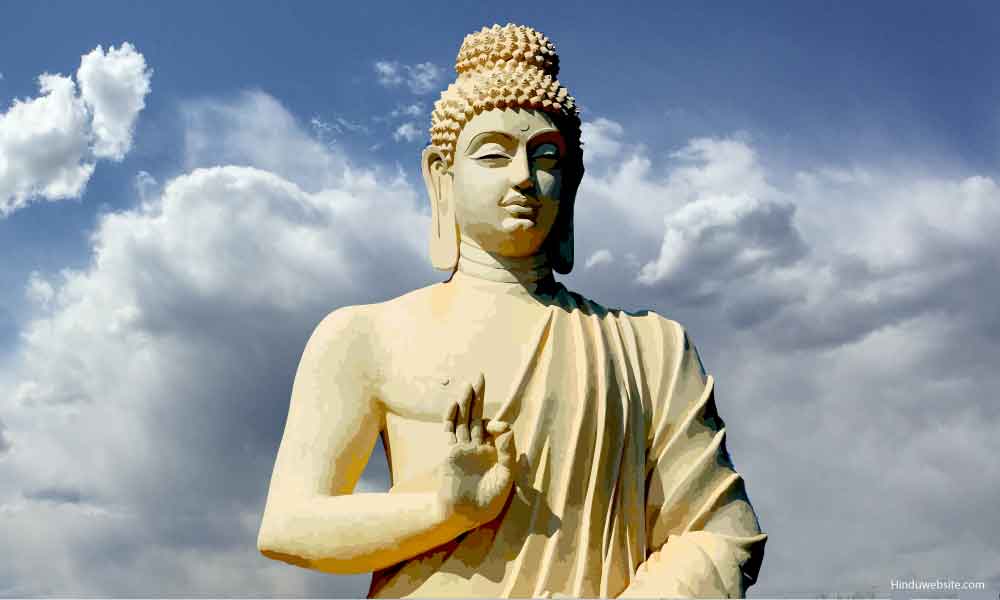
The Buddha was like a doctor, treating the spiritual ills of the human race. The path of practice he taught was like a course of therapy for suffering hearts and minds. This way of understanding the Buddha and his teachings dates back to the earliest texts, and yet is also very current. Buddhist meditation practice is often advertised as a form of healing, and quite a few psychotherapists now recommend that their patients try meditation as part of their treatment.
After several years of teaching and practicing meditation as therapy, however, many of us have found that meditation on its own is not enough. In my own experience, I have found that Western meditators tend to be afflicted more with a certain grimness and lack of self-esteem than any Asians I have ever taught. Their psyches are so wounded by modern civilization that they lack the resilience and persistence needed before concentration and insight practices can be genuinely therapeutic.
Other teachers have noted this problem as well and, as a result, many of them have decided that the Buddhist path is insufficient for our particular needs. To make up for this insufficiency they have experimented with ways of supplementing meditation practice, combining it with such things as myth, poetry, psychotherapy, social activism, sweat lodges, mourning rituals, and even drumming. The problem, though, may not be that there is anything lacking in the Buddhist path, but that we simply haven't been following the Buddha's full course of therapy.
The Buddha's path consisted not only of mindfulness, concentration, and insight practices, but also of virtue, beginning with the five precepts. In fact, the precepts constitute the first step in the path. There is a tendency in the West to dismiss the five precepts as Sunday-school rules bound to old cultural norms that no longer apply to our modern society, but this misses the role that the Buddha intended for them: They are part of a course of therapy for wounded minds. In particular, they are aimed at curing two ailments that underlie low self-esteem: regret and denial.
When our actions don't measure up to certain standards of behavior, we either (1) regret the actions or (2) engage in one of two kinds of denial, either (a) denying that our actions did in fact happen or (b) denying that the standards of measurement are really valid. These reactions are like wounds in the mind. Regret is an open wound, tender to the touch, while denial is like hardened, twisted scar tissue around a tender spot.
When the mind is wounded in these ways, it can't settle down comfortably in the present, for it finds itself resting on raw, exposed flesh or calcified knots. Even when it's forced to stay in the present, it's there only in a tensed, contorted and partial way, and so the insights it gains tend to be contorted and partial as well. Only if the mind is free of wounds and scars can it be expected to settle down comfortably and freely in the present, and to give rise to undistorted discernment.
This is where the five precepts come in: They are designed to heal these wounds and scars. Healthy self-esteem comes from living up to a set of standards that are practical, clear-cut, humane, and worthy of respect; the five precepts are formulated in such a way that they provide just such a set of standards.
Practical: The standards set by the precepts are simple -- no intentional killing, stealing, having illicit sex, lying, or taking intoxicants. It's entirely possible to live in line with these standards. Not always easy or convenient, but always possible. I have seen efforts to translate the precepts into standards that sound more lofty or noble -- taking the second precept, for example, to mean no abuse of the planet's resources -- but even the people who reformulate the precepts in this way admit that it is impossible to live up to them. Anyone who has dealt with psychologically damaged people knows that very often the damage comes from having been presented with impossible standards to live by. If you can give people standards that take a little effort and mindfulness, but are possible to meet, their self-esteem soars dramatically as they discover that they are actually capable of meeting those standards. They can then face more demanding tasks with confidence.
Clear-cut: The precepts are formulated with no ifs, ands, or buts. This means that they give very clear guidance, with no room for waffling or less-than-honest rationalizations. An action either fits in with the precepts or it doesn't. Again, standards of this sort are very healthy to live by. Anyone who has raised children has found that, although they may complain about hard and fast rules, they actually feel more secure with them than with rules that are vague and always open to negotiation. Clear-cut rules don't allow for unspoken agendas to come sneaking in the back door of the mind. If, for example, the precept against killing allowed you to kill living beings when their presence is inconvenient, that would place your convenience on a higher level than your compassion for life. Convenience would become your unspoken standard -- and as we all know, unspoken standards provide huge tracts of fertile ground for hypocrisy and denial to grow. If, however, you stick by the standards of the precepts, then as the Buddha says, you are providing unlimited safety for the lives of all. There are no conditions under which you would take the lives of any living beings, no matter how inconvenient they might be. In terms of the other precepts, you are providing unlimited safety for their possessions and sexuality, and unlimited truthfulness and mindfulness in your communication with them. When you find that you can trust yourself in matters like these, you gain an undeniably healthy sense of self-respect.
Humane: The precepts are humane both to the person who observes them and to the people affected by his or her actions. If you observe them, you are aligning yourself with the doctrine of karma, which teaches that the most important powers shaping your experience of the world are the intentional thoughts, words, and deeds you chose in the present moment. This means that you are not insignificant. Every time you take a choice -- at home, at work, at play -- you are exercising your power in the on-going fashioning of the world. At the same time, this principle allows you to measure yourself in terms that are entirely under your control: your intentional actions in the present moment. In other words, they don't force you to measure yourself in terms of your looks, strength, brains, financial prowess, or any other criteria that depend less on your present karma than they do on karma from the past. Also, they don't play on feelings of guilt or force you to bemoan your past lapses. Instead, they focus your attention on the ever-present possibility of living up to your standards in the here and now. If you are living with people who observe the precepts, you find that your dealings with them are not a cause for mistrust or fear. They regard your desire for happiness as akin to theirs. Their worth as individuals does not depend on situations in which there have to be winners and losers. When they talk about developing lovingkindness and mindfulness in their meditation, you see it reflected in their actions. In this way the precepts foster not only healthy individuals, but also a healthy society -- a society in which the self-respect and mutual respect are not at odds.
Worthy of respect: When you adopt a set of standards, it is important to know whose standards they are and to see where those standards come from, for in effect you are joining their group, looking for their approval, and accepting their criteria for right and wrong. In this case, you couldn't ask for a better group to join: the Buddha and his noble disciples. The five precepts are called "standards appealing to the noble ones." From what the texts tell us of the noble ones, they are not people who accept standards simply on the basis of popularity. They have put their lives on the line to see what leads to true happiness, and have seen for themselves, for example, that all lying is pathological, and that any sex outside of a stable, committed relationship is unsafe at any speed. Other people may not respect you for living by the five precepts, but noble ones do, and their respect is worth more than that of anyone else in the world.
Now, many people find it cold comfort to join such an abstract group, especially when they have not yet met any noble ones in person. It's hard to be good-hearted and generous when the society immediately around you openly laughs at those qualities and values such things as sexual prowess or predatory business skills instead. This is where Buddhist communities can come in. It would be very useful if Buddhist groups would openly part ways with the prevailing amoral tenor of our culture and let it be known in a kindly way that they value goodheartedness and restraint among their members. In doing so, they would provide a healthy environment for the full-scale adoption of the Buddha's course of therapy: the practice of concentration and discernment in a life of virtuous action. Where we have such environments, we find that meditation needs no myth or make-believe to support it, because it is based on the reality of a well-lived life. You can look at the standards by which you live, and then breathe in and out comfortably -- not as a flower or a mountain, but as a full-fledged, responsible human being. For that's what you are.
Suggestions for Further Reading
- Buddhism - The Concept of Anatta or No Self
- Anatta or Anatma in Buddhism
- Anicca or Anitya in Buddhism
- The Buddha on God
- The Buddha on Avijja or Ignorance and on the Origin of Life
- The Eightfold Path Of Buddhism
- The Four Noble Truths of Buddhism
- Buddhism - Right Living On The Eightfold Path
- Handbook for the Relief of Suffering by Ajaan Lee
- Meat Eating or Vegetarianism in Buddhism
- The Agendas of Mindfulness
- Meditation on Anicca or Impermanence in Buddhism
- A Sketch of the Buddha's Life
- What is Ignorance And Cessation Of Ignorance
- The Meaning of the Buddha's Awakening
- Basic Breath Meditation Practice
- Buddha's Teachings on Kamma or Karma
- Affinities Of Buddhism And Christianity
- Death and Dying in Buddhism
- Buddhism In A Nutshell
- The Buddha on Ignorance or Avijja
- Dhamma for Everyone by Ajaan Lee Dhammadharo
- Advaita Vedanta and Buddhism
- Four Discourses of the Buddha on Everyman's Ethics
- The Five Aggregates A Study Guide
- The Healing Power of the Five Buddhist Percepts
- The Working of Maya or Illusion - A Buddhist Perspective
- Buddhism - Kamma (Karma) and its Fruit
- Buddhism - Kamma (Karma) A Study Guide
- Buddhism - Living the Dhamma A Practice Guide
- What Anatta or No-Self is All About
- Buddhism - The Middle Way
- The Buddhist Monastic Code, Dhamma-Vinaya
- Nibbana, or Nivranva in Buddhsim
- Why The Buddha Taught the Anatta or Not-Self Doctrine
- The Status of Women in Buddhist Societies
- Buddhism - The Practice of Loving-Kindness (Metta)
- Buddhism - Does Rebirth Make Sense
- Buddhism - Right Concentration
- Buddhism - Intentions and Nirvana
- The Round of Rebirth - Samsara
- The Role of Samavega in Buddhism
- The Chaos Theory and Nirvana in Buddhism
- A Christian's Journey Into Buddhism
- A Simple Guide to Buddhism
- Buddhist Cosmology - The Thirty one Realms of Existence
- Buddhism and the concept of renunciation
- Sankharas (Samskaras) in Buddhism
- Vedanta and Buddhism A Comparative Study
- Buddhism - Vipansana or Insight Meditation
- The Right Approach To End Suffering in Buddhismm
- Essays On Dharma
- Esoteric Mystic Hinduism
- Introduction to Hinduism
- Hindu Way of Life
- Essays On Karma
- Hindu Rites and Rituals
- The Origin of The Sanskrit Language
- Symbolism in Hinduism
- Essays on The Upanishads
- Concepts of Hinduism
- Essays on Atman
- Hindu Festivals
- Spiritual Practice
- Right Living
- Yoga of Sorrow
- Happiness
- Mental Health
- Concepts of Buddhism
- General Essays
Source: Copyright © 1999 Thanissaro Bhikkhu Reproduced and reformatted from Access to Insight edition © 1999 For free distribution. This work may be republished, reformatted, reprinted, and redistributed in any medium. It is the author's wish, however, that any such republication and redistribution be made available to the public on a free and unrestricted basis and that translations and other derivative works be clearly marked as such.