
A Guided Meditation For Spreading Goodwill and Happiness
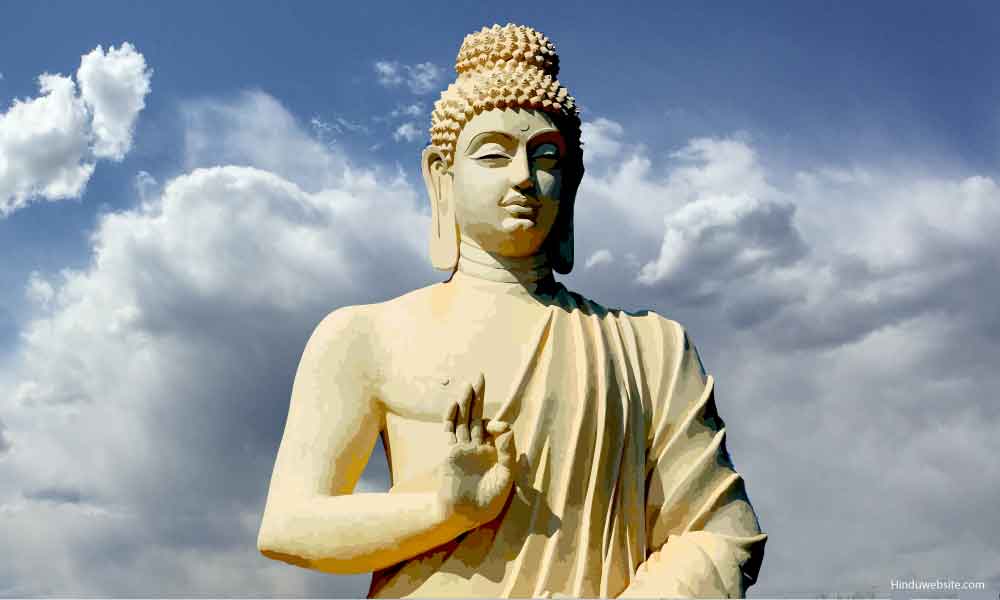
Sit comfortably erect, without leaning forward or backward, left or right. Close your eyes and think thoughts of good will. Thoughts of good will go first to yourself, because if you can't think good will for yourself -- if you can't feel a sincere desire for your own happiness -- there's no way you can truly wish for the happiness of others. So just tell yourself, "May I find true happiness." Remind yourself that true happiness is something that comes from within, so this is not a selfish desire. In fact, if you find and develop the resources for happiness within you, you're able to radiate it out to other people. It's a happiness that doesn't depend on taking away anything away from anyone else.
So now spread good will to other people. First, people who are close to your heart -- your family, your parents, your very close friends: May they find true happiness, as well. Then spread those thoughts out in ever widening circles: people you know well, people you don't know so well, people you like, people you know and are neutral about, and even people you don't like. Don't let there be any limitations on your good will, for if there are, there will be limitations on your mind. Now spread thoughts of good will to people you don't even know -- and not just people; all living beings of all kinds in all directions: east, west, north, south, above, and below, out to infinity. May they find true happiness, too.
Then bring your thoughts back to the present. If you want true happiness, you have to find it in the present, for the past is gone and the future is an uncertainty. So you have to dig down into the present. What do you have right here? You've got the body, sitting here and breathing. And you've got the mind, thinking and aware. So bring all these things together. Think about the breath and then be aware of the breath as it comes in and goes out. Keeping your thoughts directed to the breath: that's mindfulness. Being aware of the breath as it comes in and out: that's alertness. Keep those two aspects of the mind together. If you want, you can use a meditation word to strengthen your mindfulness. Try "Buddho," which means "awake." Think "bud-" with the in-breath, "dho" with the out.
Try to breathe as comfortably as possible. A very concrete way of learning how to provide for your own happiness in the immediate present -- and at the same time, strengthening your alertness -- is to let yourself breathe in a way that's comfortable. Experiment to see what kind of breathing feels best for the body right now. It might be long breathing, short breathing; in long, out short; or in short, out long. Heavy or light, fast or slow, shallow or deep. Once you find a rhythm that feels comfortable, stay with it for a while. Learn to savor the sensation of the breathing. Generally speaking, the smoother the texture of the breath, the better. Think of the breath, not simply as the air coming in and out of the lungs, but as the entire energy flow that courses through the body with each in-and-out breath. Be sensitive to the texture of that energy flow. You may find that the body changes after a while. One rhythm or texture may feel right for a while, and then something else will feel more comfortable. Learn how to listen and respond to what the body is telling you right now. What kind of breath energy does it need? How can you best provide for that need? If you feel tired, try to breathe in a way that energizes the body. If you feel tense, try to breathe in a way that's relaxing.
If your mind wanders off, gently bring it right back. If it wanders off ten times, a hundred times, bring it back ten times, a hundred times. Don't give in. This quality is called ardency. In other words, as soon as you realize that the mind has slipped away, you bring it right back. You don't spend time aimlessly sniffing at the flowers, looking at the sky, or listening to the birds. You've got work to do: work in learning how to breathe comfortably, how to let the mind settle down in a good space here in the present moment.
When the breath starts feeling comfortable, you can start exploring it in other areas of the body. If you simply stay with the comfortable breath in a narrow range, you'll tend to doze off. So consciously expand your awareness. A good place to focus first is right around the navel. Locate that part of the body in your awareness: where is it right now? Then notice: how does it feel there as you breathe in? How does it feel when you breathe out? Watch it for a couple of breaths, and notice if there's any sense of tension or tightness in that part of the body, either with the in-breath or with the out-breath. Is it tensing up as you breathe in? Are you holding onto the tension as you breathe out? Are you putting too much force on the out-breath? If you catch yourself doing any of these things, just relax. Think of that tension dissolving away in the sensation of the in-breath, the sensation of the out-breath. If you want, you can think of the breath energy coming into the body right there at the navel, working through any tension or tightness that you might feel there ...
Then move your awareness to the right -- to the lower right-hand corner of your abdomen -- and follow the same three steps there: 1) locate that general part of the body in your awareness; 2) notice how it feels as you breathe in, how it feels as you breathe out; and 3) if you sense any tension or tightness in the breath, just let it relax ... Now move your awareness to the left, to the lower left-hand corner of your abdomen, and follow the same three steps there.
Now move your awareness up to the solar plexus ... and then to the right, to the right flank ... to the left flank ... to the middle of the chest ... After a while move up to the base of the throat ... and then to the middle of the head. Be very careful with the breath energy in the head. Think of it very gently coming in, not only through the nose but also through the eyes, the ears, down from the top of the head, in from the back of the neck, very gently working through and loosening up any tension you may feel, say, around your jaws, the back of your neck, around your eyes, or around your face ...
From there you can move your attention gradually down the back, out the legs, to the tips of the toes, the spaces between the toes. As before, focus on a particular part of the body, notice how it feels with the in-breath and out-breath, relax any sensation of tension or tightness you might feel there, so that the breath energy can flow more freely, and then move on until you've reached the tips of the toes. Then repeat the process, beginning at the back of the neck and going down the shoulders, through the arms, past your wrists, and out through your fingers.
You can repeat this survey of the body as many times as you like until the mind feels ready to settle down.
Then let your attention return to any spot in the body where it feels most naturally settled and centered. Simply let your attention rest there, at one with the breath. At the same time let the range of your awareness spread out so that it fills the entire body, like the light of a candle in the middle of a room: the candle flame is in one spot, but its light fills the entire room. Or like a spider on a web: the spider's in one spot, but it knows the whole web. Be keen on maintaining that broadened sense of awareness. You'll find that it tends to shrink, like a balloon with a small hole in it, so keep broadening its range, thinking "whole body, whole body, breath in the whole body, from the top of the head down into the tips of the toes." Think of the breath energy coming in and out of the body through every pore. Make a point of staying with this centered, broadened awareness as long as you can. There's nothing else you have to think about right now, nowhere else to go, nothing else to do. Just stay with this centered, broadened awareness of the present ...
When the time comes to leave meditation, remind yourself that there's a skill to leaving. In other words, you don't just jump right out. My teacher, Ajaan Fuang, once said that when most people meditate, it's as if they're climbing a ladder up to the second story of a building: step-by-step-by-step, rung-by-rung, slowly up the ladder. But as soon as they get to the second story, they jump out the window. Don't let yourself be that way. Think of how much effort went into getting yourself centered. Don't throw it away.
The first step in leaving is to spread thoughts of good will once more to all the people around you. Then, before you open your eyes, remind yourself that even though you're going to have your eyes open, you want your attention to stay centered in the body, at the breath. Try to maintain that center as long as you can, as you get up, walk around, talk, listen, whatever. In other words, the skill of leaving meditation lies in learning how not to leave it, regardless of whatever else you may be doing. Act from that sense of being centered. If you can keep the mind centered in this way, you'll have a standard against which you can measure its movements, its reactions to the events around it and within it. Only when you have a solid center like this can you gain insight into the movements of the mind.
Suggestions for Further Reading
- Buddhism - The Concept of Anatta or No Self
- Anatta or Anatma in Buddhism
- Anicca or Anitya in Buddhism
- The Buddha on God
- The Buddha on Avijja or Ignorance and on the Origin of Life
- The Eightfold Path Of Buddhism
- The Four Noble Truths of Buddhism
- Buddhism - Right Living On The Eightfold Path
- Handbook for the Relief of Suffering by Ajaan Lee
- Meat Eating or Vegetarianism in Buddhism
- The Agendas of Mindfulness
- Meditation on Anicca or Impermanence in Buddhism
- A Sketch of the Buddha's Life
- What is Ignorance And Cessation Of Ignorance
- The Meaning of the Buddha's Awakening
- Basic Breath Meditation Practice
- Buddha's Teachings on Kamma or Karma
- Affinities Of Buddhism And Christianity
- Death and Dying in Buddhism
- Buddhism In A Nutshell
- The Buddha on Ignorance or Avijja
- Dhamma for Everyone by Ajaan Lee Dhammadharo
- Advaita Vedanta and Buddhism
- Four Discourses of the Buddha on Everyman's Ethics
- The Five Aggregates A Study Guide
- The Healing Power of the Five Buddhist Percepts
- The Working of Maya or Illusion - A Buddhist Perspective
- Buddhism - Kamma (Karma) and its Fruit
- Buddhism - Kamma (Karma) A Study Guide
- Buddhism - Living the Dhamma A Practice Guide
- What Anatta or No-Self is All About
- Buddhism - The Middle Way
- The Buddhist Monastic Code, Dhamma-Vinaya
- Nibbana, or Nivranva in Buddhsim
- Why The Buddha Taught the Anatta or Not-Self Doctrine
- The Status of Women in Buddhist Societies
- Buddhism - The Practice of Loving-Kindness (Metta)
- Buddhism - Does Rebirth Make Sense
- Buddhism - Right Concentration
- Buddhism - Intentions and Nirvana
- The Round of Rebirth - Samsara
- The Role of Samavega in Buddhism
- The Chaos Theory and Nirvana in Buddhism
- A Christian's Journey Into Buddhism
- A Simple Guide to Buddhism
- Buddhist Cosmology - The Thirty one Realms of Existence
- Buddhism and the concept of renunciation
- Sankharas (Samskaras) in Buddhism
- Vedanta and Buddhism A Comparative Study
- Buddhism - Vipansana or Insight Meditation
- The Right Approach To End Suffering in Buddhismm
- Essays On Dharma
- Esoteric Mystic Hinduism
- Introduction to Hinduism
- Hindu Way of Life
- Essays On Karma
- Hindu Rites and Rituals
- The Origin of The Sanskrit Language
- Symbolism in Hinduism
- Essays on The Upanishads
- Concepts of Hinduism
- Essays on Atman
- Hindu Festivals
- Spiritual Practice
- Right Living
- Yoga of Sorrow
- Happiness
- Mental Health
- Concepts of Buddhism
- General Essays
Source: Copyright © 1999 Thanissaro Bhikkhu. Reproduced and reformatted from Access to Insight edition © 1999 For free distribution. This work may be republished, reformatted, reprinted, and redistributed in any medium. It is the author's wish, however, that any such republication and redistribution be made available to the public on a free and unrestricted basis and that translations and other derivative works be clearly marked as such.