
Nissaya - Training and Mentoring Junior Monk
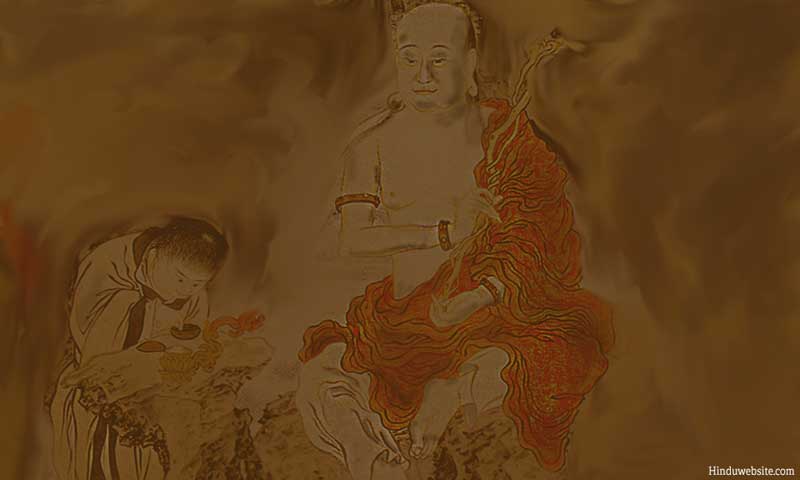
The Dhamma and Vinaya impinge in such detail on so many areas of one's life that no new bhikkhu can be expected to master them in a short time. For this reason, the Buddha arranged for a period of apprenticeship — called nissaya, or dependence — in which every newly ordained bhikkhu must train under the guidance of an experienced bhikkhu for at least five years before he can be considered competent to look after himself.
This apprenticeship has formed the human context in which the practice of the Buddha's teachings has been passed down for the past 2,600 years. To overlook it is to miss one of the basic parameters of the life of the Dhamma and Vinaya. Thus we will discuss it here first, before going on to the individual training rules of the Patimokkha.
Dependence is of two sorts: dependence on one's preceptor (upajjhaya) and dependence on a teacher (acariya). The relationships are similar — and in many details, identical — so the following discussion will use the word "mentor" to cover both preceptor and teacher wherever the pattern applies to both, and will distinguish them only where the patterns differ.
Choosing a mentor
Before ordination, one must choose a bhikkhu to act as one's preceptor. The Mahavagga (I.36-37) gives a long list of qualifications a bhikkhu must meet before he can act as a preceptor, while the Commentary divides the list into two levels: ideal and minimal qualifications. A bhikkhu who lacks the minimal qualifications incurs a dukkata if he acts as a preceptor; a bhikkhu who meets the minimal but lacks the ideal qualifications is not an ideal person to give guidance, but he incurs no penalty in doing so.
The ideal qualifications: The preceptor should have an arahant's virtue, concentration, discernment, release, and knowledge of release; and should be able to train another person to the same level of attainment. He should have faith, a sense of shame, fear of evil, persistence in the practice, and quick mindfulness (according to the Subcommentary, this means that he is constantly mindful of whatever mental object is before the mind). He should be free of heavy and light offenses and be possessed of right view. (This last point, the Commentary says, means that he does not adhere to the extremes of eternalism or annihilationism.) He should be competent to tend to a sick pupil, or to find someone who will tend to him, and to allay dissatisfaction in a pupil who wants to leave the celibate life.
The Mahavagga does not say outright that these are ideal, as opposed to minimal, qualifications, but the Commentary offers as proof the fact that one of a pupil's duties is to try to allay any dissatisfaction that may arise in his preceptor. If all preceptors were arahants, no case of this sort would ever arise, and there would be no need to mention it. Thus the Commentary concludes that arahantship, although ideal in a preceptor, is not necessary.
The minimal qualifications: The preceptor must be learned and intelligent. According to the Commentary, this means that he knows enough of the Dhamma and Vinaya to govern a following and is intelligent enough to know what is and is not an offense. He must be competent enough to allay any anxiety a pupil may have over the rules, know what is and is not an offense, what is a light offense, what is a heavy offense, and how an offense may be removed. He must have detailed knowledge of both Patimokkhas (the one for the bhikkhus and the one for the bhikkhunis) and be able to train the pupil in the bhikkhus' customs (Com.: this means that he knows the Khandhakas), in the basic rules of the chaste life (Subcom.: he knows both Vibhangas), the higher Dhamma, and the higher Vinaya. He must be able to dissuade his pupil from adhering to a wrong view, or find someone who will help dissuade him. And — the most basic requirement — he must have been ordained as a bhikkhu for ten years or more.
If, for some reason, the new bhikkhu lives in a separate monastery from his preceptor, he must take dependence under a teacher, whose qualifications are precisely the same as those for a preceptor. Since the Mahavagga (I.72.1) gives a dukkata for taking dependence under an unconscientious bhikkhu, the new bhikkhu is allowed four to five days to observe his potential teacher's conduct before taking dependence under him (Mv.I.72.2).
Taking dependence. Prior to his ordination — and usually, as part of the ceremony itself — the candidate must make a formal request for dependence from his preceptor. The procedure is as follows:
Arranging his upper robe over his left shoulder, leaving his right shoulder bare, he bows down to the preceptor and then, kneeling with his hands palm-to-palm in front of his heart, repeats the following passage three times:
Upajjhayo me bhante hohi, which means, "Venerable sir, be my preceptor."
If the preceptor responds with any of these words — Sahu (very well), lahu (certainly), opayikam (all right), patirupam (it is proper) or pasadikena sampadehi (manage it amiably) — the dependence has taken hold. The Mahavagga adds that if the preceptor indicates any of these meanings by gesture, that also counts; and according to the Commentary, the same holds true if he makes any equivalent statement (Mv.I.25.7).
If, after his ordination, the new bhikkhu needs to request dependence from a teacher, the procedure is the same, except that the request he makes three times is this:
Acariyo me bhante hohi; ayasmato nissaya vacchami, which means, "Venerable sir, be my teacher; I will live in dependence on you." (Mv.I.32.2)
Duties
The Mahavagga (I.25.6; 32.1) states that a pupil should regard his mentor as a father; and the mentor, the pupil as his son. It then goes on to delineate this relationship as a set of reciprocal duties.
The pupil's duties to his mentor fall into the following five categories:
1. Attending to the mentor's personal needs. The Mahavagga goes into great detail on this topic, giving precise instructions dealing with every conceivable way a pupil can be of service to his mentor. The Vinaya Mukha tries to reduce these duties to a few general principles, but this misses much of what the Mahavagga has to offer, for it is in the details that we can see fine examples of mindfulness in action — the best way to fold a robe, clean a dwelling, and so forth — as well as indications of how one can use this aspect of one's training to develop sensitivity to the needs of others. Still, the detailed instructions are so extensive that they would overburden the discussion in this chapter, so I have saved them for Appendix VIII. Here I will simply give them in outline form. The pupil should: a. Arrange his mentor's toiletries for his morning wash-up. b. Arrange his seat and food for his morning conjey (if he has any) and clean up after he is finished.
c. Arrange his robes and bowl for his alms round.
d. Follow him on his alms round, if the mentor so desires, and take his robes and bowl when he returns.
e. Arrange his seat and food for his alms meal and clean up afterwards.
f. Prepare his bath. If he goes to the sauna, go with him and attend to his needs.
g. Study the Dhamma and Vinaya from him when he is prepared to teach. (The Mahavagga describes this as "recitation" and "interrogation." Recitation, according to the Commentary, means learning to memorize passages; interrogation, learning to investigate their meaning.)
h. Clean his dwelling and other parts of his dwelling complex, such as the restroom and storage rooms, when they get dirty.
2. Assisting the mentor in any problems he may have with regard to the Dhamma and Vinaya. The Mahavagga lists the following examples:
a. If the preceptor begins to feel dissatisfaction with the celibate life, the pupil should try to allay that dissatisfaction or find someone else who can. b. If the preceptor begins to feel anxiety over his conduct with regard to the rules, the pupil should try to allay that anxiety, or find someone else who can.
c. If the preceptor begins to hold to wrong views, the pupil should try to dissuade him from those views or find someone else who can.
d. If the preceptor has committed a sanghadisesa offense, the pupil should — to the best of his ability — help with the arrangements for penance, probation, and rehabilitation, or find someone else who can.
e. If the Community is going to carry out a formal act against the mentor, the pupil should try to dissuade them from it. According to the Commentary, this means that he should go to the various members of the Community individually before the meeting and try to dissuade them from going through with the act. If he can't dissuade them, he should try to get them to lessen its severity (say, from an act of banishment to an act of censure). If they are justified in carrying out the act, though, he should not object while the meeting is in progress. Once they have carried out the act, he should concentrate on helping his mentor behave so that they will rescind the act as quickly as possible.
3. Washing, making, and dyeing the mentor's robes.
4. Showing loyalty and respect for the mentor.
a. The pupil should neither give or receive gifts, nor give or receive services to/from others without first obtaining the mentor's permission. According to the Commentary, others here refers to people who are on bad terms with the mentor. b. The pupil should obtain his mentor's permission before entering a village, going to a cemetery (to meditate, says, the Commentary), or leaving the district in which they live. The Commentary notes, though, that if the mentor refuses one's request the first time, one should ask up to two more times, presenting one's reasons as best one can. If the mentor still refuses, the pupil should reflect on his situation. If staying with the mentor is not helping his education and meditation, and if the mentor seems to want him to stay simply to have someone to look after his (the mentor's) needs, the pupil is justified in leaving and taking dependence with a new mentor in his new residence.
5. Caring for the mentor when he falls ill, not leaving him until he either recovers or passes away (Mv.I.25).
According to the Commentary, a pupil is freed from these duties when he is ill. Otherwise, he should observe all the above duties to his preceptor as long as he is in dependence on him, and the duties in sections 1-3 even after he is released from dependence, as long as both he and the preceptor are alive and still ordained.
As for the duties to one's teacher, the Commentary lists four types of teachers: the going-forth teacher (the one who gives one the ten precepts during one's ordination ceremony); the acceptance teacher (the one who chants the motion and announcements during the ceremony); the Dhamma teacher (the one who teaches one the Pali language and Canon); and the dependence teacher (the one with whom one lives in dependence). With the dependence teacher, one must observe all the above duties only as long as one is living in dependence on him. As for the other three, one should observe sections 1-3 as long as both parties are alive and still ordained.
The Commentary adds that if the mentor already has a pupil who is performing these duties for him, he may inform his remaining pupils that they need not take them on. This exempts them from having to observe them. If he neglects to do this, the pupil who is performing the duties may inform his fellows that he will take responsibility for looking after the mentor. This also exempts them. Otherwise, they incur a dukkata for every duty they neglect to perform.
The mentor's duties to his pupil:
1. Furthering the pupil's education, teaching him the Dhamma and Vinaya through recitation, interrogation, exhortation, and instruction. 2. Providing requisites for the pupil. If the pupil lacks any of his basic requisites, and the mentor has any to spare, he should make up the lack.
3. Attending to the pupil's personal needs when he is ill, performing the services mentioned in section 1 under the pupil's duties to his mentor.
4. Assisting the pupil in any problems he may have with regard to the Dhamma and Vinaya, performing the services mentioned in section 2 under the pupil's duties to his mentor.
5. Teaching the pupil how to wash, make, and dye robes. If for some reason the pupil is unable to handle these skills, the mentor should find someone who can help the pupil with them.
6. Caring for the pupil when he falls ill, not leaving him until he either recovers or passes away (Mv.I.26).
According to the Commentary, the preceptor, going-forth teacher, and acceptance teacher must observe these duties toward the pupil as long as both parties are alive and still ordained. As for the Dhamma and dependence teachers, they must observe these duties only as long as the pupil is living with them.
Dismissal
If the pupil does not observe his duties to his mentor, the mentor is empowered to dismiss him. In fact, if the pupil deserves dismissal, the mentor incurs a dukkata if for some reason he does not dismiss him, just as he would for dismissing a pupil who did not deserve it (MV.I.27.5-8). The grounds for dismissal are five:
1. The pupil has no affection for his mentor — i.e., he shows him no kindness. 2. He has no faith in his mentor — i.e., he does not regard him as an example to follow.
3. He has no shame in front of his mentor — i.e., he openly disregards the training rules in his mentor's presence.
4. He has no respect for his mentor — i.e., he does not listen to what the mentor has to say, and openly disobeys him.
5. He is not developing under his mentor — the Commentary translates developing here as developing a sense of good will for his mentor, but it could also mean developing in his general education and practice of the Dhamma and Vinaya.
The Vinaya Mukha notes that the mentor should reflect on his own conduct before dismissing such a pupil. If he has done anything that would give the pupil valid reason for losing affection, etc., he should first correct his own conduct. Only after reflecting that there is no longer anything in his own conduct that would give the pupil valid reason to disregard him should he go ahead with the dismissal.
The Mahavagga mentions each of the following statements as a valid means of dismissal: "I dismiss you." "Don't come back here." "Take away your robes and bowl." "Don't attend to me." It also states that if the mentor makes any of these meanings known by gesture — e.g., he evicts the pupil from his quarters and throws his robes and bowl out after him — that also counts as a valid means of dismissal (Mv.I.27.2). The Commentary adds that any statement conveying the same basic meaning as those above would count as well.
Once a pupil has been dismissed, it is his duty to apologize. If he doesn't, he incurs a dukkata (Mv.I.27.3). Once the pupil has apologized, the mentor's duty is to forgive him (Mv.I.27.4). If, however, he sees that the pupil is still unconscientious, he should not take him back, for a mentor who takes on an unconscientious pupil incurs a dukkata (Mv.I.72.1.). Thus the mentor may, if he sees fit, inflict a non-physical punishment on the pupil before taking him back on the original footing, to make sure that he has actually seen the error of his ways. An example of such punishment, mentioned in the Vinaya Mukha, is simply asking to wait to observe the pupil's behavior for a while to see whether or not his apology is sincere.
The Commentary recommends that if the mentor refuses to forgive the pupil, the latter should try to get other bhikkhus in the monastery to intercede for him. If that doesn't work, he should go stay in another monastery and take dependence under a senior bhikkhu there who is on friendly terms with the mentor, in hopes that the mentor will take this as a sign of the pupil's good intentions and will eventually grant his forgiveness.
Dependence lapses
Mv.I.36.1 says that if a pupil is staying in dependence with his preceptor, the dependence lapses if:
1. He leaves. According to the Subcommentary, this means that the preceptor goes to spend the night outside the monastery, regardless of whether or not he plans to return. 2. He disrobes.
3. He dies.
4. He goes over to another side — according to the Commentary, this means that he joins another religion.
In all of the above cases, the commentaries interpret "he" as referring to the preceptor, although it would seem to refer to the pupil as well. This would fit with the passages from the Mahavagga, to be mentioned below, that refer to a new bhikkhu on a journey as not being in dependence. In such cases, the new bhikkhu is most likely the one who has left the preceptor, and his leaving is what has caused the dependence to lapse.
5. He gives a command. This is the one alternative where "he" clearly refers only to the preceptor. The Commentary interprets command here as dismissal, as discussed above, although the Vinaya Mukha would also include cases where the preceptor sees that the pupil qualifies to be released from dependence (see below) and tells him so. In each of these cases, a pupil who is not yet released from dependence must find someone else to take dependence under on that very day, except in the following instances (taken from the Commentary):
— The preceptor leaves, saying that he will be away only for a day or two, and that the pupil need not ask anyone else for dependence in the meantime. If it so happens that the preceptor's return is delayed, he should send word to his pupil, saying that he still intends to come back. If, however, the pupil receives word from his preceptor that the latter no longer intends to return, he should immediately look for a teacher to take dependence under. — The preceptor leaves, and the only other senior bhikkhu in the monastery is one whom the pupil does not know well. In this case, the pupil is allowed four or five days to observe the senior bhikkhu's behavior (as mentioned above) before requesting dependence from him. If, though, the pupil already knows the senior bhikkhu well enough to feel confident in his conduct, he should take dependence with him on the day of his preceptor's departure.
If the pupil is staying in dependence on a teacher, the dependence can lapse for any of six reasons. The first five are identical with those above, although even the Commentary states that "he leaves," the first reason, applies not only to cases where the teacher leaves but also to cases where the pupil leaves. The sixth reason is:
6. The pupil rejoins his preceptor. The Commentary explains this by saying that, in effect, the pupil's original dependence on his preceptor always overrides his dependence on a teacher. If the pupil happens to see his preceptor and recognize him, or to hear and recognize his voice — even if they just happen to pass on the street — his dependence on his teacher automatically lapses, and his dependence on his preceptor is reinstated. If he then returns to live with his teacher, he must ask for dependence from the teacher all over again. The Vinaya Mukha objects to this judgment, saying that "rejoins the preceptor" should refer to the pupil's actually living with the preceptor, either in another monastery or in the same monastery where the teacher lives. This, however, is an area where different Communities differ in their interpretation, and the wise policy is to follow the interpretation of the Community in which one lives.
Temporary exemption from dependence
Normally a junior bhikkhu is required to live in dependence under a mentor at all times. However, Mv.I.73 allows him not to take dependence when living in the following situations if no qualified bhikkhu is available as a mentor:
1) He is on a journey. 2) He is ill.
3) He is caring for an ill person who has requested his help (%).
4) He is living alone in the forest, meditating comfortably, intending to take dependence if a qualified mentor comes along.
The Commentary, in discussing these allowances, makes the following points:
A bhikkhu on a journey is said to have no mentor available if no qualified senior bhikkhu is traveling with him. In other words, the fact that he happens to pass by a monastery with a qualified mentor does not mean that a mentor is available, and he is allowed to continue traveling without taking dependence. If, however, he spends the night in a place where he has taken dependence before, he should take dependence on the day of his arrival. If he reaches a place where he has never been before and plans to spend only two or three days, he need not take dependence; but if he plans to spend a week, he must. If the senior bhikkhu he requests dependence from says, "What's the use of taking dependence for only a week?" that exempts him from this requirement.
As for the bhikkhu living alone in the forest, the Commentary says that "meditating comfortably" means that his tranquillity and insight meditation are going smoothly. For some reason, though, it says that this allowance applies only to bhikkhus whose meditation is at a tender stage and might deteriorate if they were to leave the forest; if a bhikkhu has attained any of the Noble Attainments — beginning with stream-entry — he may not make use of this allowance. Why the Commentary limits the allowance in this way, it doesn't say.
At any rate, once the month before the Rains Retreat arrives, and no suitable mentor appears, the junior bhikkhu must leave his forest abode and look for a place where he can take dependence for the Rains.
Release from dependence
According to Mv.I.53.4, a bhikkhu may be released from dependence after he has been ordained for five years, on the condition that he be experienced and competent. If he is not yet experienced and competent, he must remain under dependency until he is. If he never becomes experienced and competent, he must remain in dependence for his entire life as a bhikkhu. The Commentary adds that, in the last case, if he cannot find a competent experienced bhikkhu who is senior to him, he must take dependence with a competent, experienced bhikkhu who is his junior.
To be considered competent and experienced enough to deserve release from dependence, a bhikkhu must meet many of the same general qualifications as those for a mentor, except that he need not possess the competence to look after a pupil, and the minimum number of years he needs as a bhikkhu is five. None of the texts divide the qualifications here into ideal and minimal qualifications, as they do for the mentor, but it seems reasonable that the same division would apply here as well. This would give us the following list:
The ideal qualifications: The bhikkhu should have an arahant's virtue, concentration, discernment, release, and knowledge of release. He should have faith, a sense of shame, fear of evil, persistence in the practice, and quick mindfulness. He should be free of heavy and light offenses and possess right view.
The minimal qualifications: The bhikkhu must be learned and intelligent, knowing both Patimokkhas in detail, understanding what is and is not an offense, what is a light offense, what is a heavy offense, and how an offense may be removed. And — the most basic requirement — he must have been ordained as a bhikkhu for at least five years (Mv.I.5-13).
The Commentary expands on the term learned here, saying that the bhikkhu must have memorized:
1. Both Patimokkhas. 2. The Four Bhanavaras — a set of auspicious chants that are still regularly memorized in Sri Lanka.
3. A discourse that is helpful as a guide for sermon-giving. (The Commentary lists as examples the Maha-Rahulovada Sutta [M. 62], the Andhakavinda Sutta, and the Ambattha Sutta [D. 3].)
4. Three kinds of anumodana (rejoicing in the merit of others) chants: for meals; for auspicious merit-making ceremonies, such as blessing a house; and for non-auspicious ceremonies, i.e., any relating to a death.
The Commentary adds that he must also know the rules for such official acts of the Community as the Patimokkha recitation and the Invitation Ceremony at the end of the Rains, and be acquainted with themes for tranquillity and insight meditation leading to arahantship.
This definition of learned is not universally accepted, and some traditions have reworked it. As this is another area where different Communities have different interpretations, the wise policy is to adhere to the practice followed in one's Community, as long as it follows the basic requirements in the Canon, mentioned above.
Once a pupil has been released from dependence, he need no longer perform the duties mentioned in sections 4 and 5 under the pupil's duties to his mentor.
Return to dependence
The Cullavagga (I.9-12) states that a bhikkhu released from dependence may be forced, by a formal act of the Community, to return to dependence if his conduct is so bad as to warrant it. The qualifying factors are:
1. He is ignorant and inexperienced. 2. He is full of offenses and has not made amends for them.
3. He lives in unbecoming association with lay people.
If these factors apply to a bhikkhu to the extent that the Community is "fed up with granting him probation, sending him back to the beginning, imposing penance, and rehabilitating him" — these terms refer to the procedures for dealing with a bhikkhu who has committed repeated sanghadisesa offenses (see Chapter 5) — then the Community is justified in imposing a formal "act of dependence" on him. This is identical with a formal "act for further misbehavior," to be discussed in Chapter 11, and carries the same penalties, the only difference being that the bhikkhu must live in dependence under a mentor as long as the act of dependence is in effect. If he mends his ways to the Community's satisfaction, they may rescind the act and return his independence.
* * * At any rate, as we mentioned above, regardless of whether a pupil is under dependence or released from it, he is still expected to observe certain duties to his preceptor — and his preceptor, certain duties to him — as long as both are alive and ordained. This is in line with the fact that they are always to regard each other as father and son: The preceptor is to take a continuing interest in his pupil's welfare, and the pupil is to show his continuing gratitude for the initiation his preceptor has given him into the bhikkhu's life.
Suggestions for Further Reading
- Buddhism - The Concept of Anatta or No Self
- Anatta or Anatma in Buddhism
- Anicca or Anitya in Buddhism
- The Buddha on God
- The Buddha on Avijja or Ignorance and on the Origin of Life
- The Eightfold Path Of Buddhism
- The Four Noble Truths of Buddhism
- Buddhism - Right Living On The Eightfold Path
- Handbook for the Relief of Suffering by Ajaan Lee
- Meat Eating or Vegetarianism in Buddhism
- The Agendas of Mindfulness
- Meditation on Anicca or Impermanence in Buddhism
- A Sketch of the Buddha's Life
- What is Ignorance And Cessation Of Ignorance
- The Meaning of the Buddha's Awakening
- Basic Breath Meditation Practice
- Buddha's Teachings on Kamma or Karma
- Affinities Of Buddhism And Christianity
- Death and Dying in Buddhism
- Buddhism In A Nutshell
- The Buddha on Ignorance or Avijja
- Dhamma for Everyone by Ajaan Lee Dhammadharo
- Advaita Vedanta and Buddhism
- Four Discourses of the Buddha on Everyman's Ethics
- The Five Aggregates A Study Guide
- The Healing Power of the Five Buddhist Percepts
- The Working of Maya or Illusion - A Buddhist Perspective
- Buddhism - Kamma (Karma) and its Fruit
- Buddhism - Kamma (Karma) A Study Guide
- Buddhism - Living the Dhamma A Practice Guide
- What Anatta or No-Self is All About
- Buddhism - The Middle Way
- The Buddhist Monastic Code, Dhamma-Vinaya
- Nibbana, or Nivranva in Buddhsim
- Why The Buddha Taught the Anatta or Not-Self Doctrine
- The Status of Women in Buddhist Societies
- Buddhism - The Practice of Loving-Kindness (Metta)
- Buddhism - Does Rebirth Make Sense
- Buddhism - Right Concentration
- Buddhism - Intentions and Nirvana
- The Round of Rebirth - Samsara
- The Role of Samavega in Buddhism
- The Chaos Theory and Nirvana in Buddhism
- A Christian's Journey Into Buddhism
- A Simple Guide to Buddhism
- Buddhist Cosmology - The Thirty one Realms of Existence
- Buddhism and the concept of renunciation
- Sankharas (Samskaras) in Buddhism
- Vedanta and Buddhism A Comparative Study
- Buddhism - Vipansana or Insight Meditation
- The Right Approach To End Suffering in Buddhismm
- Essays On Dharma
- Esoteric Mystic Hinduism
- Introduction to Hinduism
- Hindu Way of Life
- Essays On Karma
- Hindu Rites and Rituals
- The Origin of The Sanskrit Language
- Symbolism in Hinduism
- Essays on The Upanishads
- Concepts of Hinduism
- Essays on Atman
- Hindu Festivals
- Spiritual Practice
- Right Living
- Yoga of Sorrow
- Happiness
- Mental Health
- Concepts of Buddhism
- General Essays
Source: Copyright © 1994 Thanissaro Bhikkhu. Reproduced and reformatted from Access to Insight edition © 1994For free distribution. This work may be republished, reformatted, reprinted, and redistributed in any medium. It is the author's wish, however, that any such republication and redistribution be made available to the public on a free and unrestricted basis and that translations and other derivative works be clearly marked as such.