Positive Mental Attitude: What It Is and What It Is Not
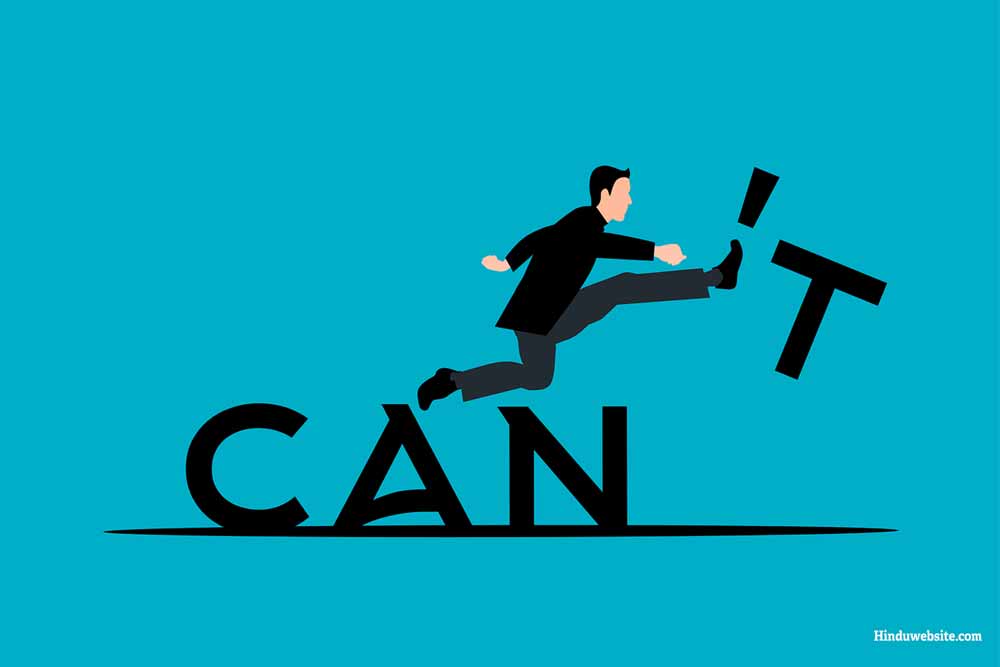
Summary: Positive Mental Attitude (PMA) is a grounded, realistic form of optimism that helps people face challenges with flexibility rather than denial. The page explains how PMA supports motivation, coping, resilience, and health, while distinguishing it from forced cheerfulness and toxic positivity. It highlights research on optimism, positive affect, and stress regulation, along with the risks of suppressing difficult emotions. The article outlines practical ways to cultivate PMA through cognitive reappraisal, gratitude, mindfulness, supportive environments, and consistent habits. It emphasizes that healthy PMA is flexible, reality‑based, and strengthened through meaningful action rather than pretending everything is fine.
“Positive mental attitude” (PMA) is one of those phrases that can sound like a motivational poster, sunrise, mountain peak, maybe a bold font. But in psychology, a workable definition is surprisingly grounded: PMA is a pattern of realistic optimism, hope, and approach-oriented coping that helps you respond to stressors with flexibility rather than helplessness. It is not pretending everything is fine. It is closer to saying, “This is hard, and I still have options.” When PMA is healthy, it supports well-being and resilience; when it becomes rigid (or socially enforced), it can slip into emotional avoidance, often called toxic positivity.
What PMA Is (and What It’s Not)
In research, PMA overlaps with constructs like dispositional optimism, a general expectation that good outcomes are possible, and positive affect, the tendency to experience pleasant emotions more frequently. A large meta-analytic review found that optimism is a statistically significant predictor of better physical health outcomes across many studies (e.g., pain, cardiovascular outcomes, and immune markers), suggesting that outlook is not just “in your head” in the dismissive sense; it influences behavior, stress physiology, and persistence over time.
Still, PMA is not the same as constant cheerfulness. A useful way to think about it is as a stance toward experience: you allow the full range of emotions, but you try not to get trapped in the story that nothing can improve. Positive emotions can “broaden” attention and build coping resources over time, relationships, problem-solving capacity, and willingness to try again, yet those benefits depend on being able to notice reality clearly. When positivity becomes a rule (“I must feel upbeat, or I’m failing”), it stops being a resource and starts acting like a muzzle.
When PMA Helps: Motivation, Coping, and the Upward Spiral
PMA is most helpful when you need energy to engage with a challenge: studying for an exam, rebuilding after a setback, starting therapy, changing a health habit, or navigating a difficult season at work. In these situations, optimism functions less like a prediction (“Everything will work out”) and more like a permission slip to invest effort (“It might work out, so it’s worth trying”). Research on positive affect suggests that people who experience more frequent positive emotions tend to show better outcomes across domains such as relationships, work performance, and health, and that positive affect can precede some forms of success by supporting proactive behaviors and social connection.
There are a few pathways by which PMA tends to pay off. First, optimistic people often choose more constructive coping, planning, seeking support, and reframing, rather than disengaging. Second, they are more likely to stick with healthy behaviors long enough for results to show up. And third, optimism seems to buffer stress responses that wear the body down over time. A meta-analysis of optimism and physical health concluded that optimism meaningfully predicts better health outcomes across a wide range of indicators. An invited commentary in JAMA Network Open similarly highlights growing evidence linking optimism with cardiovascular and overall health outcomes while also noting that “optimism” as a stable trait may not be equally modifiable for everyone.
When PMA Doesn’t Help: The Limits of Positivity (and the Problem of “Toxic Positivity”)
PMA becomes unhelpful when it replaces reality-testing. Grief, trauma, chronic illness, systemic injustice, and major losses often require acknowledgment before they can be integrated. If the rule is “stay positive,” people may feel pressure to suppress legitimate emotions, which can add a second layer of distress: not only are you hurting, you also think you’re hurting “wrong.” A 2025 literature review on toxic positivity describes how enforced positivity can contribute to emotional suppression and increased distress, especially when negative emotions are invalidated rather than processed.
In everyday life, toxic positivity often shows up as well-intended but minimizing responses (“Everything happens for a reason,” “Just be grateful,” “At least it’s not worse”). That language can shut down real conversation and discourage help-seeking. A piece from the Fisher College of Business at The Ohio State University frames the issue as a pendulum swing: optimism can be healthy, but when positivity becomes an avoidance strategy, it can silence emotions and reduce support at the very moment it’s needed.
There’s another important limit: sometimes a bit of caution helps you perform. Research on defensive pessimism shows that some people manage anxiety by setting lower expectations and then preparing thoroughly; for them, forced positivity can actually impair performance. In classic work, [Julie K. Norem]() and [Nancy Cantor]() found that when defensive pessimists are prevented from using their preferred strategy (mentally rehearsing potential problems and planning), performance can worsen, suggesting that “think positive” is not one-size-fits-all.
Cultivating PMA: Evidence-Based Practices That Don’t Require Pretending
Because PMA is partly a habit of attention and interpretation, it can be cultivated, at least to a degree, through practices that shift how you relate to thoughts and feelings. One of the most reliable approaches is cognitive reappraisal: not denying difficulty, but actively testing alternative explanations. For example, “I failed, so I’m hopeless” becomes “I failed, so I need a different study strategy.” This small shift protects agency, which is one of the core ingredients of PMA.
Gratitude practices are another accessible route, especially when they focus on specific, concrete moments rather than vague “good vibes.” A 2023 systematic review and meta-analysis evaluated gratitude interventions and found measurable benefits for well-being outcomes across studies, supporting gratitude as more than a social nicety; it can be a trainable mental skill. The key is consistency and specificity: noting what helped, who showed up, or what you handled better than last time.
Mindfulness also supports PMA, not by forcing positive thoughts but by reducing the grip of negative ones. Mindfulness-based cognitive therapy (MBCT), for example, integrates mindfulness with cognitive strategies and has been studied for reducing depression relapse and improving emotional regulation. A 2025 systematic review of MBCT literature reports evidence of benefits for depression, anxiety, and stress, alongside improvements in cognitive and emotional regulation outcomes. When your mind stops treating every worry as an emergency, a steadier form of optimism has room to emerge.
Finally, PMA is easier to build in an environment that reinforces it. Social support matters because other people can “lend” perspective when your own is narrowed. And action matters because mood often follows motion: small, values-based steps (a walk, a hard email, a therapy appointment, five minutes of tidying) create evidence that you are not stuck. In other words, PMA is not only something you think; it is something you practice.
Sustaining PMA: From Short-Term Boost to Long-Term Mindset
Most people can “get positive” for a day or two. The real challenge is sustaining PMA when life keeps doing what life does: changing plans, breaking things, and occasionally throwing a week that feels like a month. Long-term PMA tends to rest on three pillars: routines, meaning, and recovery skills.
Routines make PMA less dependent on inspiration. Simple “attentional hygiene” habits, sleep consistency, movement, some daylight, fewer doom-scroll spirals, reduce the baseline stress that makes negative thinking sticky. If you want a casual rule of thumb: protect your brain’s fuel (sleep, food, movement) and it will be less dramatic about everything else.
Meaning keeps PMA from becoming shallow. When optimism is anchored in values, learning, family, service, creativity, it becomes sturdier than optimism anchored in outcomes. You can’t guarantee results, but you can keep showing up for what matters. This is also where realistic goal-setting helps: break goals into controllable steps and treat setbacks as information rather than verdicts.
Recovery skills are the difference between “I’m positive when things are good” and “I’m resilient when things are hard.” These skills include naming emotions accurately, asking for support early, and planning for predictable dips. If you’re someone who uses strategic realism, like defensive pessimism, you don’t need to convert into a sunshine-only optimist. You can keep your planning style and still cultivate PMA by adding a final step: after you list what could go wrong, also list what you’ll do if it does, and what might go right if you try.
Books Worth Your Time (and Why)
If you want a bookshelf-based jumpstart, start with a mix of classic motivation and research-grounded positive psychology. Success Through a Positive Mental Attitude by Napoleon Hill and W. Clement Stone popularized the very term PMA and still reads like a high-energy pep talk, useful for momentum, even if you take the claims with a modern, critical eye. For a more academic foundation, Martin Seligman’s Learned Optimism (noted for its work on explanatory style) translates cognitive principles into practical exercises. For happiness skills backed by research, Sonja Lyubomirsky’s work (e.g., The How of Happiness) pairs well with the evidence that frequent positive affect is linked to better life outcomes. And if you’ve ever felt allergic to forced positivity, Julie Norem’s writing on defensive pessimism is a reassuring reminder that “positive” can include careful planning and realistic thinking, not just upbeat vibes.
A Balanced Takeaway
PMA works best when it is flexible, reality-based, and paired with action. Think of it as psychological posture: you can stand upright without pretending the ground isn’t uneven. When PMA helps, it fuels effort, strengthens coping, and supports health through better habits and stress regulation. When it hurts, it typically does so by silencing emotion, minimizing real problems, or pressuring people to perform happiness. The sweet spot is “both/and”: acknowledge what is painful and stay oriented toward what is possible.
If you want a simple way to start today, try this three-step loop for one week: (1) name the stressor honestly (“This is hard”), (2) choose one reappraisal (“Here’s one part I can influence”), and (3) take one small step that aligns with your values. Layer in a short gratitude note a few evenings a week, and you’ve built a sustainable PMA practice that doesn’t require you to fake a smile.
Note: This article has been written, researched, edited, corrected, and improved with AI assistance. Some of the links in this article are affiliate links. Hinduwebsite.com benefits at no additional cost to you when you click on the links and make a purchase.
References
1. Carver, C. S., Scheier, M. F., & Segerstrom, S. C. (2010). Optimism. Clinical Psychology Review, 30(7), 879–889. (Cited in discussion of optimism and well-being.)
2. Diniz, G., Korkes, L., Tristão, L. S., Pelegrini, R., Bellodi, P. L., & Bernardo, W. M. (2023). The effects of gratitude interventions: A systematic review and meta-analysis. Einstein (São Paulo), 21, eRW0371.
3. Gkintoni, E., Vassilopoulos, S. P., & Nikolaou, G. (2025). Mindfulness-Based Cognitive Therapy in clinical practice: A systematic review of neurocognitive outcomes and applications for mental health and well-being. Journal of Clinical Medicine, 14(5), 1703.
4. Hill, N., & Stone, W. C. (2007/1960). Success Through a Positive Mental Attitude. (Publisher information).
5. Holloway, A. (2024). Balancing optimism with toxic positivity: When looking on the bright side becomes too much. Fisher College of Business, The Ohio State University.
6. Huffman, J. C. (2019). Optimism and health: Where do we go from here? JAMA Network Open, 2(9), e1912211.
7. Lyubomirsky, S., King, L., & Diener, E. (2005). The benefits of frequent positive affect: Does happiness lead to success? Psychological Bulletin, 131(6), 803–855.
8. Norem, J. K., & Cantor, N. (1986). Defensive pessimism: “Harnessing” anxiety as motivation. Journal of Personality and Social Psychology, 51(6), 1208–1217.
9. Rasmussen, H. N., Scheier, M. F., & Greenhouse, J. B. (2009). Optimism and physical health: A meta-analytic review. Annals of Behavioral Medicine, 37(3), 239–256.
10. Sonia. (2025). The dark side of positivity: How toxic positivity contributes to emotional suppression and mental health struggles. International Journal of Indian Psychology, 13(2).